Reduce wrong-pair waste
Use exposure notes and fit trials to prevent boots from sitting unused in branch stockrooms.
SUS-A commitment progress
Responsible safety footwear is not only about material sourcing. It also means buying fewer wrong boots, extending useful service where appropriate, documenting cleaning limits, and avoiding stock waste created by unclear specifications.
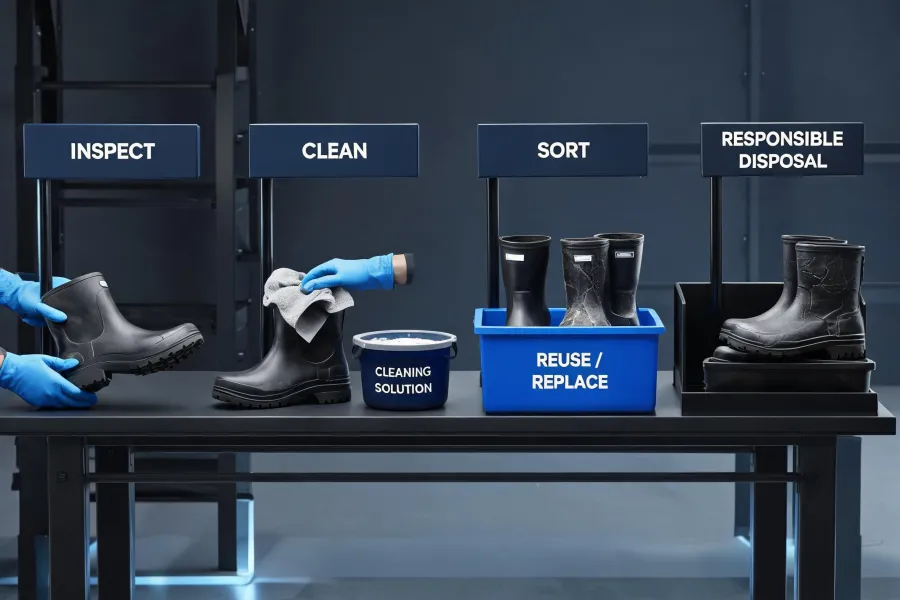
Dunlop Protective Footwear sustainability work is framed around practical decisions that B2B buyers can control. A boot program can reduce waste when it limits duplicate SKUs, prevents unsuitable substitutions, orders the right size curve, and teaches workers how to clean and store boots without damaging the compound. The goal is not to claim a perfect environmental outcome. The goal is to make footwear purchasing more traceable, more durable, and less reactive.
For many facilities, the largest avoidable waste starts before the first shipment. If a refinery orders a food-processing boot, or a washdown plant orders a boot that fails comfort trials, unused inventory accumulates. A disciplined standard crosswalk, field trial, and core stock list can reduce those mismatches. Where recycled content, lower-impact compounds, or take-back options are available, they should be reviewed alongside chemical resistance, outsole wear, and worker acceptance.
Use exposure notes and fit trials to prevent boots from sitting unused in branch stockrooms.
Document cleaning, storage, inspection, and replacement triggers so boots are not discarded too early or kept too long.
Track compound, lining, outsole, packaging, and supplier notes when sustainability data is available for procurement review.
Send your current boot list, unused stock issues, and replacement triggers. We will help organize the next review around exposure, material notes, and reorder discipline.