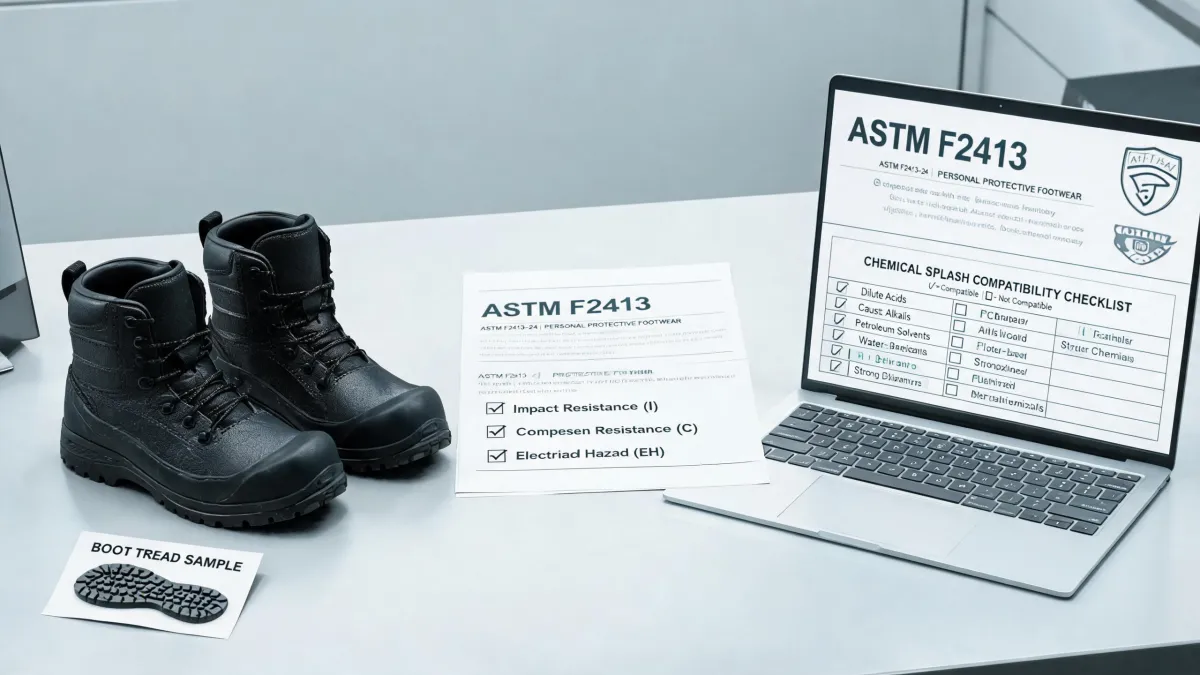
If you're looking at Dunlop rubber work boots for your crew, stop. The first decision isn't which boot. It's which environment.
Here's the thing: I've spent 4 years handling safety boot orders for a mid-sized industrial facility in Texas. We've bought over 200 pairs of Dunlop boots. I've personally wasted about $3,200 on the wrong models. That's not counting the re-order costs because I didn't match the boot to the actual job.
So, let me save you the trouble. The best Dunlop boot for you is not the most expensive one. It's the one that fits your specific hazard. Period.
My Experience (and My Mistakes) with Dunlop Boots
I started buying Dunlop boots in 2021. Our crew was migrating from cheap leather boots that fell apart in wet conditions. The production manager said, "Get something waterproof." So, I did. I ordered 30 pairs of Dunlop Chesapeake rubber boots because they were the most popular. Popular. Big mistake.
The Chesapeake is a fantastic boot. But it's not great for a mechanic working around oil and tools. The heel is a bit wider, perfect for standing on wet concrete. The tread is deep. But for the guy who's up and down ladders? The tread grabbed everything. They hated it. They slipped on metal steps.
That order cost $890 in re-stocking fees and shipping. Plus the time. The crew was griping for a week. I learned a hard lesson: popularity is not a substitute for job-specific fit.
Chesapeake vs. Hawx: The Real Differences
A lot of people ask me about the Dunlop Chesapeake rubber boots versus the Hawx work boots. I've bought both. A lot of both. Here's the honest breakdown, based on real-world use:
Dunlop Chesapeake Rubber Boots
The Chesapeake is a classic. It's built for one main thing: standing in wet, slippery environments. Think dairy farms, food processing, concrete plants, and flood cleanup. The rubber is thick and durable. I've seen pairs last 3-4 years in moderate use.
- Best for: Heavy mud, water, and chemical splash (non-hazmat). The outsole is fantastic for gripping wet, uneven surfaces.
- Not great for: Ladder work, fine debris (like small stones get stuck in the tread), or all-day walking on hard surfaces. The sole is stiff.
- My lesson: I ordered 20 pairs for a crew that was mostly on concrete floors. They complained their feet were tired by lunch. The boot is stiff. It took them 2 weeks to break in, and some guys just hated it.
Dunlop Hawx Work Boots
The Hawx is a newer line. It's lighter. It's more like a boot than a rubber overshoe. The rubber is still waterproof, but the construction allows for more ankle movement and a generally less 'clompy' feel.
- Best for: General construction, maintenance, electricians, and anyone who needs a waterproof boot but also needs to walk, climb, or move quickly. It's also much better on metal surfaces.
- Not great for: Deep mud or heavy chemical exposure. The sole is less aggressive than the Chesapeake. It's also less resistant to puncture from sharp debris.
- My mistake: I once ordered 15 pairs of the Hawx for a crew doing demolition. They were fantastic on ladders and walking through debris. But one guy found a screw that went through the sole. It's not a steel-midsole boot. It's a rubber boot. The crew wasn't happy.
Bottom line: If you're standing in water all day, get the Chesapeake. If you're moving, climbing, or on mixed surfaces, get the Hawx.
Where to Buy Steel Toe Boots (and What to Look For)
This is the other big question I get from procurement people: "Where to buy steel toe boots for a team?" Not just Dunlop, but all brands.
Look, I've bought from Amazon, from big-box industrial suppliers, and from authorized distributors. The difference? Consistency and sizing. Here's what I learned after the third rejection in Q1 2024 (yes, I keep a log now):
The single biggest mistake I see is buying from a platform that doesn't carry size runs. You buy a pair of dunlop rubber work boots online, thinking you're getting the model you need. The box arrives with a slightly different tread pattern or a different liner. Or, worse, the sizing is a full half-size off from the same model you bought last year.
I now buy all our boots from authorized Dunlop distributors who actually stock the full size range and have a size chart that works. The price is sometimes $10-15 higher per pair. But the re-order failure rate dropped from 30% (the first year) to under 5%. That saved us a ton of time and money. Trust me on this one.
My Final Advice on Dunlop Work Boots
What I've learned boils down to three things:
- Match the boot to the hazard, not the hype. The Chesapeake is amazing for standing in water. It's terrible for ladder work. Don't buy it for the wrong job.
- Buy from a real distributor. Avoid the random online marketplaces. You'll get better sizing consistency, better returns, and you'll actually get the model you need.
- Don't assume the most expensive model is the best for your crew. The Hawx work boots are more expensive than some of the entry-level Dunlop models. But for a crew that does a mix of indoor and outdoor work, they are worth every penny. For a crew that only works in mud? Not so much.
One more thing: I can't speak for how these boots perform in extreme cold or in food-grade clean rooms. My experience is limited to general industrial and construction settings in a warm climate. If you're working in a brewery or a meatpacking plant, the rules might be different. For my world? Stick to the job-specific fit. It's the only way to avoid the waste.