-
The five mistakes, in the order I made them
-
1. The Master Lock brass padlock that wasn't for the environment I put it in
-
2. The smoke detector beeping at 2 a.m. — because I chose the wrong battery class
-
3. The stockade fence order that was off by a foot on every post
-
4. The handcuff order where I forgot how people actually draw them
-
5. The "compliance" claim I trusted without checking
-
1. The Master Lock brass padlock that wasn't for the environment I put it in
-
What I do differently now
-
Where this breaks down
Small-batch safety orders fail on the boring stuff, not the price. My last five mistakes cost $2,340 combined, and four of them had nothing to do with how much I paid per unit. They were about specs, catalogs, and installation details I didn't think to check. If you're ordering under $5,000 at a time, this is the list of things that will actually bite you.
I handle safety product orders for a mid-size facilities team — seven years now, mostly PPE, locks, and physical security fixtures. I've personally made five significant mistakes, and I've documented each one. The worst part: none of them happened because I bought the cheapest option. They happened because I didn't check something that wasn't on the quote.
The five mistakes, in the order I made them
1. The Master Lock brass padlock that wasn't for the environment I put it in
Back in 2019, I ordered 40 Master Lock brass padlocks for a chemical storage area. Brass, weather-resistant, classic — looked like an obvious choice. Four months later, half of them were seized. Brass handles rain fine; it does not handle regular exposure to alkaline cleaning agents.
That error cost about $420 in replacement locks plus a weekend of maintenance labor. The lesson: the master-lock catalog lists a service environment rating on almost every page. I just didn't read that far down. Now the environment rating is the first thing I check, before keying, before size.
Related: when buying via the master lock catalog from a distributor, confirm the revision date. I once ordered from a 2022 PDF that was still floating around in a shared drive. Two models had been replaced (should mention: one thing that saved me was the vendor flagging it before shipping), but the delay cost us four days.
2. The smoke detector beeping at 2 a.m. — because I chose the wrong battery class
I installed twelve wall-mounted smoke detectors in a warehouse break area. Three weeks later, my phone started ringing at 2 a.m. — smoke detector beeping, low battery. The units were hard-wired, so this shouldn't have happened. Turns out the model I bought used a backup battery type that doesn't last through winter temperature swings.
Cost: about $260 in replacement batteries across all units, plus two callouts. What I should have done — what I now do on every detector order — is ask the vendor for the actual battery model and its rated temperature window, not just "battery backup included."
3. The stockade fence order that was off by a foot on every post
I needed a stockade fence section for a utility yard perimeter — roughly 80 feet. I measured the linear footage, ordered panels, and didn't account for the post spacing difference between my measurement and that manufacturer's standard. Every panel needed cutting. $310 in labor, plus a delay on a compliance inspection.
Point being: stockade fence isn't like buying a gate — the post spacing spec is part of the product, not a detail you fix on site. (I really should put that on a sticky note on my monitor.)
4. The handcuff order where I forgot how people actually draw them
We supply handcuffs to a contracted security team. I ordered a batch of chain-link handcuffs and matching belt holsters separately. Both products were fine on their own. What I didn't check: whether the holster position accommodated a quick draw from a duty belt with existing gear — the how to draw handcuffs motion the team actually trains for. The first batch went back.
That was a $190 restocking fee and about ten days of the team working with loaner gear. The fix was simple — we switched to a holster style that sat higher on the belt. But it taught me that accessories aren't accessories. If you sell handcuffs as a system, order them as a system.
5. The "compliance" claim I trusted without checking
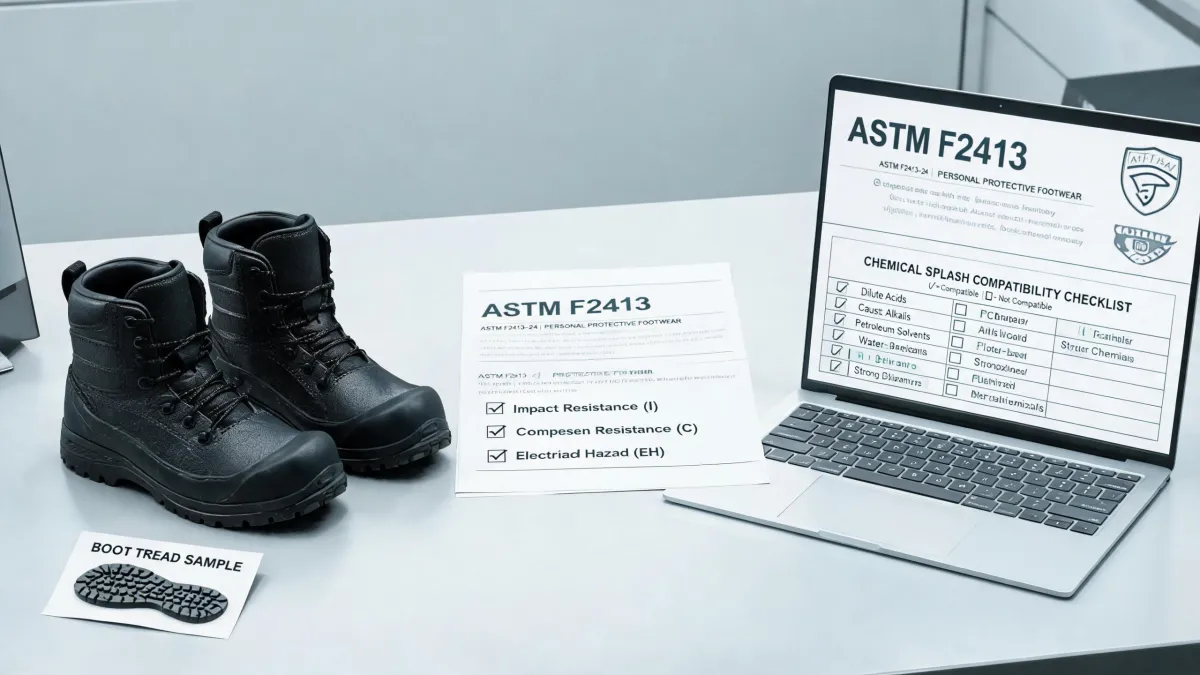
This one is the most embarrassing. I ordered PPE from a vendor whose spec sheet said "meets applicable safety standards." That phrase is meaningless. Per FTC advertising guidelines (ftc.gov), safety-related claims must be truthful, substantiated, and specific — a vague "meets standards" line doesn't pass that test, and it shouldn't have passed mine either.
That order went into a compliance audit and came back flagged. Cost: $540 in replacement product and a very uncomfortable meeting. Now I ask for the standard number, the testing lab, and the date on the certificate. If a vendor can't name the standard, I don't buy.
What I do differently now
It took me about seven years and roughly 400 orders to understand that the mistakes above weren't knowledge problems — they were checklist problems. I knew what to check in theory. I just didn't have a fixed list, so I skipped whatever wasn't in front of me.
My current pre-order list is 14 items. The first five are: environment rating, catalog revision date, battery/consumable spec, post/install spacing, and standard number (as of January 2025 — the list has grown twice since 2019). Since I put this list into our ordering process in Q1 2024, we've caught about 20 potential errors (maybe 18, I'd have to check the log) before they shipped.
One small-batch trick that's saved real money: for sample parts — a holster clip, a battery, a lock shackle — we ship USPS instead of courier. According to USPS (usps.com), a large envelope can go up to 12" × 15" and costs $1.50 per ounce as of January 2025. That beats a $12 courier charge for a $2 part. Small-batch thinking applies to shipping too.
Where this breaks down
Two honest caveats. First, small orders will always get less vendor attention than large ones — that's a resource reality, not a moral failing on the vendor's side. The checklist compensates for it by making you do the checks the vendor won't do at your order size.
Second, this list assumes standard commercial environments. If you're ordering for hazmat facilities, healthcare, or anything with regulated certification requirements beyond general industry, you need a specialist review — not a buyer's checklist. I've learned that the hard way too.
Last thing: if you're a small buyer, don't apologize for your order size. The vendors who treated my $200 orders seriously in 2018 are the same ones I still call for $20,000 orders now. A checklist isn't about being paranoid — it's about being the kind of buyer vendors take seriously.