How a $320 Mistake Taught Me to Stop Guessing on Safety Gear
It was September 2023. I’d just signed my first real contract — a three-month job handling chemical cleaning for a small industrial site. I needed boots and gloves for me and my two-man crew. The order was tiny: three pairs of boots, three dozen gloves. Small potatoes, right?
I called around to suppliers. Most didn’t even return my voicemail. One guy laughed when I said “qty: 3.” That stung. But a smaller distributor — I’ll call him Dave — took me seriously. He asked about the environment: chemicals, sharp debris, standing water. I told him we needed something waterproof and slip-resistant. He recommended Dunlop.
“Dunlop’s rubber boots are built for this. But you gotta tell me exactly what you’re walking through. Their lineup is huge.”
I nodded like I understood. I didn’t. And that’s where the trouble started.
The Boot That Looked Right but Wasn’t
Dave sent me links: the Dunlop Chesapeake men’s rubber boots plain toe, the Hazmat series, steel toe options. I skimmed. My brain latched on to price. The Chesapeake plain toe were $48 a pair. The steel toe Hazmat were $89. I ordered three pair of the Chesapeake plain toe — saved $123, I thought.
Big mistake.
First day on site, my lead guy stepped on a metal bracket. The boot flexed — the piece hit his foot hard. He limped the rest of the shift. Second day, we had a splash of mild solvent on another boot. Plain rubber, no chemical rating. It started cracking by week two.
From the outside, those boots looked like they’d handle anything. The reality is: plain toe rubber boots are perfect for light-duty, dry environments — not for a chemical site with sharp debris.
I’d fallen for the surface illusion: “Rubber boot = tough.” Nope. Dunlop makes different boots for different hazards. Their Hazmat line has steel toes, slip-resistant soles, and chemical-resistant compounds. The Chesapeake? Great for farm work, not for industrial cleaning.
That mistake cost me: $144 for the boots, $45 return shipping, and a week of lost productivity while we waited for replacements. And the embarrassment of having my crew work in subpar gear.
The Nitrile Glove Surprise
While I was messing up the boots, I also ordered gloves. The site required heat resistance up to 350°F for handling hot pipes. I searched online: “are nitrile gloves heat resistant?”
Most Google results said “yes” — nitrile handles heat better than latex. So I bought a case. Turned out the key qualification is how much heat. Standard nitrile gloves start degrading around 250°F. At 350°F, they soften, melt, and can even ignite. I learned that the hard way when my guy grabbed a pipe and the glove stuck to his hand.
No serious injury, but a close call. The gloves were rated for chemical splash, not thermal protection. People assume “heat resistant” means “fireproof.” What they don’t see is that heat ratings vary by polymer thickness, brand, and testing standard. The question everyone asks is “are nitrile gloves heat resistant?” The question they should ask is “to what temperature, for how long, and with what backing?”
We replaced them with aramid-lined gloves rated to 500°F. Cost more, but we won’t make that mistake again.
What I Now Know About Dunlop Boots (and Safety Gear)
After the dual disaster, I went back to Dave. I swallowed my pride and admitted I’d ordered the wrong stuff. He didn’t say “I told you so.” Instead, he walked me through the Dunlop range:
- Dunlop Chesapeake men’s rubber boots plain toe — perfect for dry, general work (warehouse, farm). No steel toe, limited chemical resistance.
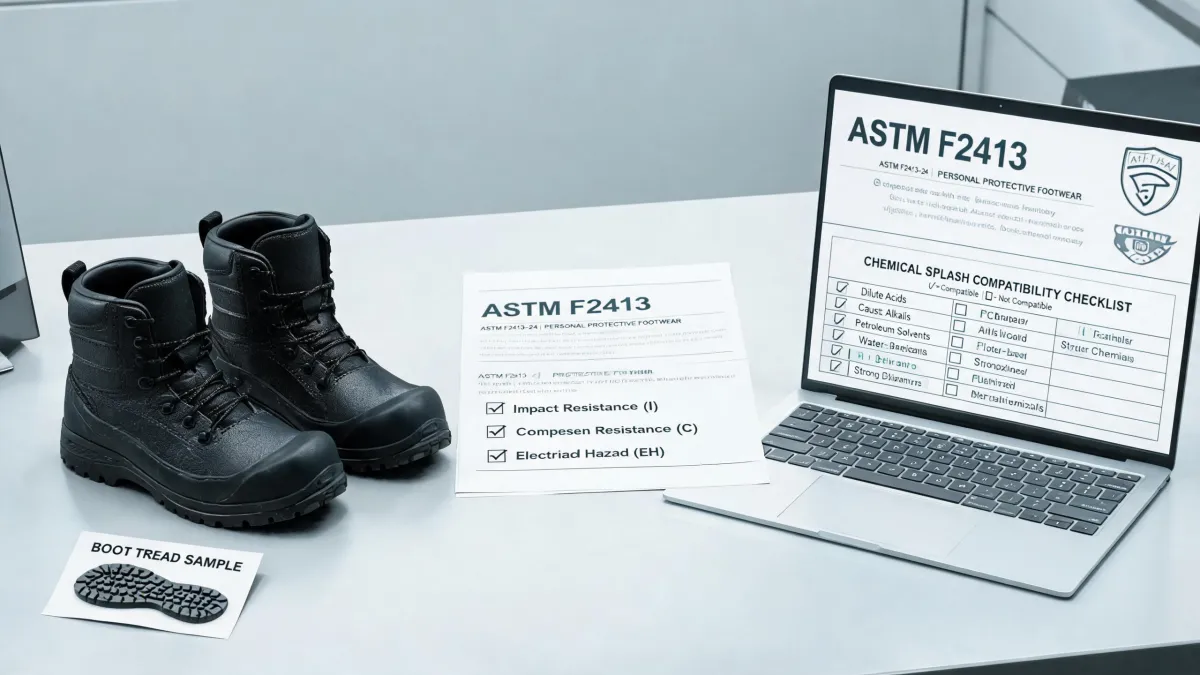
- Dunlop Hazmat boots — steel toe, chemical-resistant rubber, tested to ASTM F2413 for impact and compression. Great for chemical sites.
- Dunlop steel toe rubber boots — mid-range, good for construction and wet environments without heavy chemical exposure.
- Dunlop insulated and metatarsal boots — for extreme cold or high impact risk.
I ended up ordering three pair of the Hazmat steel toes. They cost more upfront — $89 each — but they’ve lasted eight months with zero issues. No cracking, no leaks, no foot injuries. Bottom line: the right gear pays for itself.
My Checklist for Buying Safety Boots (and Gloves)
If you’re a small business owner like me — or even a solo worker — here’s what I wish I’d done from day one:
- List your hazards explicitly. Water? Chemicals? Sharp objects? Hot surfaces? Each boot (and glove) is designed for specific threats.
- Don’t assume “good brand” means “right product.” Dunlop makes excellent boots, but the Chesapeake plain toe isn’t designed for industrial chemical work — that doesn’t make it bad.
- Check certifications, not marketing. For boots: ASTM F2413 (impact/compression), ASTM F2892 (soft toe), ASTM D471 (chemical resistance). For gloves: ANSI/ISEA 105 (cut, puncture, heat).
- Buy from a supplier who asks questions. If they just take your order without asking what you’ll be doing, that’s a red flag. Dave saved me, eventually.
- Factor in the cost of being wrong. My $123 “savings” turned into $320 in direct costs plus lost work time.
“Small doesn’t mean unimportant — it means potential. The vendors who treated my $200 order seriously are the ones I still use for $20,000 orders.”
That’s not just a nice sentiment. It’s how I operate now. When I needed replacements, I called the same distributor. He remembered my mistakes, and now we have a relationship. He even helped me find a Nike work boots option for one of my guys who needed a narrower fit — but we both agreed Dunlop was still the right call for the wet/chem environment.
As for nitrile gloves? I keep a few boxes of standard ones for light tasks, but anything hot gets the aramid-lined style. And I never Google “are nitrile gloves heat resistant” without checking the actual temperature rating on the spec sheet.
Final Thoughts
Looking back, my biggest mistake was thinking safety gear was simple. Boots are boots, gloves are gloves. No. The difference between a $48 boot and an $89 boot isn’t markup — it’s engineering. Dunlop’s heritage in rubber technology (they’ve been making tires and boots for over a century) means they know how to compound rubber for specific conditions. But you still have to pick the right model.
I’ve now documented 9 significant procurement mistakes over the past 18 months. This one — the boots and gloves — was number 3. It cost roughly $320 in wasted budget, plus a chunk of credibility with my crew. But it’s also the one that taught me the most.
If you’re reading this because you searched for “dunlop boots” or “brown work boots” or “dunlop hazmat boots reviews” — stop. Don’t order yet. Think about what you’re actually walking into. Then call a supplier who asks hard questions.
Your feet (and hands) will thank you.