January 2023: Three Quotes and a Bad Decision
I still remember the Friday afternoon I approved the $11,800 quote. Our annual safety budget was $42,000—covering fire protection, PPE, and facility safety for our 140-person logistics company. We had two warehouses, a loading dock that saw 60+ truck arrivals daily, and a noise problem in the main sorting area that everyone had learned to ignore.
That year, I needed to replace three things: an aging fire alarm system, 30 pairs of steel toe boots for the dock crew, and 50 earmuffs for the sorting floor. The dock also had a fall protection issue—a railing that looked fine to me but apparently wasn't.
I collected three quotes. The lowest came in at $11,800. Tyco's was $14,600. My boss asked the obvious question: "Why would we pay $2,800 more?" I didn't have a good answer. So I went with the cheap option and moved on with my week.
If you've ever approved the lowest bid and then spent the next six months explaining the fallout to your ops director, you already know where this is going.
August 2023: The OSHA Audit That Changed Everything
The inspector arrived on a Tuesday morning. Routine audit, she said. Nothing personal.
By noon, we had four violations and a punch list that made my stomach drop:
Noise: Our sorting floor registered at 87 dB. The earmuffs we bought had an NRR rating of 22—not enough for an 8-hour shift at that level. OSHA required us to either reduce exposure or provide better protection. We replaced all 50 pairs. Cost: $1,900.
Fire alarm testing: The system we installed required quarterly testing per its manual. The vendor I bought from had told me the testing was "optional." It wasn't. We needed a service contract—retroactive for the months we'd missed. Cost: $1,200 annually.
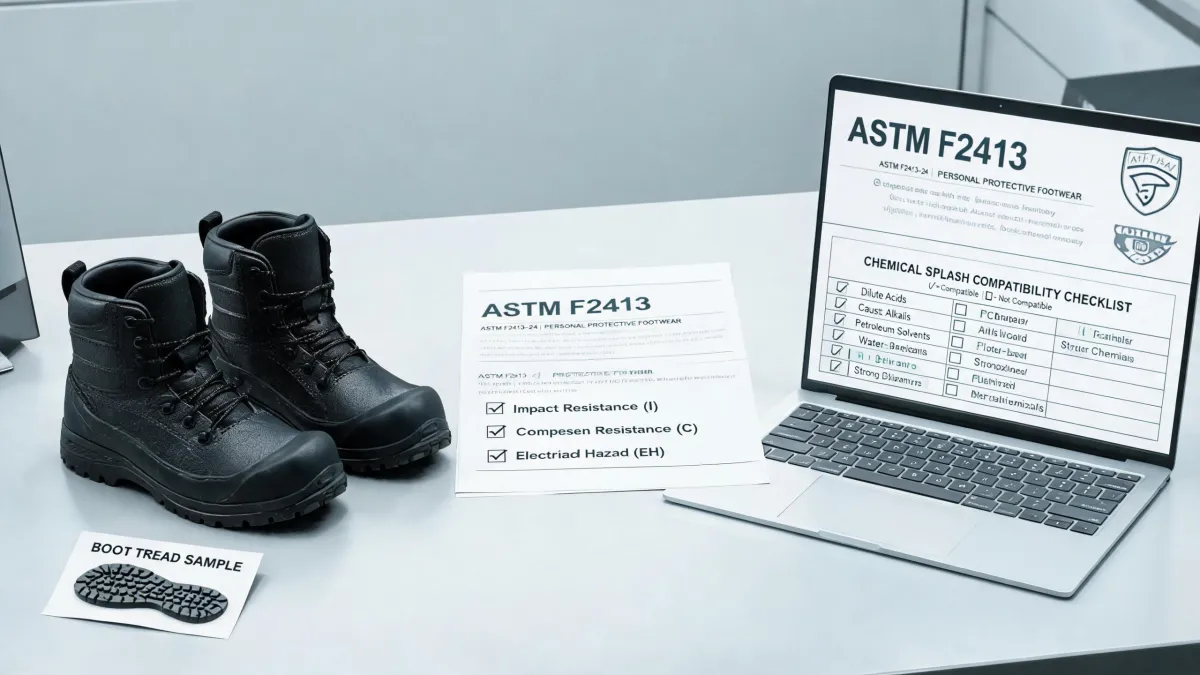
Boots: Three pairs already had sole separation after five months. The "bargain" boots carried a 90-day warranty. The mid-year replacement order cost $2,800.
Fall protection: This one stung the most. Our dock railing measured 36 inches. I genuinely didn't know what "fall protection measures" meant in OSHA terms—I assumed it was railings and common sense. Turns out OSHA defines it as a system: guardrails at 42 inches minimum, safety nets, personal fall arrest systems (harnesses, lanyards, and anchor points), and a documented inspection schedule. We had none of the paperwork. Cost to fix: $4,400 for railing modifications and a training program.
September–December 2023: Digging Out
I spent the next three months cleaning up. Every time I fixed one thing, another cost surfaced. A replacement sensor for the fire panel ($600). A revised safety data sheet distribution process (two weeks of my time). New dock signage ($340).
Here's what the math looked like by December:
Original "cheap" quote: $11,800
OSHA fixes: $1,900 + $1,200 + $2,800 + $4,400 = $10,300
Unplanned extras: $940
Year-one total: $23,040
The Tyco quote I'd rejected? $14,600. It included the fire alarm testing contract, boots with a 6-month warranty, earmuffs rated for 27+ NRR, and—this is the part that still bothers me—a written fall protection audit that would have caught the dock railing issue before OSHA did.
I'd saved $2,800 upfront and spent $8,440 more in the first year. That's a 71% premium for the privilege of buying "cheap."
January 2024: Rebuilding My Procurement Process
I'm not naturally a spreadsheet person. I'm the guy who gets quotes, compares the bottom line, picks the lowest number, and moves on. But that $8,440 gap taught me something I couldn't unlearn.
So I built a TCO calculator. It's seven columns wide and fits on a single page:
- Base price
- What's included (testing, installation, training, documentation)
- Warranty length
- Expected replacement cycle
- Compliance certification
- Known hidden fees
- Internal labor hours to manage the vendor
When we re-bid in February, I sent the same requirements to three vendors—Tyco and two others. But this time, I asked for an all-in pricing sheet: base cost + first-year consumables + service contract + warranty terms + training hours.
The results were eye-opening. One vendor quoted $9,200 base—but charged $1,200 for installation, $800 for a "commissioning report," and $400 for the first training session. Total: $11,600. Another quoted $10,400 flat, but their boots carried a 90-day warranty and their earmuffs had no NRR certification on the spec sheet. Tyco quoted $14,200 all-in, with the testing contract included, boots covered for six months, earmuffs rated 27+ NRR, and a fall protection audit built into the service agreement.
I switched the fire protection and fall protection systems to Tyco. I kept the boots and earmuffs with a mid-priced vendor—their TCO worked out over 18 months, and their local rep was responsive. The point wasn't that one brand won on every line item. The point was that I finally had numbers that meant something.
What I'd Tell Anyone Buying Safety Equipment
Here's the thing about safety purchases: the sticker price is almost meaningless.
In my opinion, there are three hidden costs that every procurement manager should calculate before signing:
1. Compliance costs. If the product doesn't meet the standard, you're not saving money—you're just delaying the replacement. The $12 earmuffs cost us $1,900 more than the compliant ones would have. That's not a discount; it's a deferred invoice.
2. Maintenance contracts. Fire protection systems aren't fire-and-forget. The tyco fire alarm system we installed required quarterly testing—$1,200 a year we hadn't budgeted because our vendor hadn't disclosed it. Ask every vendor: "What's the annual maintenance contract, and is it included in this quote?" If they hesitate, that's your answer.
3. Replacement cycle. That $64 steel toe boot lasted five months. The $89 boot had a six-month warranty and a longer replacement cycle. I didn't calculate the per-month cost until after I'd already replaced the cheap ones. Do that math before you buy, not after.
To be fair, I get why people go with the cheapest option. Budgets are real, and a $2,800 difference is meaningful when you're staring at a tight P&L. But cheap only stays cheap if nothing goes wrong. In safety equipment, something almost always goes wrong.
The Bottom Line
If you're in the market for safety equipment—whether it's a tyco fire product, steel toe boots, earmuffs, or fall protection—do the math on the full cost. I'm not talking about a major systems project. Just ask three questions:
- What's the total cost over 18 months, including maintenance and replacements?
- What certifications does the product carry, and do they match our specific workplace conditions?
- What's not included that most buyers assume is included?
That $2,800 I "saved" in January 2023? It cost me $8,440 and three months of cleanup. I'd rather have paid the premium upfront and kept my summer free.
This worked for us, but our situation was a 140-person logistics company with a fixed location and a predictable purchasing cycle. If you're a seasonal operation with turnover spikes, or if you're managing multiple sites with inconsistent conditions, the calculus might look different. I can only speak to what I've seen—but I've seen enough to know that "cheap" doesn't mean what I used to think it meant.