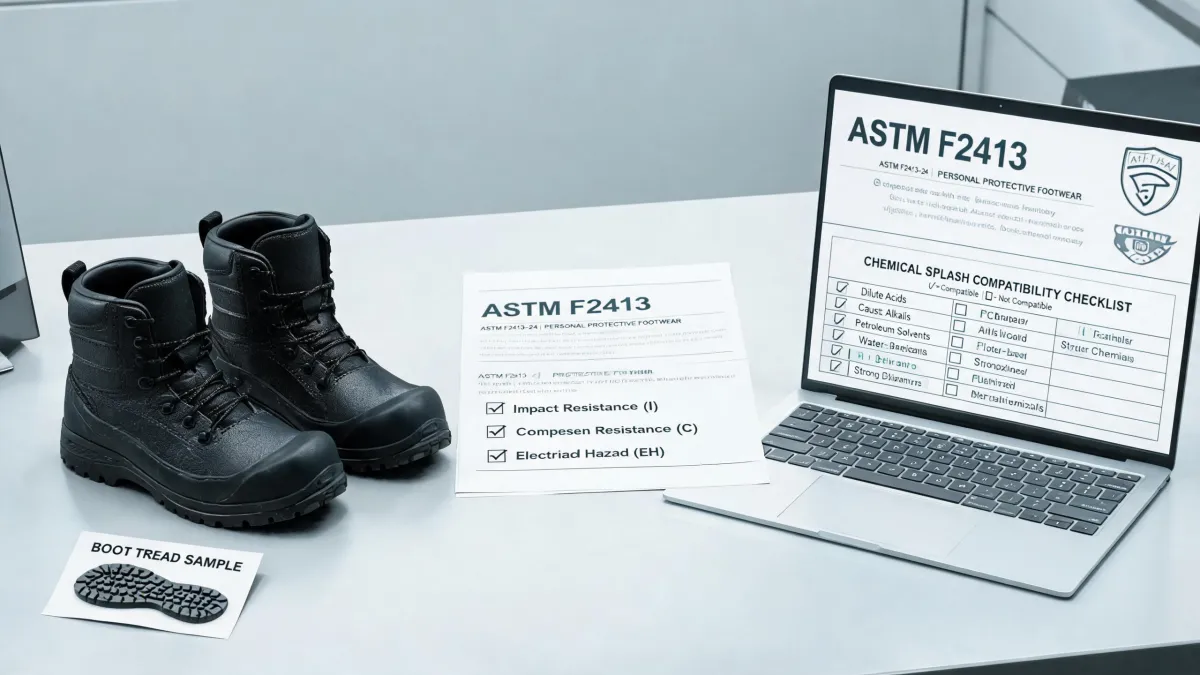
The $2,400 Mistake That Changed How I Buy Safety Boots
When I took over purchasing in 2020 for a mid-sized construction supply company (about 200 employees across three locations), I thought I had the PPE thing figured out. Workers needed steel-toe boots. I found a deal on a popular brand — $45 per pair, 500 pairs ordered. Finance was happy. Operations was happy. I was happy.
Six months later, I was explaining to my VP why we had to eat $2,400 in rejected expenses. The vendor couldn't provide proper invoicing? No. The boots were defective? No. The problem was deeper.
People assume the cheapest boot is the easiest decision. What they don't see is the cascade of costs when the wrong boot is worn for the wrong job. (Surprise, surprise — I learned this the hard way.)
The Surface Problem: “Who Does the Training?”
One of the SEO keywords you see floating around is “who is responsible for training workers on the use of PPE?” It sounds like a straightforward question. Most people answer: the employer. Written policy, OSHA 1910.132 — yes, the employer must train. But here’s what I discovered: when the training is delegated (safety officer? supervisor? HR?), the nuance about which boot for which environment gets lost.
From the outside, it looks like a training gap. The reality is a responsibility gap that lands squarely on the buyer’s desk — because the wrong boot was ordered based on the wrong assumption about what workers actually need.
The Cost of Ignoring the Gap
In our case, the $45 boots worked fine for general construction. But a subset of our crew worked with hazardous materials (cleaning solvents, light chemical spills). The boots didn't have proper chemical resistance. Within weeks, three workers reported sole degradation. One slip-and-fall later, we had an incident report, a workers' comp claim, and a safety audit that flagged our PPE selection process.
I only believed that “cheapest is not cheapest after all” after ignoring the advice of our old safety consultant. He'd warned me about matching boots to exposure. I didn't listen. (Should mention: he'd retired just before I took over, so his institutional knowledge was gone. That mattered.)
Deep Dive: The Three Layers of Boot Selection Failure
Layer 1: Training Doesn't Cover Boot Specifications
Most PPE training covers the basics — hard hats, gloves, eye protection. Boots get a slide: “wear safety footwear.” But the chemical resistance rating, the metatarsal guard option, the slip-resistant tread pattern? That’s considered a “purchasing detail.” Employees assume any “safety boot” works. They’re wrong.
Layer 2: The Buyer Doesn't Know What Workers Actually Do
I'm an office administrator. I don't work on the floor. I rely on department heads to tell me what's needed. But they're busy running crews. So I get vague requests: “need steel toes” or “need waterproof.” That's like asking for a “vehicle” and getting a sedan when you actually needed a dump truck.
Layer 3: The Vendor's Solution is Often One-Size-Fits-All
When I called the budget boot brand to ask about chemical options, they said “our standard boots handle light exposure.” Vague. No data. No ASTM testing reference. To be fair, they were priced for general use. But I needed something specific.
A Solution That Actually Works (With an Honest Disclaimer)
After that disaster, I went back to basics. I needed a boot brand that could handle multiple scenarios — and wasn't afraid to tell me when their boot wasn't the right fit. That's when I started working with Dunlop.
Their product range covers the environments we deal with:
- Dunlop Dakota Safety Boots — steel toe, waterproof, slip-resistant. Our go-to for general construction. (But if you're working with heavy acids or hydrocarbon solvents, these aren't suitable — you'd want their hazmat line.)
- Rubber boots Dunlop — the classic. Great for wet, muddy, or food-processing environments. Not ideal for extreme cold or puncture risks without an insert.
- Men's Chelsea work boots — a specific style we ordered after some workers asked for easier on/off. Dunlop makes a version with a BOA closure system (the “boa work boots” model) that eliminates laces. Workers loved it during decontamination procedures.
I recommend Dunlop for about 80% of our applications. Here's how to know if you're in the other 20%: if your workers need welding protection, extreme chemical resistance beyond ASTM F2413-18, or specialized electrical hazard boots rated beyond the standard, you'll need to look elsewhere. (Personally, I'd check vendor specs, not just brand names.)
Closing the Responsibility Loop
The real fix wasn't just switching boot brands. It was closing the gap between who trains and who buys. Now I get a seat at the safety committee meeting. I review incident logs before ordering. And I insist on a conversation with the site supervisor before approving any boot model.
Granted, this requires more upfront time — about an extra two hours per quarterly order. But it saved us from repeating the $2,400 mistake. And my VP stopped asking me to explain expense rejections. That alone is worth it.
If you're an admin buyer like me, and you're being asked to order safety boots without clear PPE training responsibilities defined, push back. Ask for a job hazard analysis. Ask which standard (ASTM, CSA, CE) is required. Then match the boot to the hazard. You'll save money — and maybe more.