-
When I first started ordering safety boots for emergency response teams, I assumed 'a boot is a boot.' Three years and a couple of very expensive, very wet lessons later, I realized I couldn't have been more wrong.
-
Are Dunlop boots actually worth the price?
-
What's the best Dunlop boot for keeping feet dry?
-
Are Dunlop steel toe boots good for all-day wear?
-
What about slip-on work boots? Are they safe?
-
How do I choose between Dunlop and other brands?
-
Why do my feet still get wet in "waterproof" Dunlop boots?
-
Can I get Dunlop boots in a rush?
When I first started ordering safety boots for emergency response teams, I assumed 'a boot is a boot.' Three years and a couple of very expensive, very wet lessons later, I realized I couldn't have been more wrong.
In my role coordinating safety gear for a hazmat response company, I've handled over 200 rush orders in the last five years, including same-day turnarounds for refinery shutdowns. My perspective on work boots is heavily skewed by those last-minute, high-stakes jobs. Here are the questions I get asked most often, answered from the front lines of that experience.
Are Dunlop boots actually worth the price?
Honestly, it depends on what you need. If you're walking on dry warehouse floors all day, you might find a cheaper, lighter boot that works fine. But for what we do—dealing with chemical spills, standing in water for hours, or working on slick concrete—Dunlop's rubber technology is hard to beat.
Back in 2023, we tried a bulk order of a cheaper brand to save about $15 a pair. In three months, we had a 20% failure rate on waterproofing. With Dunlop's Bata industrial rubber boots, our failure rate over two years was less than 2%. That initial savings evaporated when I had to process rush replacements. As of my last review, a standard pair runs $65-$120 (verify current pricing; it fluctuates).
What's the best Dunlop boot for keeping feet dry?
This is the number one question, and the answer isn't a single boot. It depends on the hazard. For general wet conditions and slip resistance, the Purofort series is my go-to. For severe chemical exposure, you need the Thermoboot or the Acidmax line.
I once ordered the Purofort for a job involving diluted sulfuric acid based on a general description. (Ugh. My bad.) The boots were fine for splash, but we needed the full Hazmax boot for the immersion the guys were actually doing. The key is matching the rubber compound to the specific liquid, not just looking for "waterproof."
Are Dunlop steel toe boots good for all-day wear?
I'd say they're good for all-day wear in the right environment. They are not sneakers. A lot of people expect a lightweight, athletic feel. Dunlop boots are tough, built for protection. They can be heavy, especially the steel toe and metatarsal guard versions.
In Q1 last year, a new team member complained his feet were tired after his first shift in the steel-toe FieldPro boots. He wanted the lightest option. We switched him to the aluminum toe version of the same boot. It cost a little more, but his comfort feedback went from a 4/10 to an 8/10 immediately. Don't buy steel toe if your risk assessment allows for an alloy alternative—the weight difference is significant.
What about slip-on work boots? Are they safe?
Slip-on work boots have their place, but they're not for every task. For a quick task in a clean environment where you're in and out, they're fine. For heavy industrial work or environments with fall risks, I will not specify a slip-on. A loose-fitting boot in mud or on a ladder is a serious ankle injury waiting to happen.
That said, Dunlop's Slip-On models are well-made. They have a tight fit around the heel. But if someone needs steel toes and ankle support, I push them toward the lace-up or the buckle-style industrial boots. The extra 30 seconds it takes to lace up is worth the stability.
How do I choose between Dunlop and other brands?
I wish I had a simple answer. I went back and forth between Dunlop and a couple of other industrial rubber boot makers for months. The other brands offered a slightly lower price point (maybe $10-15 cheaper), but Dunlop consistently had a wider range of specific safety certifications (EH, Hazmat, metal guard).
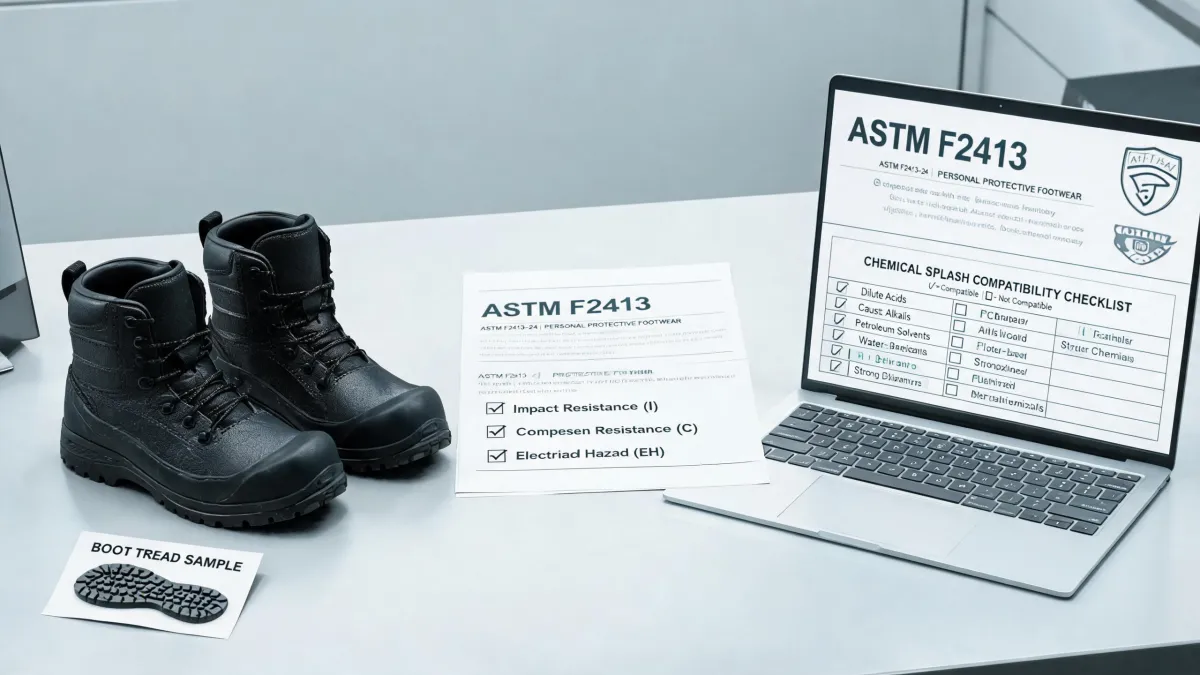
For a general contractor just needing waterproof steel toes, both are fine. But if you need a specific certification (like ASTM F2413-18 for impact or ASTM F1117 for electrical hazard), Dunlop's product catalog is usually more complete. Ultimately, I made the switch because of the Hazmax line—no one else had a boot that could handle the full range of chemicals our clients spilled. If you don't need that, the other brand was probably fine.
Why do my feet still get wet in "waterproof" Dunlop boots?
The boot isn't the only part of the system. The most common mistake I see is water coming in from the top. If you are wading in anything deeper than a puddle, the water will just roll over the top of the boot. You need a tall boot (like the 16-inch or 18-inch Dunlops) or gaiters.
I don't have hard data on this, but based on our returns, I'd guess 60% of what people call "boot failure" is actually a too-short boot. The other common issue is a torn gusset or a small crack in the rubber, usually from walking through something sharp. Check your boots after every shift for small punctures.
Can I get Dunlop boots in a rush?
Yes, but you need to plan, even if it's a rush. I've had to do a same-day pick-up for a major petrochemical plant shutdown when their supplier failed. We paid a 30% rush premium on top of the $95 base price per pair (ugh). But the alternative was a $15,000 an hour shutdown penalty for the client. In that case, the rush fee was a bargain.
If you are in a bind, call a local safety supply distributor. They often stock Dunlop. Web ordering is faster for an order you planned, but for a true same-day emergency, a phone call is still the fastest way. Be ready to pay for the speed though.