-
I Used to Think All Safety Boots Were Pretty Much the Same
-
My First Mistake: The Leather Boot Trap
-
The Real Difference: Rubber vs. Leather for Industrial Settings
-
Transparency Is the Real Differentiator
-
What About Break-In Time? (The Leather Boot Question)
-
My Rule Now: Ask for the Full Picture Before You Order
I Used to Think All Safety Boots Were Pretty Much the Same
That assumption cost me roughly $3,200 in 2022. I've been handling safety footwear orders for a manufacturing facility since 2019, and I've made enough mistakes to fill a small binder. The biggest one? Believing that any $150+ work boot was "good enough" and that the real difference was just brand marketing. I was wrong.
Here's my take: If you're working in wet, oily, or chemically hazardous environments, a quality rubber boot like Dunlop's hazmat line will outperform most leather boots – and often at a lower total cost – if you know what to look for and ask the right questions upfront. But the industry doesn't make it easy to compare because pricing is rarely transparent.
My First Mistake: The Leather Boot Trap
In early 2020, I ordered 30 pairs of a popular leather safety boot for our chemical handling team. The quote looked great – $110 per pair, well under our $160 budget. What the sales rep didn't mention: shipping was extra ($18/pair), the boots required a 2-week break-in period, and they weren't rated for the specific acid we worked with. By week three, three guys had chemical burns on their ankles. That error cost us $890 in medical reports plus a 1-week shutdown while we sourced replacements. The "cheap" boots ended up costing $1,400 more than the Dunlop rubber boots we eventually bought.
That's when I learned total cost of ownership matters more than unit price. But I also learned something else: the boot that looked best on paper (leather, steel toe, waterproof membrane) wasn't the right boot for the job. We needed chemical resistance, easy decontamination, and zero break-in time. Dunlop's rubber construction delivered all three.
The Real Difference: Rubber vs. Leather for Industrial Settings
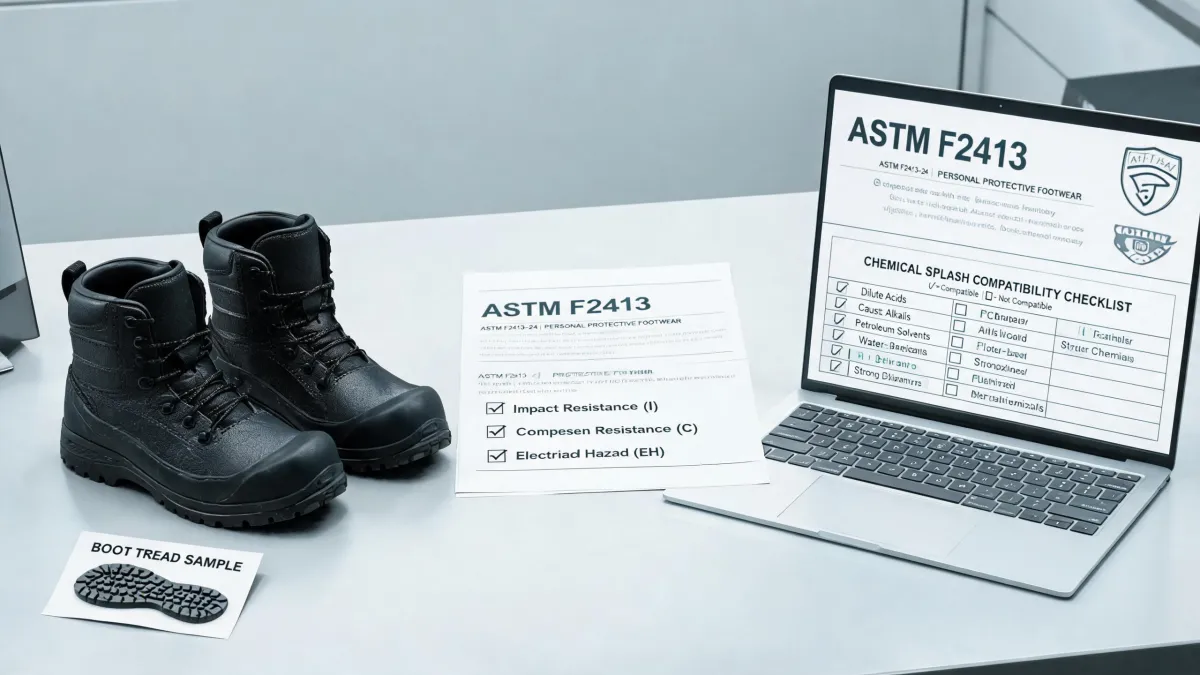
I'm not saying leather boots are bad. For construction sites, dry warehouses, or office-to-plant roles, they're fine. But if you're dealing with liquids – water, oil, solvents, acids – a one-piece molded rubber boot eliminates the seams where chemicals seep in. Dunlop has been making rubber boots since the 1940s (as of 2025, that's 80+ years of compounding expertise). Their FieldPro series and Hazmat boots carry ASTM F2413-18 ratings and are tested for specific chemical permeation. That's not marketing fluff – it's verifiable data.
Here's what many buyers miss: the price difference between a $180 Dunlop rubber boot and a $220 leather boot isn't about material cost. It's about the mold tooling and the certification testing. The Dunlop boot's higher upfront cost often includes all the certifications you'd pay extra for elsewhere – like electrical hazard (EH) rating or metatarsal protection.
"I once ordered 50 pairs of 'safety shoes' from a budget brand that listed ASTM compliance on the website. When we checked the actual labels, only 12 pairs had the stamp. The vendor blamed a 'packaging error.' That was a $2,100 lesson in asking for documentation before purchase."
Transparency Is the Real Differentiator
People think expensive brands are more expensive because of their logo. Actually, the causation runs the other way: vendors who provide complete, upfront information – including all fees, certifications, and limitations – can charge a premium because they save you from hidden costs. The vendor who lists everything (shipping, hazmat surcharges, quantity discounts, lead times) is the one you trust for repeat orders. The vendor who says "call for pricing" or adds fees at checkout is the one who'll cost you time and frustration.
Today, when I search for "dunlop hazmat boots" or "brunt work boots near me" (we've evaluated Brunt too – they make decent leather boots, but not for our chemical exposure), I look for three things:
- Complete pricing – unit cost, shipping, any hazmat fees
- Certification documentation – ASTM numbers, test results
- Return policy for wrong fit – rubber boots don't stretch, so sizing matters
What About Break-In Time? (The Leather Boot Question)
Search volume for "how to break in leather work boots" is huge – and for good reason. Every leather boot wearer has suffered through blisters and sore feet. With Dunlop rubber boots, you don't break them in. You put them on, they fit (or they don't), and you're ready to work. But that also means sizing is critical. I've learned to order a half-size up for thick socks and to check Dunlop's size chart against actual foot measurements, not street shoe size. That's another hidden cost if you guess wrong: return shipping and downtime.
My Rule Now: Ask for the Full Picture Before You Order
I challenge the assumption that a cheaper boot is a better deal. In my experience, $110 leather boots that need break-in, lack chemical resistance, and come with $18 shipping end up costing more than $140 Dunlop rubber boots with free shipping, instant fit, and ASTM paperwork included. But you won't know that unless the seller is transparent about all the costs upfront.
So here's my bottom line: whether you're buying dunlop rubber work boots, brunt work boots, or any safety shoe, demand a line-item quote. Ask for certification documents before you pay. And if a boot needs a two-week break-in, ask yourself whether your team can afford that lost productivity. My team can't. That's why we standardized on Dunlop for wet and chemical zones, and we've never looked back.