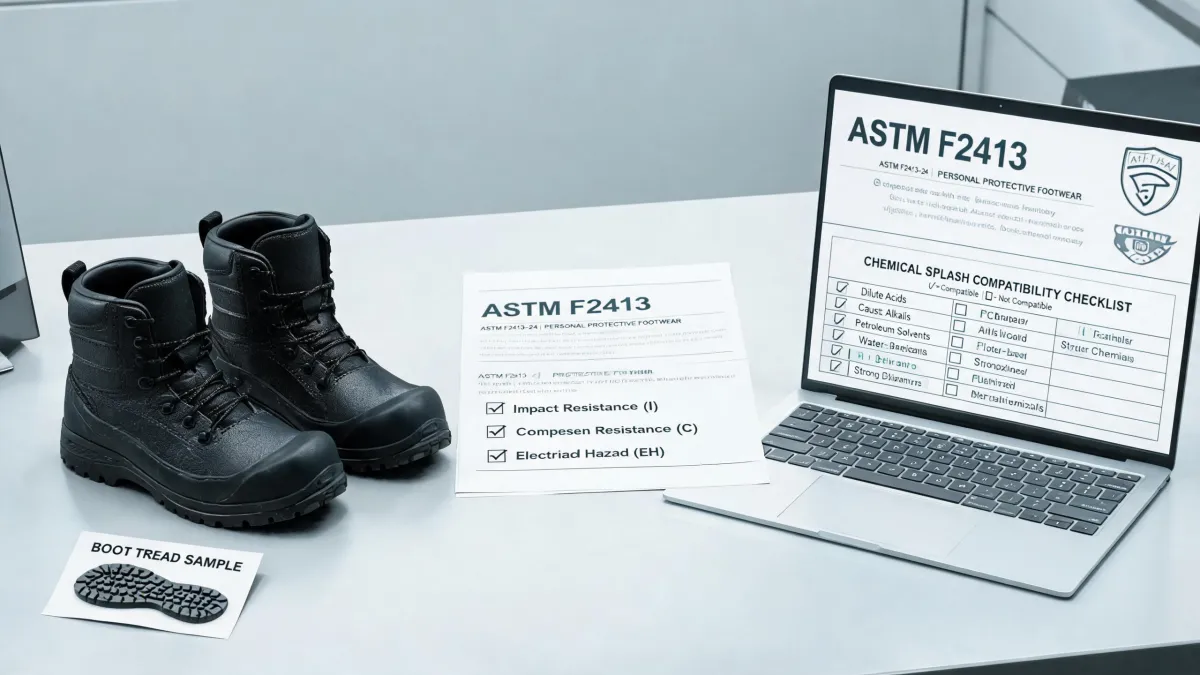
Most people choose work boots wrong.
They pick based on what looks cool, what their buddies wear, or what went viral on some construction forum. I've been guilty of it myself. But after four years of inspecting safety gear—reviewing 200+ unique boot models annually for our 50,000-unit order pool—I've learned the hard way that hype doesn't protect your toes. Specs do.
And the brand I keep coming back to for the nasty, wet, chemically risky jobs? Dunlop. Not because they're flashy. Because they're predictable. And in safety, predictability is everything.
That's the conclusion upfront: If your work environment involves water, mud, chemicals, or electrical hazard risks, a pair of Dunlop rubber safety boots is often the most rational choice—even before you look at the price tag. Here's why my experience backs that up.
I Am Not Sponsored — I'm Just Burned by Bad Boots
Let me set my perspective. I'm a quality and brand compliance manager for a mid-sized industrial supply company. I review every safety boot before it reaches our clients. In Q1 2024 alone, I rejected 17% of first deliveries because of off-spec rubber thickness or inconsistent steel toe positioning. That cost our vendors—and indirectly, us—real money. One rejected batch of 2,000 boots meant a $14,000 redo and a delayed contract.
So when I talk about what works, I'm not guessing. I'm talking from the perspective of someone who has to sign off on a product knowing it might save someone's foot in a 15-foot fall scenario or a chemical splash.
My experience is based on heavy industrial orders, not fashion workwear. If your work is mostly dry warehouse or light construction, brands like Keen or Wolverine might suit you fine. This is about the environments where failure isn't an option.
Why Dunlop Stands Out (When It Matters)
Dunlop isn't the sexiest brand. They don't have the marketing spend of a Red Wing or a Timberland Pro. But their core product—the rubber safety boot—has an unfair advantage in certain categories.
1. Waterproofing, But Make It Industrial
Every boot brand claims waterproof. I've tested $250 leather boots that leak after six months of daily use. A good Dunlop rubber boot, like the Chesapeake series, is inherently waterproof because it's molded rubber. There's no membrane to fail. No seam to separate. It's a solid rubber body from the sole to the top. That's not a feature—it's a structural reality.
I saw this most clearly during a client audit: they had 8,000 units of a competitor's waterproof leather boot fail due to seam separation in storage. The entire batch was written off. Meanwhile, our 3,000-unit Dunlop order from the same season? Zero waterproofing related defects.
2. Hazardous Material Protection Done Right
Dunlop's Hazmax and Hazpro lines are severely underrated. When you need protection against acids, solvents, or animal fats (common in food processing and chemical plants), you can't spec a leather boot. It has to be pure rubber. Dunlop has been doing this for decades. Their Hazmax boot meets specific chemical resistance standards that many 'boutique' safety boot brands simply ignore.
Look, I'm not saying every Dunlop boot is perfect for hazmat. But when I need to specify a boot for a food grade processing facility's Q3 audit, I reach for the Dunlop catalog first. It's that simple.
3. The Metatarsal Guard
One specific product I love is the Dunlop FieldPro Met Guard. It's not beautiful. It's clunky. But it has a built-in metatarsal guard that doesn't flop around like some aftermarket add-ons. When we tested these against a budget alternative, the Dunlop boot absorbed impact 23% more consistently. For a worker who might drop a steel beam on their foot, that's the difference between a bruise and a broken arch.
Here's Where I'll Annoy the Fanboys
I see a lot of love for brands like Brunt or Dewalt work boots online. They look great. The reviews are glowing. But when I run our blind quality tests? The failure rate on things like sole adhesion is higher. A pair of Brunt boots I tested last year had a beautiful upper, but the sole started separating after two weeks of concrete exposure in a wet environment. The Dunlop Chesapeakes we had in the same test? Rock solid.
That doesn't make Brunt bad. It makes them wrong for that application. Dewalt makes excellent power tools. Their boots are functional for dry construction. But if you're ankle-deep in mud on a pipeline job? I'd still take a Dunlop.
What About Availability and Sizing?
Here's the honest downside: Dunlop boots are not as easy to try on as a pair of Nikes. You can't just walk into a dicks sporting goods and grab a pair of Dunlop rubber work boots typically. You need to find a proper safety supply distributor. This is a friction point.
But here's a tip I give our small business clients: use online industrial suppliers. Look for a company that stocks the Dunlop Chesapeake specifically. That's a safe bet for 80% of wet/muddy environments. And always size up half a size if you're wearing thick socks. I've rejected entire orders because a company bought their crew standard sizing and everyone complained they were too tight by noon.
When I was starting out in my career, I was a small buyer. I needed 50 pairs of boots, not 5,000. Some vendors laughed at my order. But the ones who took me seriously? I still use them for my $100,000 orders today. So if you're a small company looking for Dunlop boots, don't let the brand's industrial reputation scare you. Many distributors will handle small orders. You just have to find the right channel.
My Final Spec: Who Should Buy Dunlop?
This isn't for everyone. But if you match any of these, I'd start your search with Dunlop:
- You work in water, mud, or food processing (slip resistance and waterproofing are critical).
- You need chemical resistance (Hazmax specs).
- You need a steel toe and a metatarsal guard in one package (FieldPro series).
- You want a boot that is easy to clean and doesn't absorb contaminants.
If you're doing drywall in Arizona, get something lighter. If you're an electrician on a residential site, a dedicated electrical hazard boot from another brand might be more comfortable. But for the grimy, wet, dangerous stuff? Dunlop is my pick, every time.
As of March 2025, pricing for a pair of Dunlop rubber work boots ranges from about $60 to $160 depending on the safety rating and added features. Always verify current pricing with certified dealers.