Someone on your team just sent you a link to a pair of Dunlop boots. Or maybe you were the one searching 'dunlop rubber boots near me' after two crew members came back from shift with wet socks.
Fair enough. But there isn't one single 'best' Dunlop boot. There's the right boot for your crew's conditions, and there's a very expensive mistake if you buy the wrong one. It took me years and a lot of spreadsheet rows to accept that.
Quick background: I handle procurement for a 90-person industrial maintenance company. For the past six years, I've tracked every PPE order in our cost system—over $180,000 in cumulative spending, with boots taking up a bigger slice of that than I'd like to admit. My first instinct as the cost guy was to standardize. Pick one boot, negotiate a volume price, and move on. That plan worked great until our washdown crew hated the insulated boots while the construction crew wore through non-insulated soles in four months. Same order batch. Two completely different problems.
I use this framing now: instead of asking 'which Dunlop boot should I buy?', ask 'what hazard is my team actually dealing with?' In most workplaces, the answer falls into one of three buckets:
- Wet, muddy, low-impact work — washdown areas, food plants, farms, outdoor utility crews
- Impact and compression hazards — construction, warehousing, work around heavy equipment
- Chemical exposure and hazmat work — spill response, chemical plants, waste handling
Different crews in the same company often land in different buckets. That's normal. You just can't buy one model for the whole building and call it done.
Scenario A: Wet Work, Mud, and Washdown Environments
If the floor gets hosed down between shifts, or the crew spends the day outside in mud and rain, the boot's main job is simple: keep water out. In our purchasing records, the men's Dunlop rubber boots category is what we order most for this exact situation.
I look for four things:
- One-piece rubber or polymer construction—seams are where water gets in.
- Tread that can grip wet concrete without collecting a layer of mud.
- Boot height that matches the water depth, not just ankle coverage.
- Insulation only when the crew actually works in cold conditions.
Wait, insulation deserves more explanation. Insulated rubber boots feel great in winter, but in a warm washdown bay they turn into sweat boxes. Complaints about odor and blisters follow within a week. Buy insulated boots for cold environments and non-insulated for warm ones, even if it means splitting the order by location.
Here's the budget trap I fell into early on. The $20 no-name rubber boot looks like the responsible cost decision, and I'm embarrassed to say I made it once. We bought 15 pairs of a discount boot for our washdown crew. Eleven pairs needed replacement within six months—splits at the flex point, punctured soles, one pair that basically disintegrated around the heel. When we switched to mid-range Dunlop rubber boots, the same crew got more than two years of use out of them. Cost per month of actual wear was about three times lower. That's the number that should drive the decision.
Scenario B: Impact and Compression Hazards
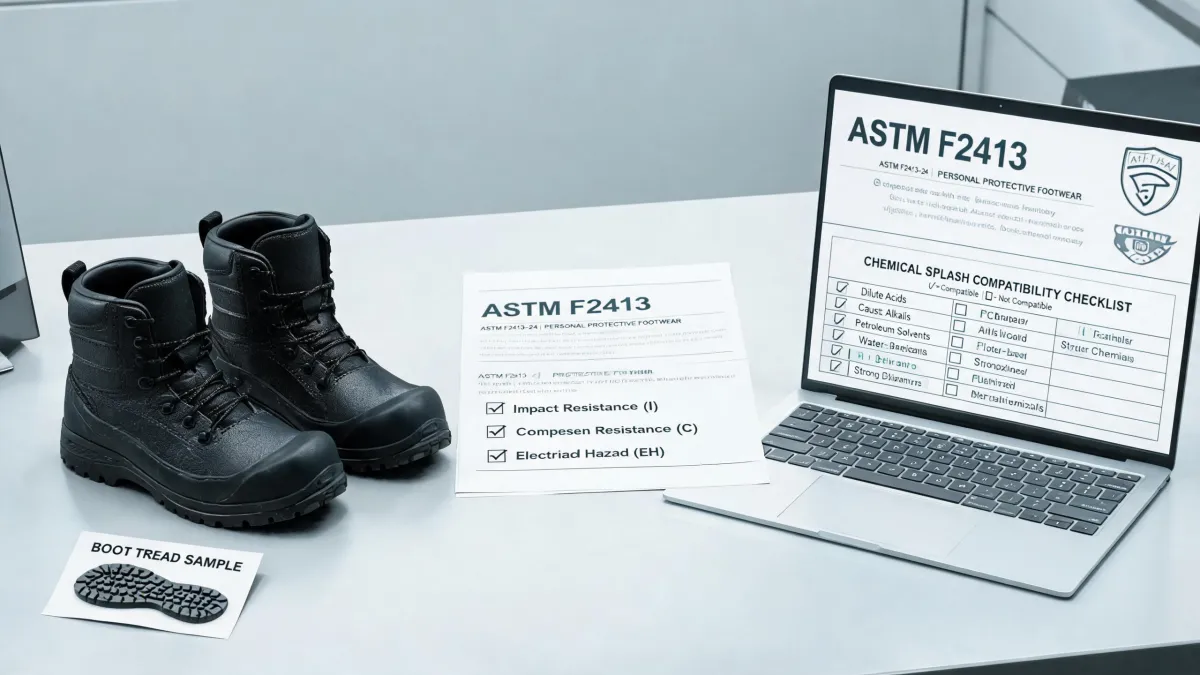
Here, people can drop things on their feet, step on rebar, or get a toe caught under a rolling load. A waterproof boot alone doesn't fix that. You need a boot with an impact-rated toe that meets ASTM F2413, the U.S. standard for protective footwear. If the boot doesn't carry that rating, the phrase 'steel toe' on the label is just marketing.
Once the rating checks out, the next question crews always ask is steel toe or composite toe. Steel toe models usually cost less and take a lot of physical punishment. But steel conducts cold. In a Michigan winter, a steel toe cap can get painfully cold, and more than one worker has left their 'safety' boots in the truck because of it. That isn't laziness; it's a design mismatch between the boot and the environment.
Composite toe boots cost more, but they're lighter and don't conduct cold the same way. For crews who work long shifts outdoors in winter, that difference is worth paying for. People often ask about Ariat composite toe boots because that brand has a strong following in the work boot world, and they do make a decent composite toe product. But when I compare quotes, I compare the rating, the sole compound, and the fit, not just the logo on the side.
The counterintuitive lesson: the cheaper steel toe boot can become the more expensive choice if workers avoid wearing it. We started choosing composite for our outdoor winter crews even though it raised the upfront cost. After two seasons, the number of 'forgot my boots' excuses dropped, and so did our minor foot injury reports.
Scenario C: Chemical Exposure and Hazmat Work
This scenario changes the whole conversation. If your crew works with acids, solvents, caustics, or hazardous waste, the boot's compatibility with specific chemicals matters more than its comfort rating.
I still kick myself for the time I ordered a 'chemical-resistant' boot because the product page sounded convincing. The boot was resistant to many things—just not the solvent blend that crew was using. We caught the issue before anyone got hurt, but it cost a day of downtime and a rushed reorder. Now I check the manufacturer's chemical resistance chart before I check the price.
Dunlop makes hazmat-grade boot styles for this exact work, but even a hazmat boot is not universal. Before ordering, I go through a short checklist:
- List the actual chemicals and concentrations the crew handles.
- Match them against the manufacturer's chemical resistance chart, not the boot's name.
- Pick a boot height based on splash risk, not style.
- Check compatibility with the rest of the PPE setup, like chemical suits and over-boot covers.
And here, I don't negotiate on price. If saving $20 per pair means giving up a chemical rating, that's not a saving; it's a gamble. One chemical exposure incident can generate costs that dwarf the entire boot order—medical reports, workers' comp, OSHA paperwork, lost productivity. That's a textbook case of prevention being cheaper than the cure.
Not Sure Which Scenario You're In? Walk the Floor
If you don't know which bucket fits your team, start by looking at the ground during a normal shift. Is it wet, muddy, or hosed down? That points to Scenario A. Are there overhead loads, stacked pallets, or forklift traffic? That points to Scenario B. Do you see chemical drums, safety data sheets, or hazmat labels? That points to Scenario C.
Ask the crew what they hate about their current boots. In about 30 seconds, you'll hear something like 'cold steel toes,' 'slippery soles when the floor is wet,' or 'water comes in over the top.' Those complaints are your purchase order.
While you're doing the walkthrough, keep the rest of the PPE conversation in view. Eye protection is a good example—the debate between safety glasses vs safety goggles usually comes down to the hazard type. Flying dust or debris? Glasses handle a lot of that. Liquid splash or fine airborne particles? Goggles give you the seal that glasses can't.
And if you manage facility compliance too, fold your other safety deadlines into the same planning session. The manager who searches for 'fire extinguisher inspection near me' a week before the audit deadline is the manager paying expedite fees. Schedule the inspection when you schedule the boot trial, and one less thing falls through the cracks.
Three Rules Before I Place Any Boot Order
After years of vendor calls and boot-related incident reports, here are my non-negotiables:
1. Test a sample pair before buying the full set. One or two workers with different foot shapes can tell you more than a spec sheet. Let them wear the boots for full shifts, then ask. A boot that feels fine at the counter can feel completely different after hour five on concrete.
2. Calculate cost per month of use, not cost per pair. Divide the boot price by the number of months it survives in your actual environment. That number exposes cheap boots faster than any argument I can make.
3. Treat 'near me' as useful, not as the whole strategy. Checking local stock for 'dunlop rubber boots near me' makes sense when you need boots by Monday. For the main order, start with certifications and compatibility. A nearby distributor that has the right boot is ideal—but proximity should be the last filter, not the first.
Bottom line: Dunlop boots are a solid choice when they match the scenario. Wet environments need waterproof rubber. Impact hazards need a real ASTM-rated toe. Chemical work needs documented resistance. The brand name is just the beginning.
If you take one thing from this, take this: a five-minute walk around the site and a quick conversation with the crew can save you thousands in wrong orders and lost work time. I've paid that tuition already, so you don't have to.