I've been handling safety boot orders for B2B clients since 2017. In that time, I've personally (and documented) at least a dozen significant buying mistakes, totaling about $8,000 in wasted budget. The biggest one? Thinking there is a single "best" boot for everyone.
Back in 2019, I tried to save time by buying one model for a whole crew—25 guys, all doing different jobs. I picked a rugged steel-toe rubber boot, thinking it was the safe choice. It wasn't. The electricians hated the weight. The guys working on dry concrete complained about sweaty feet. The only ones happy were the guys standing in mud all day. That $5,200 order turned into a $670 return hassle, a lost customer, and a lesson I won't forget.
So, if you're here wondering which Dunlop safety boot to buy for your team, stop looking for one answer. The real question is: what is your guys actually doing? Here are the three most common work scenarios I've seen, and the Dunlop boot that fits each one.
Scenario A: The Dry-Floor Crew (Warehouse, Assembly, Light Construction)
You're on concrete or dry ground all day. Maybe a warehouse floor, an assembly line, or a light construction site where the biggest hazard is dropping a box on your foot. Your main enemy isn't water—it's fatigue and heat.
My Mistake: I ordered a heavy, fully-lined rubber boot (the kind meant for standing in water) for a crew that never saw a puddle. The guys were complaining about sweaty feet by lunch. They were taking them off every break just to let their feet breathe. Two guys asked for transfers to other crews.
What I Should Have Done: Dunlop FieldPro or Active Duty II (Lightweight, non-lined).
These boots are lighter—way lighter than the traditional rubber boots. The FieldPro is a 100% waterproof rubber boot, but it's designed for agility. It's not insulated, so it breathes a bit better. The Active Duty II has a direct-attach construction that keeps it durable but not bulky. For a warehouse or dry construction gig, this is the sweet spot. You get the steel-toe protection, the slip-resistant outsole, and you don't feel like you're wearing buckets on your feet.
Key Check Before Buying:
- Check the weight. A lined rubber boot (like some Hazpro models) can weigh 3-4 pounds per boot. A FieldPro is under 2.5 pounds per boot. For an 8-hour shift on concrete, that adds up to a ton of energy saved.
- Verify the outsole. Even on dry floors, oil or grease can appear. Make sure the boot has a non-slip, oil-resistant rating. Both the FieldPro and Active Duty II have dual-density outsoles that handle this well.
Scenario B: The Wet & Muddy Site (Construction, Landscaping, Agriculture)
This is the classic work boot job. You're in mud, rain, maybe shallow water. You need a boot that seals out moisture, has serious ankle support, and can take a beating from rocks and tools. This is where Dunlop's rubber heritage really shines.
My Mistake: I once ordered a budget PVC boot (not Dunlop) to save $15 per pair. The PVC cracked after three weeks of cold-weather use. We had to replace 12 pairs out of a 30-pair order. The $450 we saved on the initial order? Swallowed by return shipping and replacements. Plus, one guy stepped in a puddle and got wet socks on Day 1. Not a good look.
What Works: Dunlop Active Duty (Classic Rubber) or Safety Direct (if you need extra insulation).
The classic Active Duty boot is the gold standard for wet environments. It's 100% waterproof rubber (not PVC), has a steel toe, and a proven outsole that grips mud and gravel really well. I've seen guys wear these for two years on a muddy site without a single leak. If you work in colder climates (frozen ground, snow), go for the Safety Direct which has a non-insulated but thicker rubber wall—or if you really need warmth, the Dunlop Isoflex but that's a rubber-on-rubber construction that's a bit heavier.
What Surprised Me:
The most common complaint I get for this scenario isn't about the boot's durability—it's about the smell. Guys wear the same rubber boot all day, every day, and never dry them out. You can buy the best boot in the world, but if your team doesn't air them out at night, they'll smell like a wet dog by Friday. I learned this the hard way when a customer blamed the boots. The boots were fine. The hygiene wasn't. Now I add a note to every order: "Buy a boot dryer or a spare pair."
Scenario C: The Hazmat/Chemical Zone (Industrial Processing, Mining, Oil & Gas)
You're not just worried about water—you're worried about acids, solvents, or other hazardous materials. A standard rubber boot won't cut it. You need a boot that's specifically tested against chemical permeation. This is a different league entirely.
My Mistake: I almost ordered the standard Active Duty for a client in an oil refinery. The rep asked me: "You sure these are rated for hydrocarbon exposure?" I didn't know. I checked the spec sheet. No. I had to scramble to get the right boot. It added a day to the timeline and cost $190 in expedited shipping.
What Works: Dunlop Hazmax Series (Model 7312 or similar).
The Hazmax is a fully vulcanized rubber (not PVC) boot that's tested against a wide range of chemicals. It has a different tread pattern for slippery, oily floors. The steel toe is cold-forged and highly resistant. This is not a boot you buy on price. You buy it for the peace of mind that the gasket is sealed, the rubber is compounded differently, and the boot has been independently tested (like EN ISO 20345 standards).
Total Cost Thinking on Hazmax:
I remember one client who chose a cheaper chemical boot (about $90 vs. $130 for the Hazmax). On day 6, the boot showed signs of degradation from a mild acid splash. They had to replace 18 pairs. That $40 saved per pair turned into a $720 total loss, plus the risk of exposure. The Hazmax is $130 as of early 2025 (check current pricing)—but if it prevents one chemical burn or a week of downtime, it's actually cheaper in the long run.
How To Tell Which Scenario You're In
Here's the part I wish someone had given me back in 2017. It's not always obvious which category you fall into. Here's a simple checklist I now use.
- Is there standing water or mud for more than 50% of the shift? If yes, you're Scenario B or C.
- Are you exposed to chemical liquids (acids, solvents, oils)? If yes, you're Scenario C. Do not buy a standard boot.
- Is the work surface mostly dry, hard floor (concrete, tile)? If yes, you're Scenario A. Go lightweight.
- Is the work surface wet but not chemically hazardous (rain, mud, shallow puddles)? If yes, Scenario B. You want a classic rubber boot but look at features like insulation based on climate.
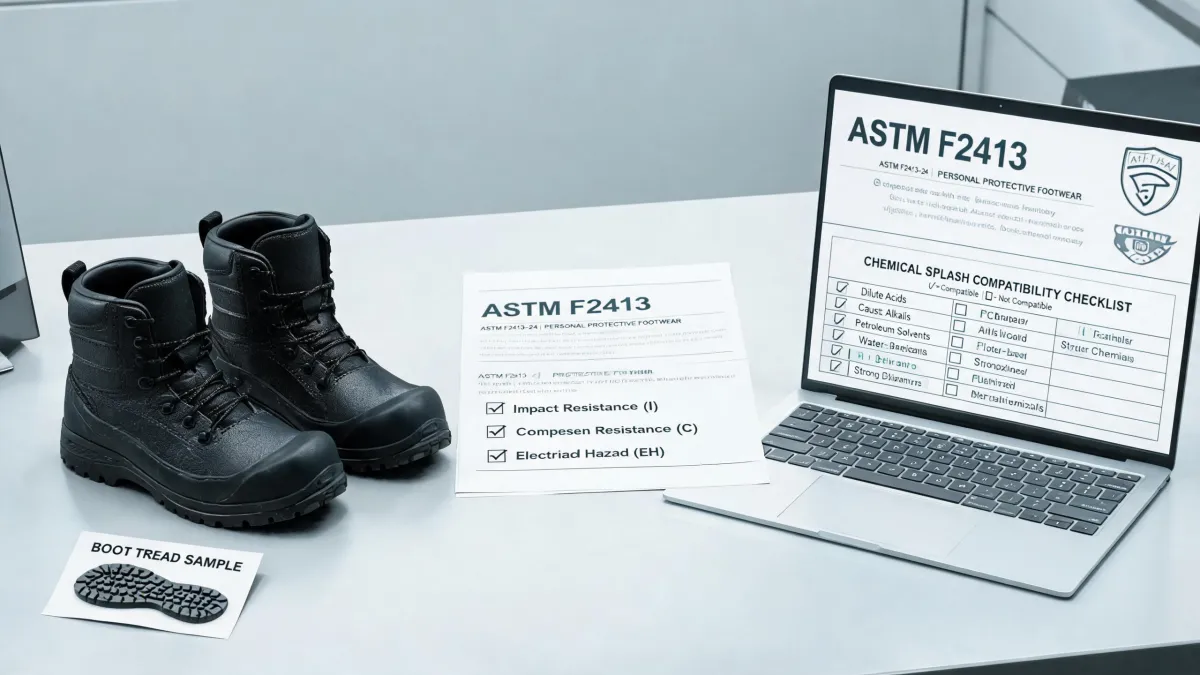
- What about electrical hazards? If your team works near live wires, you need a non-metallic steel toe or an EH-rated boot. Dunlop has specific EH-rated models. Do not assume all rubber boots are automatically non-conductive. Check the spec sheet.
I've seen teams buy the wrong boot because they thought "all safety boots are the same." They're not. The cost of a wrong boot isn't just the price tag—it's the fatigue, the safety risk, the decontamination, the smell complaint, the guy who walks off site because his feet hurt. That $800 quote from a mismatch? It cost me $1,200 in replacement, return shipping, and lost goodwill. I don't make that mistake anymore.
If you're ordering for a crew, and you're not sure which scenario fits, spend the extra half hour. Check the job site. Ask the guys what they stand on. Look at the safety data sheets for any chemicals present. The right boot for the right scenario will save you money, hassle, and maybe even a safety incident. I've seen it happen. And I've seen the opposite, too.