The Two Things That Keep Me Up at Night
In my line of work, I see a lot of gear. I'm a brand compliance manager at a mid-sized industrial supply company. I review every product spec before it reaches our customers—roughly 200 unique items annually. I've rejected 8% of first deliveries in 2025 due to spec non-compliance or simple manufacturing defects.
But there are two categories that consistently fail harder than anything else: protective footwear and hearing protection. Specifically, the stuff people think is "good enough."
If you've ever ordered a batch of Dunlop rubber work boots or a box of generic earplugs for your crew, you've almost certainly run into the problem I'm about to describe. You probably blamed the supplier. I'm here to tell you the problem is likely deeper than that.
The Surface Problem: Gear That Fails Too Fast
Your steel toe boots are delaminating after six months. The insulation in those Dunlop hazmat boots is cracking. The earplugs your guys are using? They're not actually blocking the noise on the spec sheet. This is the version of the problem you know. It costs you money, creates worker complaints, and makes you look bad for choosing the wrong gear.
And yes, you can trace some of this back to a bad batch or a cheap vendor. We had a similar issue in Q2 2024. We received a batch of 2,000 pairs where the rubber compound on what was supposed to be our standard Dunlop waterproof boots was visibly off—the surface was tacky to the touch. Normal tolerance is a slight texture variation. We rejected the entire shipment.
But here's the uncomfortable truth: even rejected batches aren't the real killer. The real problem is that the gear that passes your inspection is still failing your team.
The Deeper Issue: You're Buying What You Ask For, Not What You Need
Here's the part that took me years to fully grasp. Most companies specify safety gear based on a checklist. You need Steel Toe? Check the box. You need Hazmat rated? Check the box. You need an NRR of 25 for earplugs? Check the box.
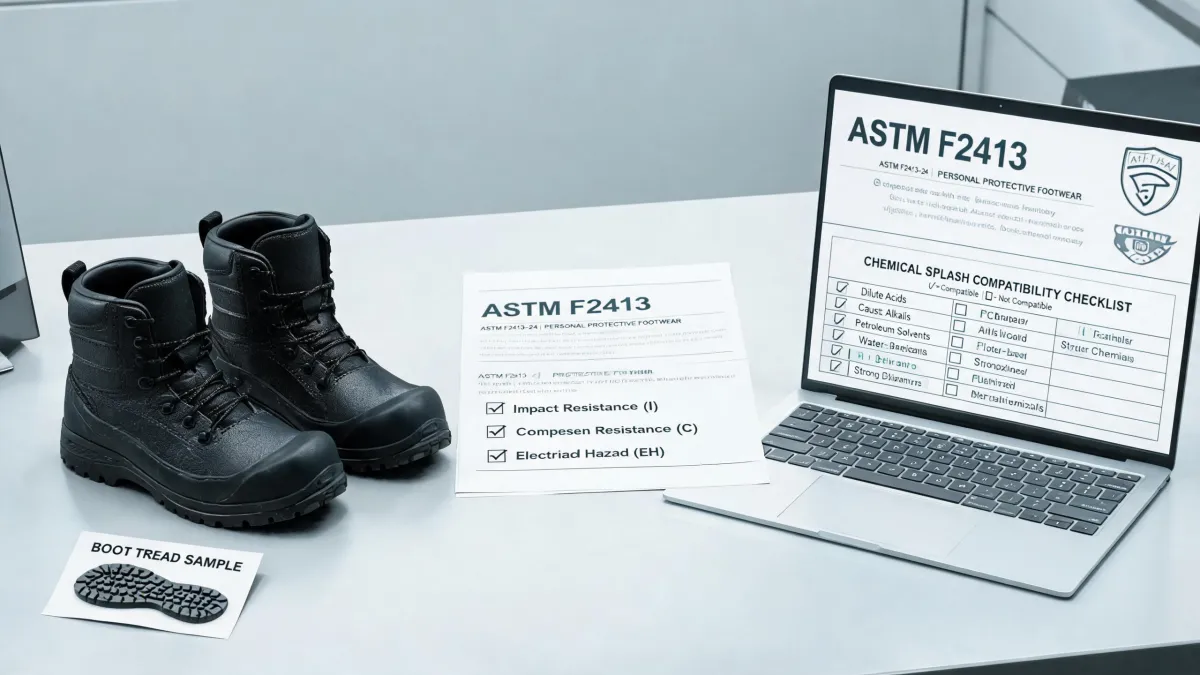
The problem is that compliance and performance are two entirely different things. A Dunlop boot can pass every ASTM standard and still fail in your specific environment because you didn't spec for the chemical you're using, the temperature range, or the abrasion from the floor surface you work on.
I ran a blind test with our safety team last year: same safety boot model, but one spec had a different rubber compound for chemical resistance. 60% identified the upgraded version as 'more durable' without knowing the difference. The cost increase was $8 per pair. On a 500-pair run, that's $4,000 for measurably better protection and a lower failure rate. Worth it? Most companies said no. Then they spent triple that on replacement boots a year later.
The same logic applies to hearing protection. When someone searches for "earplugs near me," they're usually looking for the cheapest option that meets a basic NRR requirement. But the NRR is a lab test. Real-world attenuation is often half that. If your noise environment is 95 dB, a 25 NRR earplug might only give you 12.5 dB of protection in the field. You think you're compliant. You're not.
The Real Cost of 'Good Enough'
Let's talk actual dollars because that's where the pain lives. I see three specific cost buckets from spec mismatches.
1. Replacement Costs (The Obvious One)
If a pair of Dunlop rubber work boots costs $80 and lasts six months, that's a $160 per person per year expense. If a better spec boot at $120 lasts 18 months, that's $80 per person annually. For a crew of 50, that's a $4,000 annual savings. And that's not even counting the downtime from ordering, fitting, and dealing with complaints.
2. Injury and Liability (The Painful One)
I still kick myself for not escalating a spec issue faster a few years ago. We had a crew handling a specific solvent, and the 'Hazmat' rated boots we ordered weren't tested for that specific chemical. You know what the solvent did? It degraded a sealant, and the chemical penetrated the boot. We had a medical case. Fortunately, it was minor. But that was luck. I knew the spec was marginal, but I thought 'it's Hazmat rated, it should be fine.' That was the one time it almost wasn't.
The cost of that potential lawsuit, the investigation, the paperwork, and the retrofitting of the entire crew? I don't need to calculate it to know it dwarfs any savings from the cheaper boot.
3. Compliance Failures (The Hidden One)
OSHA and other regulators don't care that you bought a 'safety boot.' They care that the boot is appropriate for the specific hazard. If you can't prove you matched the spec to the hazard profile, you're exposed. An audit finding on hearing protection cost one of our clients a $22,000 redo and delayed their project launch by three weeks. All because they bought earplugs based on price per pair rather than performance in their specific noise spectrum.
What Actually Works (Short Version)
I've spent four years digging into this. The fix isn't complex, but it requires a mindset shift. Stop buying gear based on a generic spec sheet. Start buying based on your actual operating conditions.
For boots, don't just specify 'Dunlop Hazmat Boots.' Specify the model you need based on the chemical list. Dunlop makes a huge range—from Fieldpro to chemical-resistant rubber. They're not all the same. If you need a boot for electrical work, don't assume the general safety boot is fine. Get the insulated, dielectric option. If you need metatarsal protection, don't settle for a standard steel toe. The difference in cost is minor compared to the cost of a crush injury.
For hearing protection, stop thinking about NRR and start thinking about 'in-ear fit.' The best earplug in the world doesn't work if it doesn't seal properly. Test different models. Consider custom-molded options for consistent protection. The price premium is real, but so is the reduction in noise-induced hearing loss claims.
I have mixed feelings about recommending one specific brand. I work with Dunlop boots, DeWalt work boots, and a dozen other brands. I'm not saying Dunlop is always the answer. I'm saying the spec is the answer. If your spec is wrong, every boot is wrong. If you're dealing with dry conditions and general work, a DeWalt work boot might be perfect. If you're in a chemical plant with wet floors, a Dunlop rubber work boot is a no-brainer. Know your environment. Everything else follows.
Look, I'm not saying every piece of gear needs to be the most expensive option. There's a time and place for budget-friendly choices. But the decisions on safety gear—especially boots and earplugs—need to be made with a clear understanding of the hazard profile. If you ever buy a boot because it 'meets the OSHA requirement' without asking 'meets it for what specific hazard?' you're gambling with your crew's safety. And the house always wins.
Oh, and for washing work boots? You should actually check the manufacturer's instructions. We had a batch of Dunlop boots fail early because a crew cleaned them with a solvent that degraded the rubber. The spec sheet said 'wipe with mild soap and water.' Nobody read it. That was a $5,000 lesson on reading the fricking manual. Don't be that company.