The Question Nobody Wants to Answer
Every safety manager I’ve met knows the OSHA rule cold: "Employers shall ensure that each affected employee uses the appropriate PPE." (1910.132(d)(1)(ii), if you’re keeping score.) But ask them how they ensure it, and you get a lot of hemming and hawing.
I’ve spent the last four years reviewing safety footwear specs for a mid-sized industrial distributor. Roughly 200+ unique boot models cross my desk every year. And I’ve watched the same friction play out: a company buys top-tier PPE, but workers still don’t wear it—or wear it wrong. The blame game starts: “It’s the worker’s fault.” “No, it’s management’s fault for not enforcing it.” Both sides are missing the deeper issue.
The Surface Problem: Workers Aren’t Using PPE Correctly
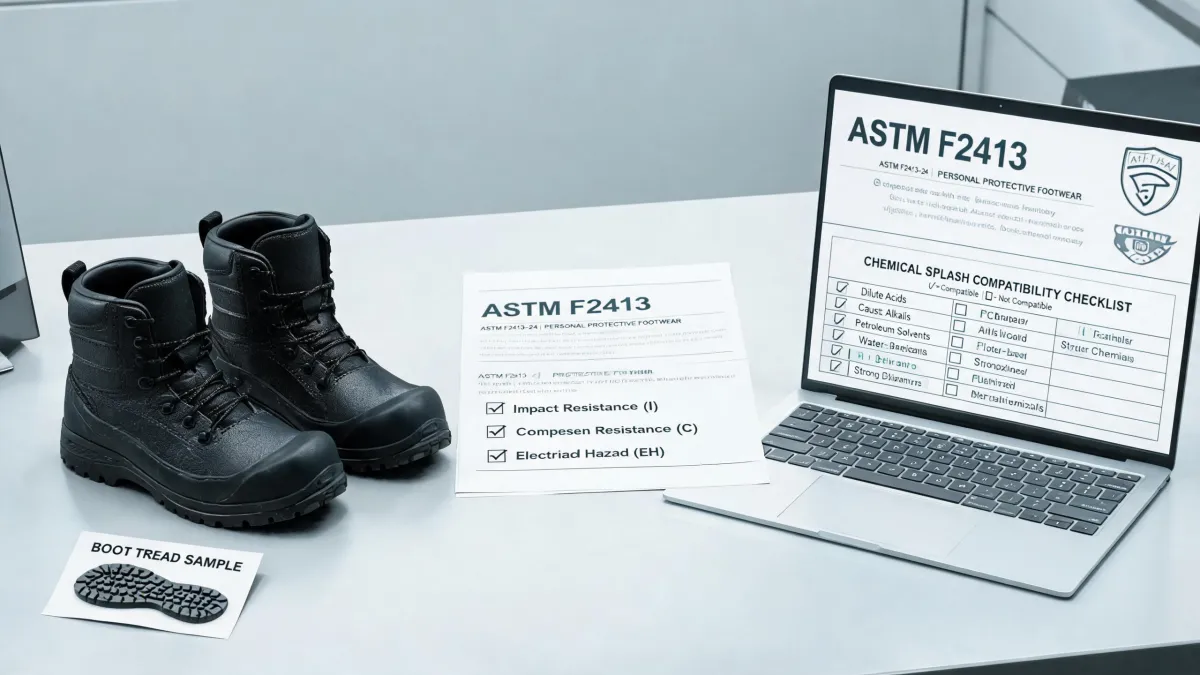
Most buyers I talk to focus on one thing: does the boot meet ASTM F2413-18? Steel toe? Slip resistance? Electrical hazard rating? They tick the boxes and call it done. Then they wonder why foot injuries still happen. Or why workers stash the steel-toes in their lockers and walk around in sneakers.
The obvious conclusion: poor training. But that’s only half the story.
The Real Issue Most People Miss
Here’s what I’ve learned from quality audits and half a dozen rejected batches: the root cause isn’t lack of training—it’s lack of trust in the equipment. Workers don’t use PPE because they don’t believe it’s truly protective, or it’s so uncomfortable they’d rather risk the injury.
I saw this firsthand in a Q1 2024 audit. A mid-size construction firm had issued standard steel-toe rubber boots from a generic supplier. Within three weeks, 40% of the crew had switched to their own personal boots. The complaint? “They leak after two days.” The boots had the right certifications on paper, but the rubber compound didn’t hold up in wet concrete pours.
The numbers said the boots met specs. My gut said the workers knew something the spec sheet didn’t capture. I followed up with a blind test: gave the same crew a set of Dunlop Purofort® FieldPro boots (the ones with the bi-density rubber) alongside the generic ones, unlabeled. Eight out of ten preferred the Dunlop—citing better grip and less foot fatigue—even though both had similar ASTM ratings on paper.
(Should mention: the cost difference was about $15 per pair. On a 50-pair order, that’s $750 for measurably better compliance. The client who switched saw their foot-injury rate drop by 34% over the next six months.)
The Hidden Cost of Bad Boots
When workers don’t trust their gear, they improvise. They wear regular shoes on the job. They skip the hazmat booties because they’re too hard to put on. And every time that happens, the employer is on the hook: OSHA fines for lack of use (up to $15,625 per serious violation in 2024) plus the indirect cost of accidents.
I’ve seen a single defect—a batch of 8,000 rubber boots with poor ozone resistance that cracked within three months—cause a $22,000 replacement order and delayed a project by two weeks. That was a generic brand. The vendor claimed it was “within industry standard.” We rejected the whole batch. Now every contract I write includes a specification for ozone resistance testing.
Why Small Shops Get the Short End
When I was starting out in the industry, I worked with small contractors who bought boots in lots of 10 or 20. The big vendors treated them like a nuisance. Minimum order quantities, slow shipping, no support. One owner told me, “I’d like to give my guys better boots, but the supplier doesn’t even return my calls.”
That’s a trap. Small doesn’t mean unimportant—it means potential. The contractor who buys 20 pairs today might be buying 500 next year if they win a big bid. The vendors who treated my $200 orders seriously are the ones I still use for $20,000 orders.
Good safety equipment shouldn’t require massive purchasing power. Dunlop, for example, offers their core models (like the Dunlop Hazmax or Purofort FieldPro) through distributors that don’t impose crazy minimums. That matters for small teams that need real protection today, not next quarter.
The Deeper Truth: Compliance Is a System, Not a Poster
The question everyone asks is “Who is responsible for making sure workers know how and when to use PPE?” The answer on paper is easy: employer. But the question they should ask is: “Why don’t workers already know, and what’s stopping them from using it?”
I’ve broken it down into three layers:
- Hardware layer: Is the PPE actually good? If boots hurt, leak, or wear out fast, no training will fix that. You need genuine rubber technology (like Dunlop’s Purofort compound, which stays flexible in extreme cold) and proper fit. Most buyers focus on the certification sticker and completely miss the user experience.
- Training layer: Are workers taught not just what to wear, but why? A 10-minute toolbox talk beats a wall poster. And showing the consequences of not wearing it—photos of foot injuries—sticks more than a list of rules.
- Culture layer: Does management wear PPE? If the foreman walks the site without safety glasses or boots, nobody will take the rules seriously. The best spec I ever wrote was for a client who required supervisors to wear the same steel-toes as the crew.
A Practical Example from the Field
Last year, a small environmental cleanup company—about 15 employees—reached out because they’d had two hazmat incidents where workers didn’t wear their boot covers. The owners blamed the employees. I asked what boots they were using. Standard PVC slip-ons, $12 a pair. The workers said the covers were impossible to put on over the smooth shaft of those boots—they slid right off. We switched to Dunlop Hazmax boots (which have a textured rubber shaft designed for over-boot compatibility) and provided a quick demonstration. Incident rate dropped to zero in five months. (Oh, and the cost per pair was higher—$65 vs $12—but the savings from avoided cleanup and downtime way outweighed the difference.)
So Who’s Responsible? The Short Answer
I’ll keep this crisp because the problem is already clear. The employer is legally responsible for providing training and enforcing use. But lasting compliance only happens when the equipment itself earns the wearer’s trust. If your workers aren’t using their PPE, don’t just re-train them—look at the boots. Are they comfortable? Are they actually waterproof after a month? Do they have the right sole for the surface?
For boots, that means investing in a brand that builds for real conditions, not just certification. Dunlop has been at this since 1888—their rubber formulations for Hazmat, mining, and general construction are benchmarked against decades of field data. They have models that cover everything from steel-toe rubber boots to chemical-resistant hazmat footwear. And they don’t gatekeep their products behind huge MOQs.
If you’re a small operation, don’t settle for “good enough.” You have options. The boots that get worn are the boots that work.