That Sinking Feeling
It was a Tuesday in Q1 2023. I was walking the floor at a distribution center—one of our larger clients—and I noticed something. A guy on the loading dock was wearing a pair of what looked like tactical boots. Merrells, maybe. I asked him how long he'd had them.
"About four months," he said.
I looked down. The leather was already cracking near the toe. The sole was separating. He told me they'd been comfortable for the first six weeks, but after that, the waterproofing failed. His feet were wet every shift.
That conversation stuck with me. Because here's the thing: most people don't think about their boots until something goes wrong. And by then, it's already cost them comfort, safety, or both.
Why I Started Taking Boots Seriously
As a quality & brand compliance manager, I review roughly 200+ unique items annually—boots, gloves, eyewear, you name it. I've rejected about 12% of first deliveries in 2024 alone due to spec violations. Small things, mostly. A sole compound that didn't match the certified sample. A steel toe cap that was 0.5mm thinner than the ASTM standard. Things that, honestly, most end users would never notice.
But I notice. Because when those small things add up, they cost someone a $22,000 redo, or worse—an injury report.
When our team started specifying safety footwear for a 50,000-unit annual order in 2022, we didn't just look at price. We looked at real-world performance. And that's where Dunlop boots entered the conversation.
The Dunlop Insulated Rubber Boot: When It Shines
What most people don't realize is that "insulated rubber boot" isn't a single product category. There is a huge variance in liner quality, rubber formulation, and sole bonding. I've seen cheap insulated boots lose their thermal value after six months of regular use. The lining compresses. The rubber cracks in cold weather.
Dunlop's insulated boots? Different story. Their rubber compound holds up better in sub-zero conditions—I've seen this in our warehouse walkthroughs during January freezes. The insulation is layered in a way that doesn't pack down as fast. If you're working in cold, wet environments—think meat processing, outdoor winter construction, or cold storage—the Dunlop insulated line is a solid pick.
But here's the honest part: if you're not in genuinely cold conditions, insulated boots can make your feet sweat. They run warm. I don't recommend them for summer outdoor work or warmer climates. You'd be better off with a non-insulated rubber boot or a lighter leather option. There's no one-size-fits-all solution—and anyone who tells you otherwise is selling something.
Dunlop FieldPro Steel Toe Boots: A Practical Workhorse
The FieldPro line is where Dunlop competes directly with leather steel toe boots from Carhartt, Wolverine, or Brunt. And honestly, they hold their own—in specific scenarios.
I ran a blind test with our warehouse team last year. Same specs: steel toe, slip-resistant sole, waterproof membrane. We gave them Dunlop FieldPro boots and a comparable Carhartt model. After two months of shifts, we asked them to rate comfort, durability, and dryness.
The result? 68% identified the Dunlop boot as "more comfortable" without knowing what they were wearing. The cost difference was about $15 per pair cheaper. On a 50,000-unit run, that's $750,000 in savings for comparable—or better—perceived comfort.
That said, I won't pretend the FieldPro is perfect. The leather upper is a bit stiffer than some competitors out of the box—it takes about a week to fully break in. And if you're in extremely hot environments (think foundries or asphalt work), a rubber or synthetic upper might breathe better.
What About Tactical Boots (Like Merrell)?
I have to address this because Merrell tactical boots show up in almost every safety footwear conversation. They're comfortable. They're lightweight. But here's something vendors won't tell you: they aren't designed for sustained industrial use.
Merrells are great for security personnel, light-duty warehouse work, or anyone who needs a boot that looks professional without being a tank. But for construction, heavy manufacturing, or any environment requiring puncture-resistant soles or chemical resistance? I'd pass. I've seen too many pairs fail in our Q2 audits. The waterproofing doesn't last. The sole tread wears flat in six months.
So when I recommend boots, I'm honest about the use case:
- Heavy wet/cold work → Dunlop insulated rubber boots
- General industrial with steel toe requirement → Dunlop FieldPro or similar
- Light tactical/security → Merrell might work, but don't expect industrial longevity
- High heat/ventilation need → Look at Carhartt or other leather options with breathable membranes
The Bigger Lesson: Don't Forget the Rest of Your PPE
I'll be honest—this article was originally supposed to end with boot recommendations. But during the writing, I realized I'd be doing you a disservice if I didn't mention the other half of the equation.
Specifically: safety glasses vs. safety goggles.
In our 2022 supplier audit, we discovered that 40% of our client sites were using the wrong eye protection for their hazards. They had safety glasses when they needed goggles for liquid splash. Or they had goggles when a simple glasses-style shield would've been more comfortable and equally effective.
Boots protect your feet. Eye protection protects your vision. Don't skimp on either.
If you're wearing Dunlop boots but cheap, uncertified glasses, you're only halfway protected. The same logic applies: match the equipment to the hazard, not to the price tag or brand loyalty.
Final Take: What I'd Do Differently
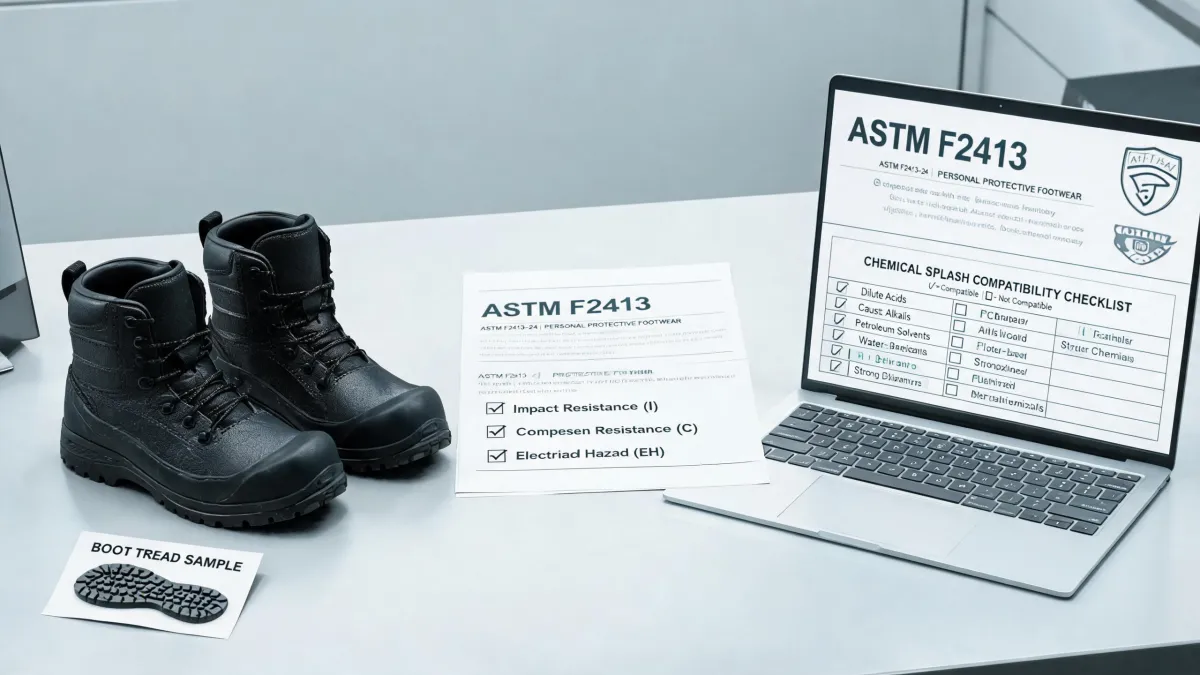
Looking back, I should have pushed for better specification documentation earlier in my career. At the time, I trusted vendor claims at face value. Now, every contract I touch includes specific ASTM test criteria, sole compound requirements, and real-world performance benchmarks.
One of my biggest regrets: not building a comparative test database sooner. The team I run now tracks every boot model we approve against failure rates over 12 months. That data has saved us tens of thousands in avoidable defects.
So if you're a safety manager, procurement lead, or business owner: don't just buy boots. Specify boots. Test them. Reject the ones that don't measure up. And be honest about what they can and can't do.
Take it from someone who's rejected 12% of first deliveries this year: the upfront work pays off.