-
Who This Checklist Is For
-
Step 1: Map Out Your Workplace Hazards First
-
Step 2: Choose Footwear by Total Cost, Not Just Unit Price
- Step 3: Don't Forget the Other PPE – Fire Extinguishers & Safety Goggles
-
Step 4: Verify Certifications Before You Click “Buy”
-
Step 5: When You Need Waterproof – Buy It or Make It
-
Step 6: Finalize the Order – Double‑Check Quantities & Invoicing
-
Common Mistakes to Avoid
Who This Checklist Is For
If you're the person in charge of ordering PPE for your company (and let's be honest, it's usually the admin who gets stuck with it), this list is for you. I manage purchasing for a 150-person manufacturing facility—roughly $85,000 annually across 12 vendors. Over the past four years I've learned what works and what burns the budget. This checklist covers the five things I now do before every safety boot or PPE order. Nothing fancy, just the steps that save me headaches.
Step 1: Map Out Your Workplace Hazards First
You can't pick the right gear until you know what your people are actually stepping into. Walk the floor or talk to the ops manager. Write down specific exposures:
- Wet or slippery surfaces? → Dunlop rubber boots (their FieldPro line is solid for wet concrete).
- Chemical spills or hazmat zones? → You need Dunlop chemical resistant boots, not just any rubber boot. Check the material chart.
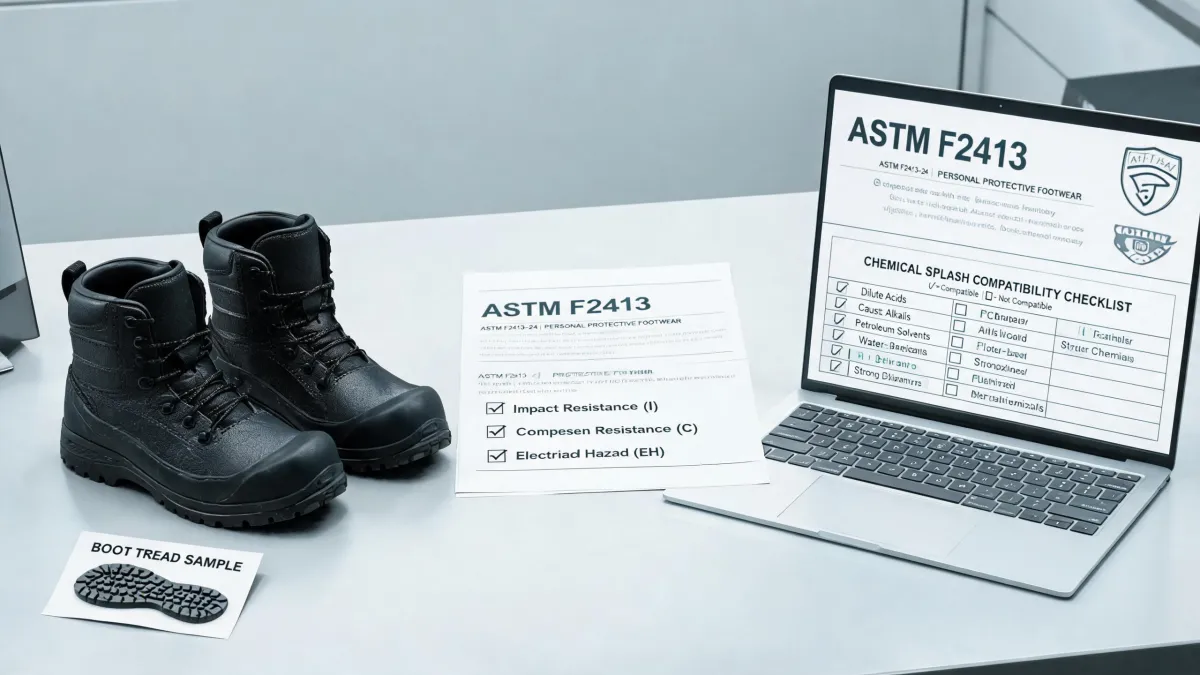
- Heavy falling objects? → Steel toe or composite toe required. The Dunlop FieldPro steel toe work boots meet ASTM F2413-18 standards—I verified that before ordering.
- Electrical hazards? → Look for electrical hazard rated (EH) boots. Dunlop makes insulated models too.
I made this mistake my first year: I ordered “general purpose” safety boots for everyone because they were $12 cheaper per pair. Two months later, a chemical spill on the production floor meant three employees had to stop work and swap boots. The downtime alone cost more than the $600 I thought I saved. (Honestly, I still cringe thinking about it.)
Step 2: Choose Footwear by Total Cost, Not Just Unit Price
I have mixed feelings about the cheapest option. On one hand, your finance team loves seeing low line items. On the other, a boot that fails after four months is way more expensive than one that lasts a year. Dunlop boots are priced mid‑range, but here's why I keep ordering them: their FieldPro steel toe boots hold up in our oily, wet environment for 10–12 months. The $19 difference per pair over a cheaper brand saved us two reorder cycles annually.
A quick TCO breakdown for 40 employees:
- $56/pair cheap boots (last 5 months) → 2.4 replacements/year → $5,376 annually
- $75/pair Dunlop (last 11 months) → 1.1 replacements/year → $3,300 annually
That $1,900 difference is real. Plus, fewer reorder cycles means less admin time (which, let's be honest, is worth something).
Step 3: Don't Forget the Other PPE – Fire Extinguishers & Safety Goggles
Footwear is one piece. If you're placing a safety order, you might as well bundle fire extinguishers and goggles to save shipping.
Fire extinguisher near me – how to source locally
Type "fire extinguisher near me" and you'll get local safety supply houses. I recommend calling three of them and asking for a bulk discount on 5lb ABC extinguishers. Don't just buy online—local vendors often refill for free if you buy from them. (We learned this after our vendor consolidation project in early 2024 cut our extinguisher costs by 22%.)
Safety goggles – the one people forget
Order anti‑fog, scratch‑resistant goggles by the case. The $3 ones from discount stores fog up in 20 minutes; employees toss them and work unprotected. Spend $8–10 per pair and it'll actually get worn. I switched to a mid‑range goggle from a reputable brand (not naming, but you know the ones) and our safety incident rate dropped—no joke.
Step 4: Verify Certifications Before You Click “Buy”
Per OSHA 29 CFR 1910.132, you're required to provide PPE that fits the hazard. But a vendor can claim “meets OSHA standards” and still sell junk. Always check the stamp on the boot: ASTM F2413, ASTM F2412, or ISO 20345. For chemical resistance, look for permeation test data (Dunlop publishes theirs on the product page). That saved me once—the third time I ordered hazmat boots for our lab, I finally created a verification checklist. Should have done it after the first time a vendor sent unlined rubber boots that failed within a week.
Step 5: When You Need Waterproof – Buy It or Make It
Some work boots start waterproof; others need treatment. Dunlop FieldPro boots are seam‑sealed and waterproof out of the box (thankfully—dodged a bullet when I ordered the non‑waterproof version once). But if you already own leather boots or need extra protection, here's how to waterproof work boots at home:
- Clean off all dirt and let them dry completely.
- Apply a waterproofing spray (like Nikwax or a silicone‑based one) evenly.
- Let it cure for 24 hours before wearing in wet conditions.
- Reapply every 2–3 months or after heavy use.
We keep a bottle of spray in the supply closet so employees can retreat their boots on demand. Much cheaper than buying new pairs every season.
Step 6: Finalize the Order – Double‑Check Quantities & Invoicing
This is where most admins slip up. We didn't have a formal approval chain for rush orders. Cost us when an unauthorized rush fee showed up on the invoice—$340 for expedited shipping the ops manager requested verbally. Now I require written approval for anything outside standard delivery.
Before you submit that PO:
- Confirm sizing chart is correct (get your employees' sizes in advance).
- Ask for a pro‑forma invoice with all fees listed.
- Verify the vendor accepts your company's PO terms (net 30, etc.).
- Save the certificate of compliance for your safety records.
Common Mistakes to Avoid
I've seen (and made) a few doozies:
- Ordering one size fits all. Steel‑toe boots vary by brand. Get a sizing kit first.
- Ignoring shipment dates. The listed “3–5 business days” can slip. I always add a buffer of a week.
- Not checking insurance requirements. Some facilities require specific safety ratings for fire extinguishers—verify with your local fire marshal.
- Assuming expensive = better. I've returned $180 boots that felt like cardboard. The Dunlop FieldPro at $75 outlasted them. Always read real user reviews, not just the number of stars.
That's it—six steps that keep my ordering process smooth, my budget under control, and my internal customers (the ops team) happy. Take it from someone who learned the hard way: spend the upfront time on this checklist, and you'll save hours of rework and dozens of grumpy emails.