If you're searching for "dunlop boots" or "dunlop rubber steel toe boots," you've probably already figured out there isn't just one perfect pair. I learned this the hard way. Back in 2018, I ordered 60 pairs of a single model for our crew without checking the actual job site conditions. I figured, "Hey, they're Dunlop. They're tough. What's the worst that could happen?"
Well, about $2,700 worth of product sat unused for a year because we bought the wrong type. That was the year I started documenting pitfalls instead of just posting POs. So, this isn't a generic guide. It's the kind of thing I wish someone had told me before I made those mistakes. The truth is, the best boot for you depends entirely on what you're stepping into.
The Three Main Scenarios (Find Yours)
There's no single "best" Dunlop boot. The decision splits pretty cleanly into three paths based on your primary environment:
- Scenario A: You're mostly working in dry conditions—fabrication shops, warehouses, or general construction.
- Scenario B: You're dealing with persistent wet, muddy, or chemical environments—think oil fields, wastewater treatment, or Hazmat suits.
- Scenario C: You need a tactical or extreme-duty boot that handles fire, electrical hazards, or heavy abrasion.
I'll walk through each, but fair warning: the advice for Scenario B is probably different from what you've heard.
Scenario A: The Dry Shop or Warehouse (The Leather Trap)
Most people assume all work boots need to be leather. And for a lot of dry environments, a good pair of brown work boots or composite toe leather boots makes sense. They breathe better, and they flex with your ankle.
But here's the mistake I made repeatedly: I bought standard leather boots for guys who were occasionally stepping into water. The leather soaked through, took three days to dry, and the boots were ruined in six months. If 90% of your work is dry, go with leather. But if you're hitting puddles or wet concrete even once a week, you need rubber.
From my procurement perspective, the Dunlop FieldPro series (rubber, steel toe) is often overkill for warehouse work. Stick with the Purofort series if you need lightweight rubber for occasional wet spots. They aren't as tough as the steel-toe rubber boots, but they won't kill your feet over a 10-hour shift.
Scenario B: The Wet and Hazardous World (Why I Changed My Mind)
This is where most of my budget went wrong. People assume that for Hazmat or chemical environments, you just buy the biggest, thickest rubber boot you can find. From the outside, it looks like more rubber equals more protection. The reality is you need to match the chemical.
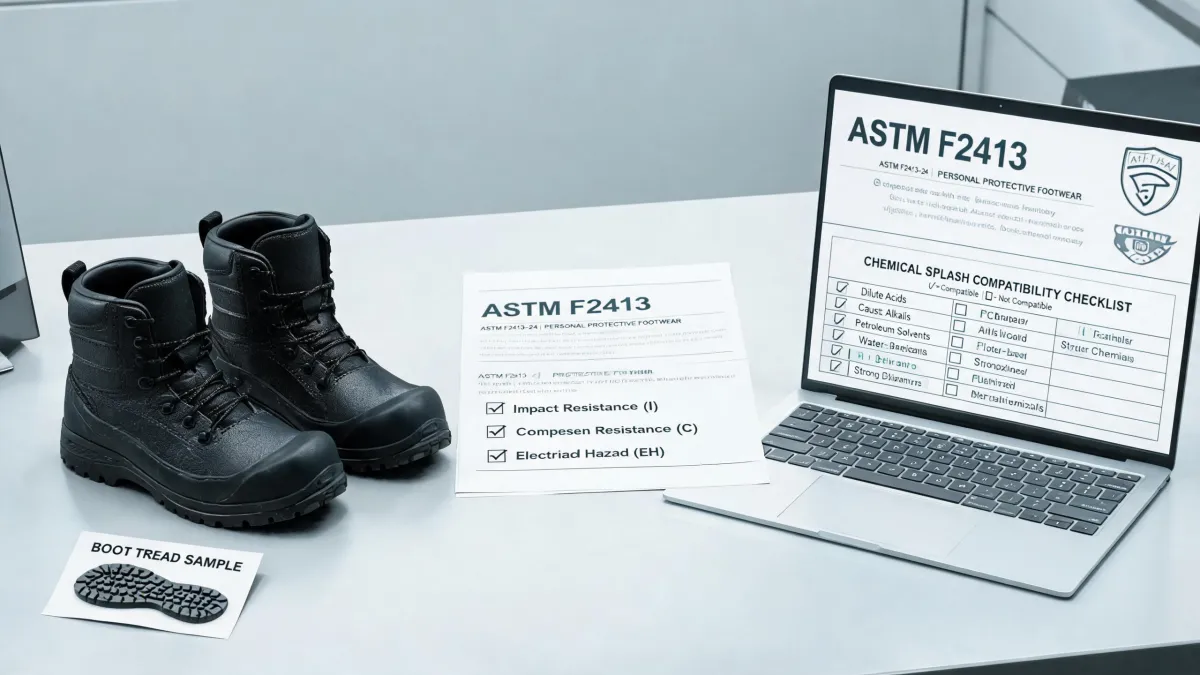
I once ordered 40 pairs of standard dunlop rubber steel toe boots for a crew working with mild solvents. The rubber started cracking within two weeks. We had to pull everyone off site and replace the boots with the specific Dunlop Hazmax line, which is formulated for oil and chemical resistance. That swap cost us the original boot price plus a $890 reorder fee and a 3-day delay. Looking back, I should have called the Dunlop rep and asked for a chemical compatibility chart. At the time, I thought all rubber was the same.
If you're in this scenario, don't guess. Look for boots with a Hazmat or chemical-resistant rating. The Dunlop Hazmax or Butyl 9726 are the go-to options. And if you need insulation for cold wet work, the Dunlop insulated steel toe models are worth the extra weight. Forget the price first. Calculate the cost of a failure.
Scenario C: The Edge Case (Tactical and Extreme)
I get questions about danner tactical boots and how they compare. Look, I'm not a tactical specialist, and I can't speak to military load-carriage specifics. From a site-safety manager's perspective—which is my wheelhouse—Danner makes exceptional boots for dry, mobile work. But they aren't rubber. They won't hold up to Hazmat or constant immersion.
If you need tactical-level durability and the waterproofing of a rubber boot, you're looking at a different niche. In that case, the Dunlop High Density Rubber (HDR) or VIP Pro models are what I'd spec. They're overbuilt, usually with metatarsal guards, and they take a beating. They don't breathe, so foot sweat is a problem—but if you're choosing between wet socks and burns, you take the sweat.
How to Pick the Right One (Without Repeating My Mistakes)
Here's the straightforward checklist I now use before any boot order. It's saved us an estimated $4,200 in potential rework in the past 18 months.
- What is the primary liquid hazard? Water? Oil? Acid? Solvent? Check the boot's chemical resistance chart. If you can't find one, don't buy it.
- Is the surface constantly wet or just damp? Constantly wet = full rubber (like the dunlop rubber boots near me searches turn up, but get the right spec). Damp = a Purofort or rubber overboot is fine.
- Do you need steel toe or composite? Steel toe (including dunlop rubber steel toe boots) is the standard for impact. Composite is lighter and doesn't conduct cold, but I've seen them fail on metatarsal impacts. I lean steel unless the job site has metal detectors.
- How long is the shift? For an 8-hour shift, the weight difference matters. A heavy Hazmax boot will tire a crew out by hour 6. For 4-hour shifts, weight is less of a concern than puncture resistance.
This isn't a complete guide, and this pricing was accurate as of Q4 2024 (the market for rubber compounds fluctuates with oil prices, so always verify current costs). But if you follow that checklist, you'll avoid the biggest pitfall I see: buying the wrong boot because it looked tough.
A good pair of Dunlop boots should last 1-2 years in a harsh environment. Over that time, the cost of the boot is trivial compared to the lost labor from wet feet or a chemical mishap. Don't learn that lesson the expensive way.