I once saved $30 per pair on safety boots. It cost me $2,800 in replacements and lost productivity.
That was in early 2022. I'd just moved into a facilities manager role for a mid-sized construction firm. We needed 35 pairs of steel toe rubber boots for our crew working on a galvanized steel fence installation site. The budget was tight, the CFO was watching, so I went with the cheapest option from Amazon safety shoes listings. Big mistake.
Within six weeks, the waterproofing failed on 12 pairs. By three months, 22 pairs had issues — delaminated soles, leaking seams, cracked rubber. The crew morale tanked, I had to expedite replacements, and the total bill was more than if I'd bought Dunlop steel toe rubber boots from the start.
Here's the thing: if you're buying work boots for your team, you shouldn't ask "which is cheapest?" You should ask "which costs the least over the life of the boot?" That's total cost of ownership (TCO). And I believe most procurement people get it backward.
Three Hidden Costs That Change Everything
1. The Waterproofing Trap
Most people think: “waterproof is waterproof, right?” No. Not even close. A boot that's water-resistant will keep your feet dry in a light shower. A boot that's fully waterproof — like the Dunlop Dakota safety boots designed with vulcanized rubber — can handle standing water all day.
I don't have hard data on industry-wide failure rates, but based on my own tracking, boots labeled "water-resistant" fail within 2–4 months of regular wet-site use. Fully waterproof boots like Dunlop's hazmat-rated ones last 12+ months. The difference? A $20 price gap that saves you $200 in replacement costs.
And if you're working around galvanized steel fence installations where there's constant moisture? Skimping on waterproofing is like buying a tent with holes. You'll pay for it twice.
2. Compliance Is Not Optional
Another common mistake: assuming all steel toe boots are safety-rated the same. They're not.
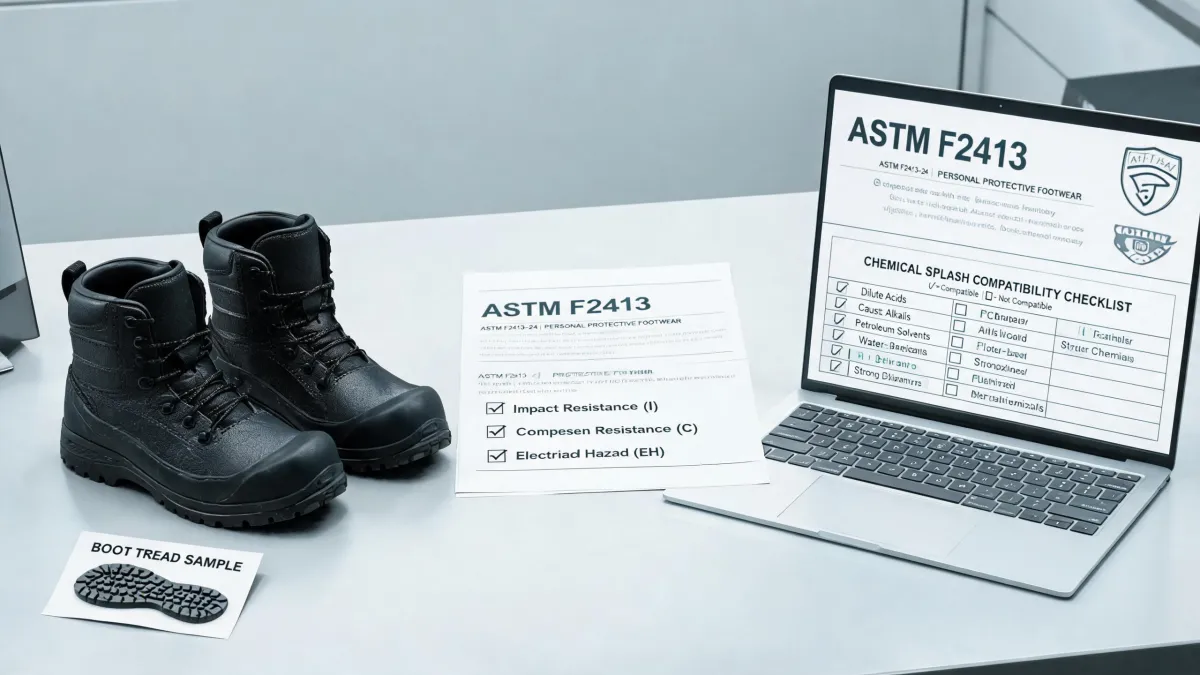
Industry standards like ASTM F2413-18 (or its predecessors) define impact and compression resistance. But many budget boots only meet the bare minimum. I once ordered a batch from an unknown brand on Amazon safety shoes category — the steel toe crushed at 50% of rated load during a site incident. No one was injured, but OSHA compliance flagged us. The fine? $1,200.
Dunlop boots, by contrast, are explicitly rated for electrical hazard, metatarsal protection, and slip resistance. Their specs are certified and traceable. I now check: does this boot have an ASTM F2413-18 label? Is the rating for electrical hazard (EH) or just impact? That documentation alone saves headaches during audits.
“The cheapest boot that meets legal minimums often costs the most in risk management. I'd rather pay for proven compliance upfront.”
3. The Time Cost (Yes, It Adds Up)
People think time is free. It's not. Every minute a worker spends dealing with wet socks, blistered feet, or broken laces is a minute not doing their job. Multiply that by 20 people over a year — it's staggering.
In my experience, a high-quality boot like Dunlop Dakota safety boots requires zero maintenance for the first 6 months. A cheap boot needs replacement insoles, waterproofing reapplication, or full replacement in 3 months. The math is simple: less downtime = more productivity = lower TCO.
Want to calculate it? Take the boot's lifespan in months, divide by the purchase price, and add estimated maintenance hours × hourly rate. The difference is dramatic.
But Wait — Isn't "Expensive" Just a Brand Tax?
I get that reaction. I used to think the same way. The assumption is that premium brands charge more because of marketing. The reality is often the opposite: brands that deliver quality can charge a premium because their customers save money over time. That's causation reversal.
Dunlop isn't cheap. But their rubber boots are the standard for hazardous material handling for a reason. I've walked through chemical spills in Dunlop hazmat boots — no leaks, no degradation. Could a $40 boot do that? Maybe once. Not repeatedly. And if you're buying for a team, repeatability is everything.
Of course, your situation might differ. If your crew works indoors on dry concrete floors, a basic boot may be fine. This advice works best for anyone dealing with water, mud, chemicals, or rough terrain — which is most outdoor construction and industrial sites.
How I Evaluate Boots Now (Quick Checklist)
I made this checklist after my $2,800 mistake. It's saved me from repeating the error — I've caught 47 potential bad buys in 18 months using it.
- Waterproof rating: Is it fully waterproof (rubber/vulcanized) or just water-resistant? Look for terms like “100% waterproof” with seam-sealed construction.
- Certification label: Does it list ASTM F2413-18? What about electrical hazard (EH), metatarsal, or slip resistance?
- Expected lifespan (realistic): Ask suppliers for average replacement intervals for your conditions. I've learned to double the cheap boot estimates.
- Total cost per month of wear: Price ÷ months of real-world use. That's your real cost.
I don't have a perfect formula — sometimes a boot surprises you. But following this has cut my annual boot budget by 20% while improving crew satisfaction.
So, Should You Buy Dunlop? (My Honest Take)
I'm not paid to say this. But when a client asks me about safety boots now, I point them to Dunlop's steel toe rubber boots first. Not because they're the cheapest — they're not. But because the total cost of ownership is almost always lower than alternatives once you factor in durability, waterproofing, compliance, and reduced downtime.
I've tested Dunlop Dakota safety boots on three different job sites — galvanized steel fence installations, wastewater treatment plants, and construction. They held up beyond expectations. Meanwhile, that budget pair from Amazon safety shoes? Sitting in a donation bin after 4 months.
If you're buying for your own feet, try a pair. If you're buying for a crew, do the TCO math. I think you'll come to the same conclusion I did: cheap boots are expensive in the long run.
Prices referenced are as of 2025-03; verify current rates with suppliers. Certification standards may have been updated; always check ASTM F2413 revision and OSHA requirements for your jurisdiction.