-
Dunlop Boots & Essential PPE: What I’ve Learned from 5 Years of Ordering Safety Gear
-
1. What are the main types of Dunlop boots?
-
2. Are all Dunlop safety boots waterproof?
-
3. What's the real difference between a bump cap and a hard hat?
-
4. Are photochromic safety glasses worth it?
-
5. What about Merrell tactical boots? Are they for work?
-
6. How do I know which Dunlop boot model is right for my crew?
-
So, bottom line?
-
1. What are the main types of Dunlop boots?
Dunlop Boots & Essential PPE: What I’ve Learned from 5 Years of Ordering Safety Gear
I’m the office administrator for a mid-sized manufacturing company. I handle ordering for our team of about 150 people across two sites. When I took over purchasing in 2020, I didn’t know a steel toe from a metatarsal guard. Five years later, I’ve processed hundreds of orders and made my share of mistakes. Here are the questions I wish I’d asked from the start.
Disclaimer: These are based on my experience as of early 2025. Prices and specific model availability change. Always check current specs with your supplier.
1. What are the main types of Dunlop boots?
Honestly, when I started, I thought “Dunlop” was just one boot. I was wrong. For our crew, we primarily order three types:
- Rubber Work Boots: These are the classic ones. Think wellies but tough. They’re great for wet environments, general outdoor work, and places where you need waterproof protection. Our maintenance team swears by the basic steel-toe rubber boot.
- Hazmat Boots: This is where Dunlop really shines. Their Hazmax line is purpose-built for chemical splashes and hazardous material handling. They’re not cheap, but the safety specs are excellent.
- Steel Toe & Metatarsal Boots: For heavy-duty construction or any job with falling object risks. The steel toe is a must for our warehouse guys.
I’m not 100% sure on all the model numbers without looking them up, but the FieldPro series is also popular for more rugged outdoor work that needs a bit more ankle support than a standard rubber boot provides.
2. Are all Dunlop safety boots waterproof?
Pretty much, yes. Their rubber boots are inherently waterproof—that’s the whole point of the rubber material. But there’s a nuance. When I compared one of our cheaper general-purpose rubber boots side-by-side with a Dunlop Hazmax boot, I finally understood why waterproofing isn’t just about keeping water out.
The Hazmax boots are also impervious to a much wider range of chemicals. A standard waterproof boot might keep you dry in the rain, but a splash of acetone or a strong acid? Different story. For standard wet conditions, any Dunlop rubber boot will do. For chemical environments, you need to verify the specific chemical resistance chart for that model. So, “waterproof” is a spectrum.
3. What's the real difference between a bump cap and a hard hat?
This is one of the most common confusions I see. A bump cap is not a hard hat. It’s designed to protect you from banging your head on low-hanging pipes, beams, or machinery—like “bumps,” not falling objects.
We use bump caps in our assembly area where there are low conveyor belts. For our construction crew working on a building expansion, it’s hard hats all the way (Type II, ANSI Z89.1 rated). The bump cap is comfortable, lightweight, and fine for its job, but don’t let anyone tell you it replaces a real hard hat. I saw a vendor try to pass off a bump cap for a hard hat once. I only believed in the strict separation after ignoring that advice and our safety officer flagged it.
4. Are photochromic safety glasses worth it?
For our outside workers? Absolutely. We used to buy two pairs for each guy—clear for inside, tinted for outdoors. It was a logistical headache. Processing 60-80 orders annually for just glasses was a pain.
Switching to photochromic safety glasses (that meet ANSI Z87.1) cut our ordering time for eyewear by about half. They darken when you go outside and go clear when you come in. The downside? The transition isn’t instant. And in very cold weather (below freezing), they slow down a bit. But for the convenience, it’s a clear win. The cost per pair is higher, but the total cost of ownership—fewer pairs to order, less hassle—makes it worthwhile.
5. What about Merrell tactical boots? Are they for work?
We had a request from a site supervisor for these. He liked the comfort of his hiking boots. I had to do some research. Merrell tactical boots (like the Moab) are excellent boots. They are designed for duty wear—think police, security, or field workers who need to be on their feet or walking for long periods on varied terrain.
They are not the same as a dedicated safety boot. They often have a slip-resistant sole and good ankle support, but many models don’t have a steel toe or a puncture-resistant plate. We use them for our security patrol team who walk the perimeter. For our general warehouse crew who need toe protection? It’s Dunlop or another certified steel-toe boot. The Merrell is a tactical/comfort boot, not a safety boot in the traditional sense.
6. How do I know which Dunlop boot model is right for my crew?
This was a big learning curve for me. The upside of getting the wrong model is... well, there isn’t one. The risk is paying for features you don’t need or, worse, not having the features you do need.
I started making a checklist:
- Work environment: Wet/dry? Chemicals? Hot/cold?
- Impact hazards: Falling objects? (Use steel toe/metatarsal). Sharp objects on the ground? (Need puncture-resistant sole).
- Electrical hazards: Working near live wires? (Need electrical hazard, or EH, rated boots). Dunlop’s insulated boots are good for colder work, too.
- Comfort: Are they standing all day or walking? Our Hazmax boots are tougher but less flexible.
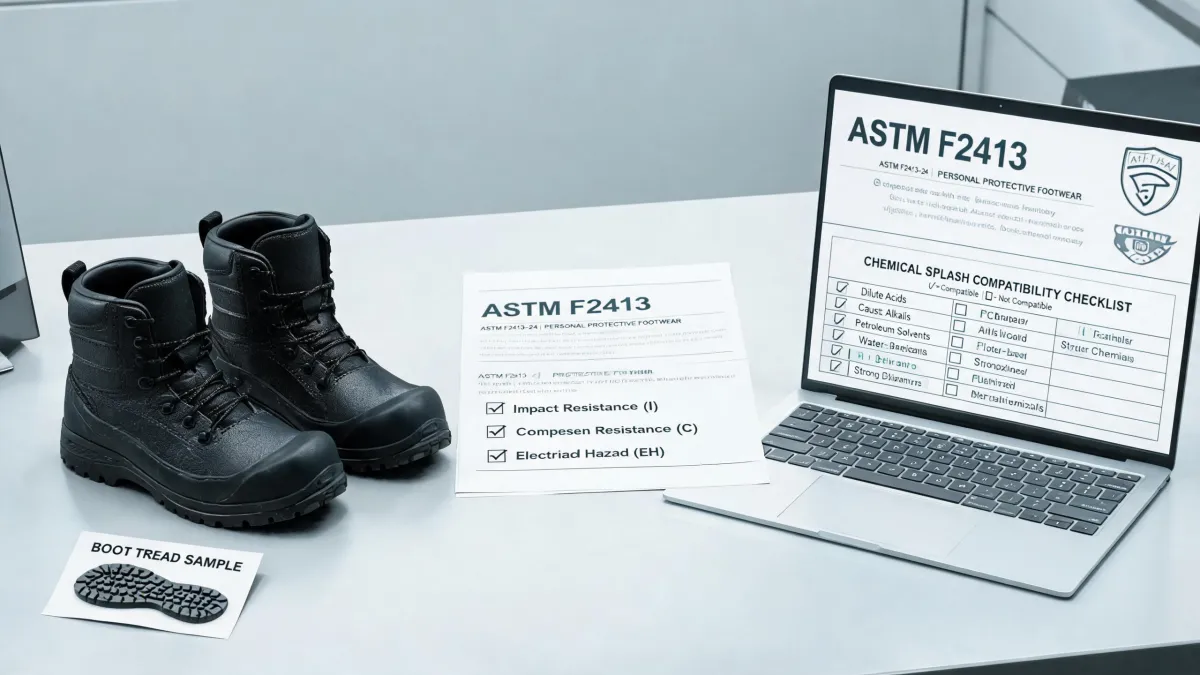
For example, for a standard wet warehouse, a good Dunlop rubber steel-toe boot is perfect. For a chemical plant, you need the Hazmax line. And for a construction site with electrical risk? You need a boot that meets the ASTM F2413-18 standard for impact and compression. I keep a copy of that standard handy.
The most frustrating part of boot sourcing: finding one boot that does everything. You often can’t. You just have to pick the right tool for the job. I gave up trying to find a single “best” boot for everyone. Now we order a couple of core models based on the team’s primary roles.
So, bottom line?
Start with the hazard, then find the boot that matches. Dunlop covers a huge range, from simple waterproof to heavy Hazmat. Don’t mix up a bump cap for a hard hat, and don’t assume a tactical boot is a safety boot. A little upfront homework saves a lot of hassle—and your budget.