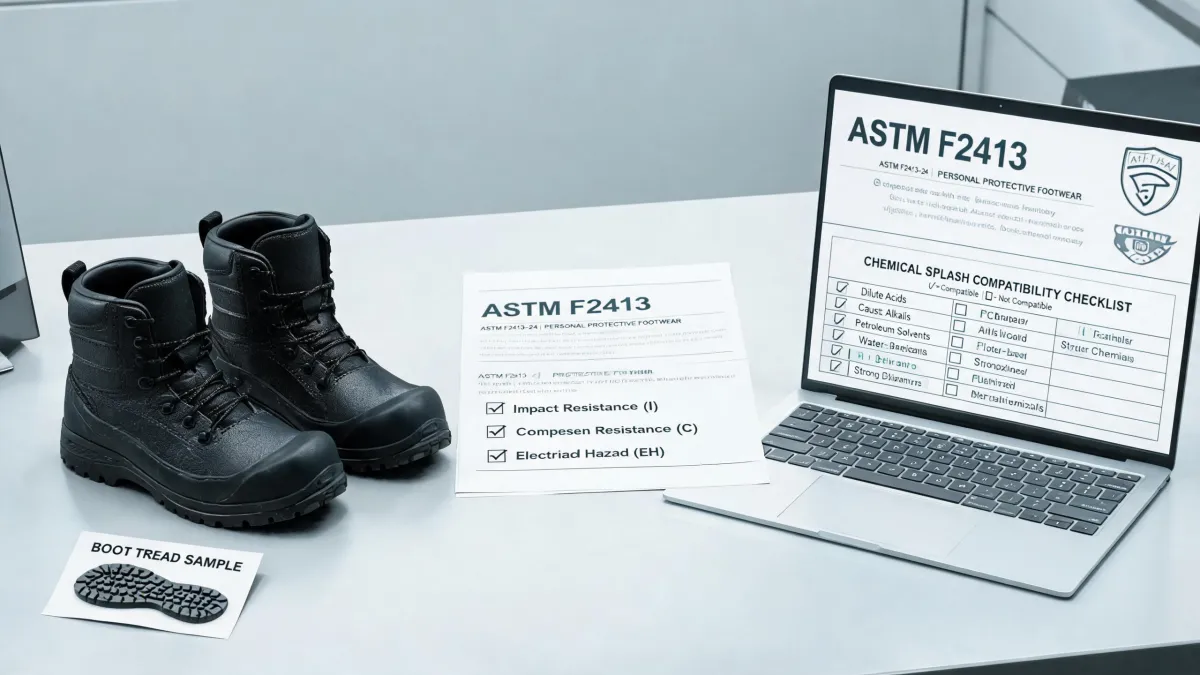
I've been doing this for four years. I'm the quality compliance manager at a safety footwear distributor. I review every batch before it hits the warehouse—roughly 40,000 pairs a year. In 2022, I put together a pre-shipment inspection protocol after one bad run of steel toe boots cost us an $18,000 redo and delayed a customer's turnaround. Since then, I've rejected about 12% of first-pass deliveries in 2024. Sole adhesion, toe cap placement, labeling errors—I've sent all of it back.
So I'm not saying this lightly: Dunlop boots are one of the most underrated pieces of PPE on the market.
Most safety buyers over-index on brand names and under-index on the environment where the boot will actually work. I get it. It's easy to go with what you know. But if you're buying for wet, chemical, or impact-heavy sites, you need to look at rubber boots before you sign the PO.
Why I Keep Passing Dunlop Rubber Steel Toe Boots in QA
Let's clear the air first. Somewhere along the line, 'rubber boot' became shorthand for 'farm boot' or 'fishing boot.' That's a misunderstanding. A pair of Dunlop rubber steel toe boots is not a concession. It's a serious piece of safety equipment.
What most people don't realize is that rubber and impact protection aren't opposites. The steel toe is embedded the same way it is in a leather boot. OSHA's foot protection rule, 29 CFR 1910.136, requires the employer to make sure workers wear protective footwear when there's a real risk of foot injury. That's not optional. And ASTM F2413, published by ASTM International, is how you prove a boot meets the impact and compression standards.
Here's something vendors won't tell you: a waterproof boot is only as good as its seams. A printed waterproof label doesn't keep water out. Look for a boot with molded or welded construction if you're going to stand in water all day. That's why I keep a copy of every Dunlop model's test certificate before I approve a shipment.
The Dunlop Chesapeake Rubber Boots Deserve More Attention
When someone asks me for a waterproof work boot that doesn't cost leather-boot money, I point them to the Dunlop Chesapeake. The Dunlop Chesapeake rubber boots are the ones I put in front of customers who are tired of wet feet after three hours on the job.
I went back and forth on this for a while. On paper, leather boots offer more comfort and breathability. But if you're dealing with standing water, mud, or chemical washdowns, rubber is the right material. The Chesapeake is built for that. It's not a fashion statement—it's a tool.
And let's be honest: a safety vest gets all the attention when you walk into a facility. You should wear one. But a safety vest doesn't stop a falling pallet from crushing your toes. The boots do.
DeWalt Work Boots Are Fine—But They're Not a Rubber Boot
I hear this all the time: 'Why not just get DeWalt work boots?' I'll be straight with you. DeWalt work boots are solid on dry sites. I've inspected them, and they're built well. But they are not the right tool for every environment.
Leather absorbs water. Rubber doesn't. That's not a knock on DeWalt. I do not think they make bad boots. I think they make boots for a different set of conditions. If a crew is standing in water or handling chemicals all day, a rubber boot like the Dunlop line is the safer call. It's material science, not brand loyalty.
How to Tie Work Boots So They Actually Hold Your Foot
Before you blame the boot, check how you're lacing it. Most foot fatigue I see isn't a boot problem—it's a lacing problem. Learn how to tie work boots the right way, and a lot of your 'uncomfortable' complaints disappear.
Here's the short version:
- Leave the lower eyelets a little looser so your toes can spread.
- Use a heel-lock lacing pattern if you get heel slip.
- Cinch the top eyelet last, then tie a heel lock.
That's not boot polish. That's practical physics. I've watched crews try on the exact same boot, one pair with proper lacing and one with the 'just yank it tight' method, and the difference is night and day.
The Pushback I Always Get
'Rubber boots are heavy.' 'They don't breathe.' 'They're uncomfortable.' I hear this on every site I audit.
Some of it is fair. Rubber boots are not hiking shoes. But a lot of the complaint comes from people wearing the wrong size or lacing the boot wrong. Or they're comparing an old rubber boot from 2010 to a modern steel toe boot with a proper outsole. It's a different product now.
There's also a tradeoff. A breathable leather boot feels great until it's soaked. A rubber boot keeps water out—that's the point. You can't have both. If you're in a wet environment, choose the boot that keeps you dry. That's not a compromise; it's the job.
The Bottom Line
I'd rather spend ten minutes explaining why a boot passed or failed than deal with a mismatch three months later. An informed buyer asks better questions and gets the right boot the first time.
For wet, chemical, and impact-heavy environments, Dunlop boots deserve to be on your shortlist. Not because they're the cheapest, and certainly not because they're trendy. Because they get the work done.
If you're buying safety footwear for a crew, ask for the ASTM test report. Look at the actual environment. And while you're at it, teach your team how to tie work boots properly. You'll save the company money, and your feet will thank you.