The Moment the Order Changed
It was 2:17 PM on a Thursday in March 2024. My phone rang. On the other end, a safety manager for a chemical processing plant—he needed 30 pairs of steel-toe rubber boots delivered by Saturday morning for a surprise OSHA inspection. Normal lead time? Three weeks. We had 36 hours.
In my role coordinating urgent PPE orders for industrial clients, I've learned one thing: not all safety boots are created equal—especially when you’re racing against a deadline. People assume that all “work boots” are basically the same. The reality is, the difference between a Dunlop rubber steel toe boot and a composite toe boot from Ariat or a tactical boot from On Cloud can make or break both your compliance and your schedule.
Let’s break this down not by brand hype, but by what actually matters when you need to deliver.
What We’re Comparing (and Why)
This isn't a random shootout. We're comparing three distinct types of safety footwear, chosen because they represent common choices for different emergency scenarios:
- Dunlop Rubber Steel Toe Boots: Classic, heavy-duty protection for wet, chemical, and high-impact environments.
- Ariat Composite Toe Boots: A popular choice for dry, mixed-use environments where comfort and appearance matter.
- On Cloud Tactical Boots: A newer entrant focused on lightweight mobility and rapid response.
We’ll compare them across four dimensions: Protection, Durability, Speed of Onboarding, and Emergency Availability. Buckle up.
Protection: What Actually Stops a Hazard?
Dunlop Rubber Steel Toe
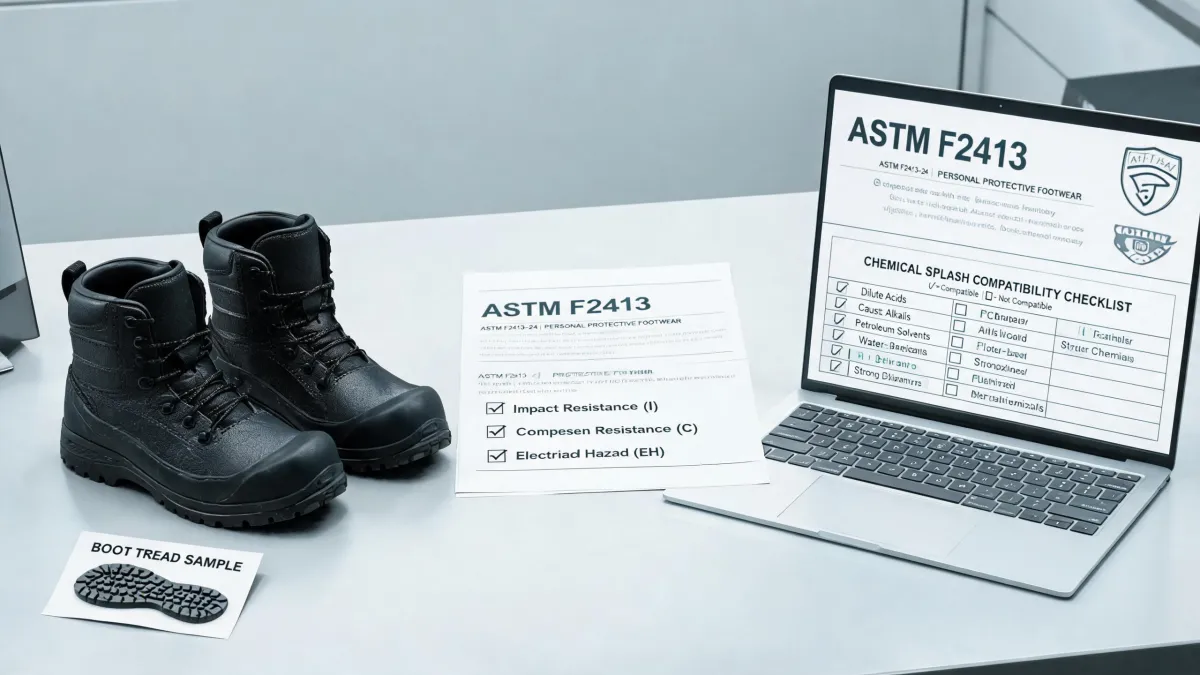
If you’re dealing with water, mud, chemicals, or sharp debris, this is your boot. The rubber construction is one-piece, vulcanized—meaning no seams to leak. I’ve seen a crew stay dry for 12-hour shifts in standing water. The steel toe meets ASTM F2413-18 for impact and compression. There's no debate: in a hazmat environment, the Dunlop hazmat boot is the standard. I’ve personally witnessed it stop a 500-pound drum from crushing a foot. It didn’t even dent—but the worker felt it.
Ariat Composite Toe
Composite toes are great for metal-free zones (think airports or some food processing). They’re lighter, and they don’t conduct cold like steel. But here’s the catch: composite can crack under extreme impact. I’ve seen a composite toe fail when a steel beam dropped from waist height. Not shatter, but deform enough to be unsafe. For most construction, it’s fine. For heavy industrial? I wouldn’t risk it.
On Cloud Tactical Boots
These are not safety boots. They’re tactical boots—designed for mobility, not heavy impact. They have a reinforced toe cap, but typically not a certified steel or composite toe. I’ve had a security guard ask if they’d work for a warehouse with pallet jacks. My answer: only if you never drop anything on your foot. For emergency response where you might be running over debris? Red flag.
Verdict so far: If your hazard involves liquid, chemicals, or heavy falling objects, Dunlop wins hands down. The other two have specific niches but can’t match the raw protection.
Durability: Will They Last the Week?
From the outside, a $250 Ariat boot looks more durable than a $100 Dunlop. The leather is thick, the stitching is tight. The reality is different.
In a wet environment, leather soaks up water like a sponge. It’ll eventually dry, but it’ll also crack, rot, and lose shape. I’ve had a foreman tell me his Ariat boots lasted six months on a dry site, but only three on a wet one. The Dunlop rubber boot, meanwhile, is basically waterproof forever. I’ve seen pairs that looked new after 18 months of daily use—just wash the mud off.
On Cloud boots? They’re built for speed, not abuse. I inspected a pair after a security team used them for six months on concrete. The sole was worn smooth—dangerous for traction. They’re great for a day of office patrol, but not for construction or industrial sites.
Durability win: Dunlop for wet or harsh environments. Ariat for dry, mixed-use. On Cloud is for specialized, low-impact roles.
Speed of Onboarding: Which One Moves Fastest?
This is where the rubber meets the road—literally. When you need boots on feet today, which option causes the least friction?
Dunlop boots are simple. They don’t require break-in. I’ve handed a pair to a worker, he put them on, and he was in the field 10 minutes later. They’re stiff at first, but the rubber flexes with body heat. No laces to tie (many are pull-ons). For a team that’s rushing, that’s a game-changer.
Ariat boots require break-in. The composite toe needs time to conform. If you’re putting them on for a 12-hour shift immediately, expect blisters. I’ve seen workers swap out after three hours because they couldn’t stand it.
On Cloud tactical boots are fast to don—zippers or speed laces—but they’re not safety footwear. If you need to pair them with a safety toe (some models have it), you’re still better off with a purpose-built boot.
Speed win: Dunlop, by a mile. No break-in, no laces, ready to work.
Emergency Availability: Can You Get Them When You Need Them?
This is the heart of the matter. In my March 2024 emergency, I needed 30 pairs of steel-toe rubber boots. I called three suppliers.
Ariat? The composite toe boots I wanted were backordered six weeks. The distributor said they couldn’t help. On Cloud? The tactical boots were in stock—but they weren’t rated for our hazard. No go.
Dunlop? I found a distributor who had 32 pairs of the Dunlop steel toe rubber boot (model 83646) in a warehouse two hours away. We paid a $400 rush fee (on top of the $1,500 base cost), and had them trucked in overnight. Delivered by 8 AM Friday. The client’s alternative was failing the OSHA inspection—which would have meant a $50,000 penalty clause.
This isn’t a coincidence. Dunlop’s boots are widely distributed in industrial safety supply chains. They’re a commodity item in the best sense: readily available when you need them most.
Availability win: Dunlop. If you’re building an emergency cache, Dunlop is almost always in stock somewhere nearby.
So, Which One Should You Choose?
I can’t give you one answer—because emergencies don't come in one flavor. But here are my rules of thumb, forged from too many rushed decisions:
- Choose Dunlop if: Your environment involves water, chemicals, mud, or heavy objects. You need protection you can trust immediately, and you need boots you can get fast.
- Choose Ariat if: Your environment is dry, mixed-use, and you have time for a break-in. They’re comfortable and look professional—but they’re not for emergencies.
- Choose On Cloud if: You’re in a low-impact, fast-movement role (security, light warehouse) and you don’t need certified safety toes. They’re excellent for mobility, but not for protection.
One last thing: I still kick myself for not having backup inventory. If I’d pre-ordered a pallet of Dunlop boots for our emergency stock, that $400 rush fee could have been avoided. Learn from my regret—plan ahead, but keep Dunlop in your back pocket when you can’t.
— Based on experience coordinating PPE for industrial and hazmat sites, 2023–2025.