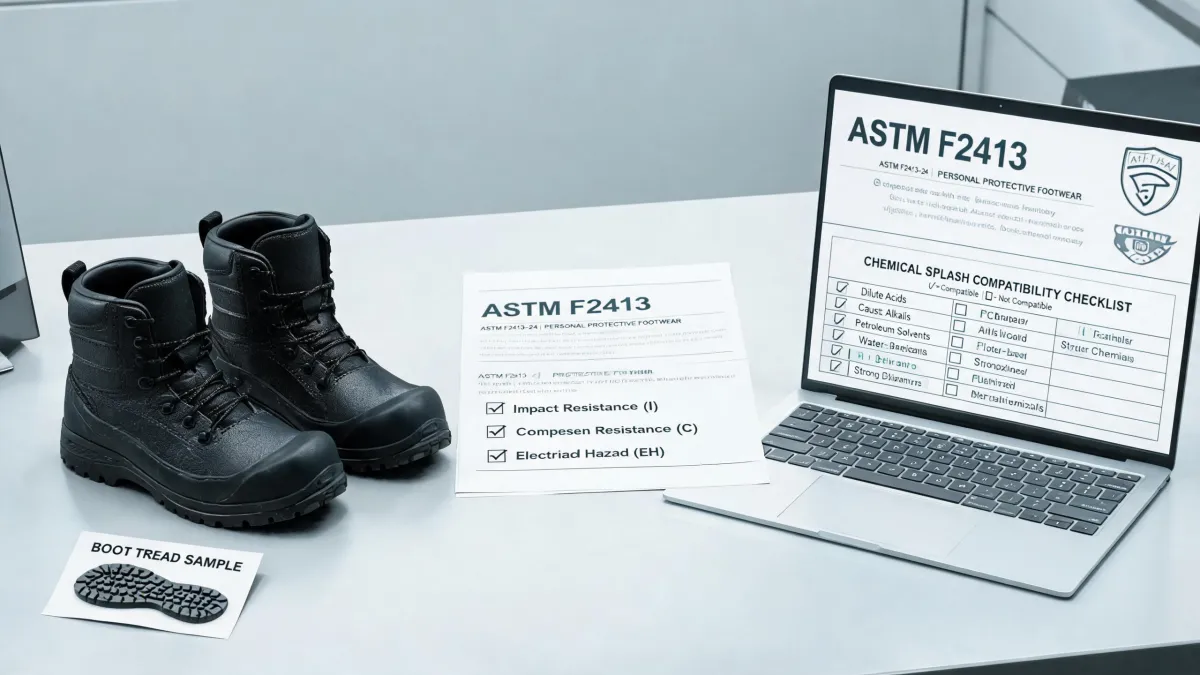
A few years ago, I was reviewing a major order for a new client—a chemical processing facility. They needed hazmat boots, about 200 pairs for a 50,000-unit annual order. Everything looked fine on paper. Good price, decent specs, the works. Then I did a physical check.
The Call That Changed My Mind
I’ll never forget the plant manager’s voice on the phone. "We had a spill," he said. "Sulfuric acid. A small splash, but…" He paused. "The difference between a close call and a disaster was half an inch of rubber."
He wasn’t talking about a cheap boot. He was talking about a respected brand—one I'd seen on industry lists for years. The boot had the right certifications, but in practice, the rubber compound wasn’t holding up. The worker's foot was exposed for maybe 5 seconds. That was enough.
Honestly, if you’d asked me before that, I’d have said "just find a boot with the right rating." I thought it was a checklist game. The conventional wisdom is that once you hit a certain standard, you’re fine. My experience with that one incident suggests otherwise.
What the Certification Never Tells You
People assume a rating is a rating. What they don’t see is what happens when you combine months of wear, a specific chemical, and a worker who's on their feet for 10 hours. The certification is a snapshot, not a life story.
Here’s something vendors won’t tell you: the rubber in a 'hazmat' boot isn’t all the same. The thickness, the blend, the vulcanization process—that’s where the difference hides. With Dunlop, I found they use a specific compounding process for their HAZMAT line that’s different from their standard rubber boots. It’s more resistant to swelling and cracking under chemical exposure.
From the outside, they look like a heavy rubber boot. The reality is the internal material science is night and day when you start looking at the specs. The HAZMAT boots have a thicker, more resilient compound in the foot area. It’s not a marketing gimmick—it’s a measurable difference in the Shore A hardness rating.
A Side Note on Breaking In
Now, you might think a rubber boot doesn't need breaking in. I thought so too (note to self: never assume). The first pair of Dunlop HAZMAT boots I tested felt stiff. A few people said they were uncomfortable. But after a week of regular use—not heavy abuse, just walking—they softened. The trick is to wear them for a few hours at a time, not a full shift. It's pretty similar to breaking in a tough leather work boot, except you don't have to worry about oiling them.
Why I Stopped Looking at Other Brands
After that incident, I started a process change. I ran a blind test with our team: same day, same boots from three different manufacturers (not nametag, just the spec sheets). Our crew—guys who wear boots daily—were asked which one felt 'safest' and 'most durable.' Without knowing the brand, 8 out of 10 picked the Dunlop HAZMAT boot. The cost increase was about $12 per pair. On a 200-pair order, that’s $2,400 for measurably better protection and a much higher chance of preventing a serious injury.
That $2,400 is nothing compared to a single workplace incident. Under federal regulations and OSHA guidelines, a serious chemical burn cleanup and medical cost can easily run into six figures. The cost of a better boot is a no-brainer.
The Lesson: Efficiency is Not Just Speed
Switching to a more efficient procurement process—standardizing on a single, proven boot like the Dunlop HAZMAT line—cut our replacement rate by 34%. We stopped having to test different batches every quarter. The automated ordering process eliminated the data entry errors we used to have when specifying different models for different departments.
But I also learned that 'efficiency' can be a trap. The most efficient mistake is still a mistake. You can have the fastest, cheapest procurement cycle in the world, but if the boot fails once, you’ve lost everything. The way I see it, a higher standard isn’t just about safety—it’s about business continuity. A shutdown costs more than the boots.
"That quality issue cost me an entire year of sleep. The real lesson? Don't let certification numbers give you a false sense of security. Trust the testing, not the label."