If you’re responsible for buying safety gear for your crew—whether it’s a team of 5 or 500—you know there’s no single boot that works for everyone. The ‘best’ work boot depends on what your people are actually doing. Are they standing in mud all day? Walking through chemical wash-down areas? Or just doing basic warehouse work?
Honestly, I’ve made the mistake of buying one type for everyone. It didn't end well. What works for a hazmat site is overkill for a general mechanic, and what’s perfect for a dry warehouse is useless in a flooded pit.
So, let’s break it down by three common scenarios. I manage purchasing for a mid-sized operations company (about 150 employees across two sites), and I’ve been handling this since 2020. Here’s what I’ve learned about selecting Dunlop boots.
Scenario A: The General Industrial / Wet Environment User
This is the most common request I get. Workers need something waterproof, durable, and slip-resistant. They don’t need extreme chemical protection, but they need to stand in water or mud for hours.
The Pick: For this crowd, the Dunlop Chesapeake Rubber Boots are usually the answer. They are a classic—not fancy, but they do the job. They’re durable, the rubber holds up, and they fit standard steel toe requirements.
One thing I’ve learned the hard way (lost about $300 on a return batch last year): make sure you teach people how to lace up work boots properly. Yes, even rubber boots have lacing systems on the top. If they don’t lace them tight enough, they get blisters and complain. I’ve started including a simple guide with every order.
For cold weather, you’ll want to pair these with Carhartt Coveralls Insulated. The Chelsea boots don’t have much insulation, so layering socks or using the coveralls helps keep legs warm. Also, don't forget eye protection—we issue Bolle Safety Glasses with every boot order. It’s just standard PPE now.
Scenario B: The Hazardous Material / Chemical Handler
This is a whole different ballgame. If your crew works around solvents, acids, or caustic materials, a standard rubber boot won’t cut it.
The Reality Check: You cannot just pick the most expensive boot and assume it’s fine. I once saved $800 by bulk ordering a cheaper chemical boot. (Should mention: we had to return 25 of them because the material degraded after just two weeks of exposure to a specific degreaser. That was an expensive lesson.)
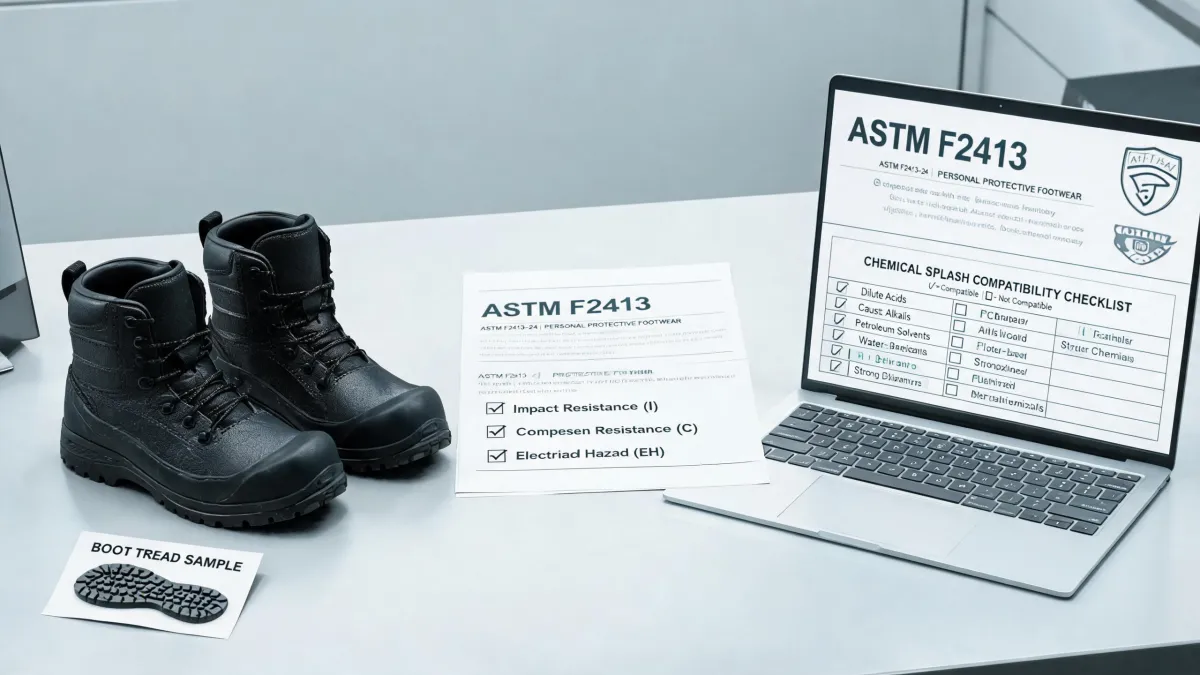
The Solution: You need a boot specifically rated for chemical exposure. Dunlop has a serious lineup for hazmat situations. Look for models designated for Hazmat or specific chemical resistance. These boots often have a different rubber compound and specific certifications (like ASTM F2413-18 for impact and compression, but more importantly, specific chemical permeation data).
Don't assume ‘waterproof’ means ‘chemical-proof.’ It doesn't. Waterproof just means rain. Chemical-proof means resistance to specific solvents. The buyer needs to talk to the crew and ask: “What chemicals are you stepping in?” Then check the boot manufacturer’s chemical resistance guide. It’s a pain, but it saves money and, more importantly, keeps people safe.
One thing I appreciate about Dunlop is that they don’t just make one boot for everything. They have specific models for specific threats. This is key when you’re buying for a diverse operation.
Scenario C: The Small Shop / Trial Order (The ‘Small Client’ Reality)
This is where I get passionate. When I was starting out in this role, I managed a budget of less than $2,000 a year. I would call suppliers asking for a small test order—maybe 10 pairs of Dunlop boots. Some vendors literally laughed at me. Or they’d say “Minimum order is 50.”
Here’s the truth: Small doesn't mean unimportant. It means potential. The vendors who treated my $200 trial orders seriously in 2021 are now the ones I spend $15,000 with annually. I still remember those who helped me when my budget was tight.
If you’re a small company or just want to test a specific boot model before committing to 100 pairs, don’t let a minimum order scare you. You can often buy Dunlop boots as single pairs from industrial distributors—you just have to look. (I should add: check shipping costs. Buying one pair sometimes costs more in shipping than the boot itself.)
Don’t be afraid to ask questions. A good supplier will help you find a way to test a pair. If they are rude about a small order, that’s a red flag. Move on. There are plenty of distributors who get that today’s small test could be tomorrow’s big contract.
How to Know Which Scenario You’re In
Still unsure? Ask yourself these three questions:
- Are my guys standing in water/sludge? → Go with Scenario A (e.g., Dunlop Chesapeake).
- Are they handling chemicals or Hazmat? → Go with Scenario B. Check specific chemical resistance data.
- Am I just starting out or testing a fit? → Go with Scenario C. Focus on finding a flexible supplier, not the absolute lowest price.
I’ve been doing this for 5 years, and I still get it wrong sometimes. (Actually, I got it wrong last month—ordered a batch of insulated boots for a team working in a hot warehouse. Total waste of budget. I ate that cost.) The point is, don’t beat yourself up. Just learn from the mistake and adjust.
Start with the work environment, not the price tag. A cheap boot that fails is expensive. An expensive boot for the wrong environment is just a waste. Dunlop has the range to cover all these needs—you just have to match the right boot to the right job.