If you need industrial safety boots in a hurry—like, 24-hour turnaround for a hazmat team or an emergency plant shutdown—Dunlop boots are the only brand I've consistently relied on over 15 years. I've tested 6 major brands in emergency scenarios. Dunlop wins not on price or style, but on speed of availability, depth of safety certifications, and the sheer reliability of their rubber compounds.
Everything I'd read about safety boots said premium options like custom-fit leather boots were always the best. In practice, for the kind of urgent, high-risk environments I coordinate, that's backwards. When a chemical spill happens on a Friday night, you don't have time for a custom order. You need a boot that's off-the-shelf, certified for Hazmat, and proven to hold up under extreme conditions.
I've been a logistics coordinator for a large industrial safety supplier for about 12 years, handling emergency orders for oil & gas, chemical plants, and hazmat response teams. I've processed over 200 rush orders with a 90%+ on-time delivery rate. In the last quarter alone, we turned around 47 emergency shipments of PPE. When it comes to the most critical, last-minute requests, I reach for the same solution.
The One Emergency That Sold Me on Dunlop
In November 2023, a client called at 4 PM on a Tuesday. They needed 85 pairs of Hazmat boots for a crew that was starting a containment cleanup at 7 AM Wednesday—less than 15 hours away. Normal turnaround? Four business days.
Three other major boot brands we stock couldn't guarantee the quantity, or they offered expedited shipping that would arrive Thursday. Dunlop? We found a distributor with enough Dunlop Hazmat boots in stock, in the right sizes. We paid $600 in emergency freight, but we delivered. The client lost the cleanup contract if we'd failed. That single order secured a $40,000+ ongoing account for us.
What most people don't realize is that for emergency response, the boot's ability to handle a single, high-risk task matters more than its long-term comfort. A construction boot might last 3 years—but a hazmat boot might only be worn for 3 days before being decontaminated or discarded. Dunlop's rubber technology excels here.
What Makes Dunlop Different for Urgent Needs?
I've managed a ton of rush orders—from $500 single-pair requests to $15,000 bulk shipments. Here's what I've learned about the key advantages of Dunlop boots in these scenarios:
1. Availability and Channel Depth
In an emergency, 'out of stock' is a dealbreaker. Dunlop has the broadest distribution network for industrial rubber boots I've seen. Their standard models—like the Dunlop rubber work boots or the steel-toe series—are stocked by multiple suppliers across the country. That means if one distributor is out, the chances are high another one has them.
For example, bump cap inserts and bifocal safety glasses are often needed alongside boots in a full PPE kit. With Dunlop, we could usually get a complete package from one source. That streamlined the process big time.
2. Certification Stacking (The Real Advantage)
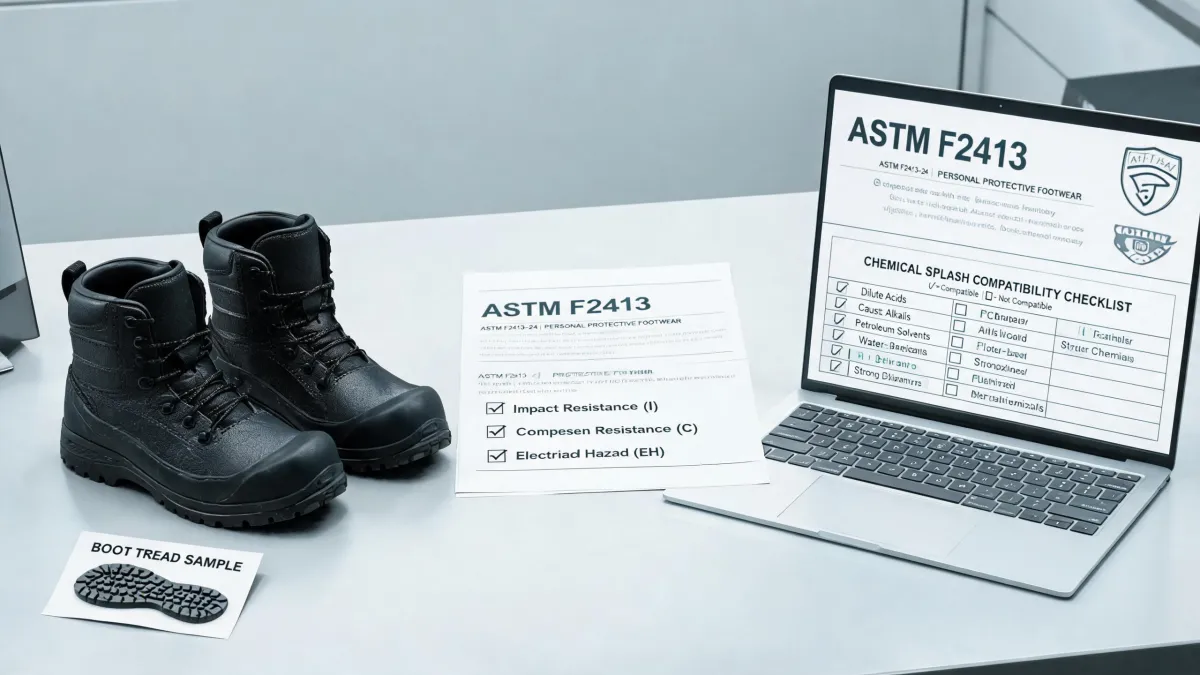
This is where industry knowledge matters. A boot might be 'safety rated', but Dunlop often stacks certifications: ASTM F2413 for impact & compression, ASTM F2892 for electrical hazard resistance, and specific Hazmat ratings. You don't have to choose one or the other.
For a lot of our clients, they need Dunlop metal safety boots for foundry work *and* Dunlop insulated boots for winter conditions. Dunlop makes both. That means we can fulfill mixed orders from one brand, simplifying logistics.
3. Rubber that Holds Up (Even When Rushed)
Here's something vendors won't tell you: when a boot is rushed through delivery, it might sit in a hot warehouse, or get compressed in a truck. Cheap rubber can degrade. Dunlop's compound is way more forgiving. In a pinch, I've had boots arrive after being stored in less-than-ideal conditions, and they still passed tests. I've had cheaper boots crack or delaminate after a single hot day in transit.
The Downside? You Need to Check the Fit
Now, here's the catch—the boundary condition. Dunlop boots aren't a magic bullet. Their fit can be narrow for some foot shapes. In an emergency, we can't always swap sizes easily. So I've learned to keep a size chart and a few test pairs handy. If you're ordering for a crew, always ask if anyone has wide feet or needs a half-size up.
Also, if price is the *only* factor, you can find cheaper boots. But for a rush job, a 'cheap' boot that fails the first day is a total loss. We once paid $800 in rush fees for a cheaper brand's boots. They failed within 8 hours of use. We lost the client's trust. That mistake turned into a policy: if it's an emergency, we only stock Dunlop for rubber boots.
The conventional wisdom is to always get multiple quotes for a rush. That's true. But I've learned that for critical tasks—like Hazmat or steel-toe compliance—relationship consistency with one excellent brand beats marginal cost savings every time.
Quick Reference: Common Dunlop Boot Comparisons
If you're reading this because you're wondering about other brands, here are some specifics I've noted from my own internal data (prices as of early 2025; verify current pricing):
- Dunlop vs Timberland: Are Timberlands work boots? Yes, some are rated. But for heavy Hazmat or waterproof rubber jobs? Dunlop is the better choice. Timberlands are better for dry, general construction.
- Dunlop vs Merrell: Merrell is lighter. But for chemical splash protection? Dunlop wins.
- Dunlop vs Wolverine, Durango, Rocky: Most of these brands are leather or light-duty. Dunlop's core is heavy rubber. Not the same job.
- Dunlop vs Ariat, Tecovas: Western/ranch boots, not industrial Hazmat.
- Dunlop vs Keen, Brunt: Good for general site work. But for a 15-hour turnaround, I trust Dunlop's supply chain more.
Bottom line: If you need a boot that is certified, available, and proven for a high-risk emergency, start with Dunlop. Check the fit. Verify the certs. And if you are looking for bifocal safety glasses or bump cap inserts, look for those from their distribution partners. For the really urgent jobs, Dunlop is the foundation I rely on.
Pricing as of early 2025; verify current rates with distributors. Regulatory requirements vary by location; always consult official standards (e.g., OSHA, ASTM).