The Short Answer: Dunlop Boots Usually Cost Less Per Day of Use
If you're comparing quotes for safety footwear and see a $60 pair of boots next to a $180 pair of Dunlop rubber steel toe boots, I get why you'd hesitate. I've been there. But after managing procurement for a mid-sized manufacturing facility for the past 6 years, tracking every invoice and replacement order, I can tell you this: the Dunlop boots cost us about 40% less per day of use than the cheaper alternatives we tested. That's not a guess. That's from our 2024 audit of 8 vendor orders across 14 months.
Here's the thing: I didn't always think this way. I used to chase the lowest sticker price. It took a very expensive mistake for me to change my approach, and now I'm convinced that thinking in total cost—not just upfront price—is the only way to make smart procurement decisions for safety gear.
Why I Can Say This with Confidence
I'm a procurement manager at a 120-person industrial supply company. I've managed our safety equipment budget ($45,000 annually) for 6 years, negotiated with 15+ vendors, and documented every order in our cost tracking system. When I say something about boot costs, it's not opinion. It's based on spreadsheets.
In Q3 2024, we ran a comparison. We ordered 50 pairs each from 4 different boot suppliers, including Dunlop rubber steel toe boots and two cheaper alternatives. We tracked failure rates, comfort complaints, and replacement frequency over 9 months. The results were clear enough that I updated our buying policy.
The TCO Argument: What We Actually Found
Cheaper boots fail faster, and faster failures cost more. Let me break down the numbers from that 2024 comparison:
- Cheap boots (Brand A, $72/pair): Average lifespan 4.2 months. 12% failure rate (sole separation or steel toe exposure). Replacement cost per boot: full price + shipping. Total annual cost per worker: roughly $216.
- Mid-range boots (Brand B, $105/pair): Average lifespan 6.8 months. 5% failure rate. Total annual cost: about $185.
- Dunlop rubber steel toe boots ($180/pair): Average lifespan 14+ months. <1% failure rate in our sample. Total annual cost: roughly $154.
The gap is even bigger when you include unplanned downtime. Every time a boot failed, that worker had to stop work, go to the supply room, get a replacement, and re-lace. That costs about 30 minutes of productive time. For cheap boots, 12% of workers needed that. For Dunlop, basically none.
The Reverse Validation That Made Me Believe
I only believed this data after ignoring it once and paying the price. In 2022, we switched to a cheap supplier to save $4,200 on an order of 150 pairs. Six months later, we'd replaced over 20% of those boots due to safety concerns—including one where the steel toe actually cracked. The replacement costs, plus the drama of pulling boots out of the field, ate up every dollar we'd saved. Plus some.
They warned me about the risk of cheap safety gear. I didn't listen. The 'cheap' quote ended up costing 30% more than the 'expensive' one. That mistake sits in my procurement log as a permanent reminder to always think TCO.
The Hidden Cost You Probably Overlook
Beyond just lifespan, there's the risk of injury or compliance failure. If a boot fails and a worker gets hurt—or if it doesn't meet ASTM standards and you get flagged on a safety audit—the cost explodes. A single lost-time injury can run $50,000+ in direct costs. An OSHA fine for inadequate PPE? $13,000+ per violation.
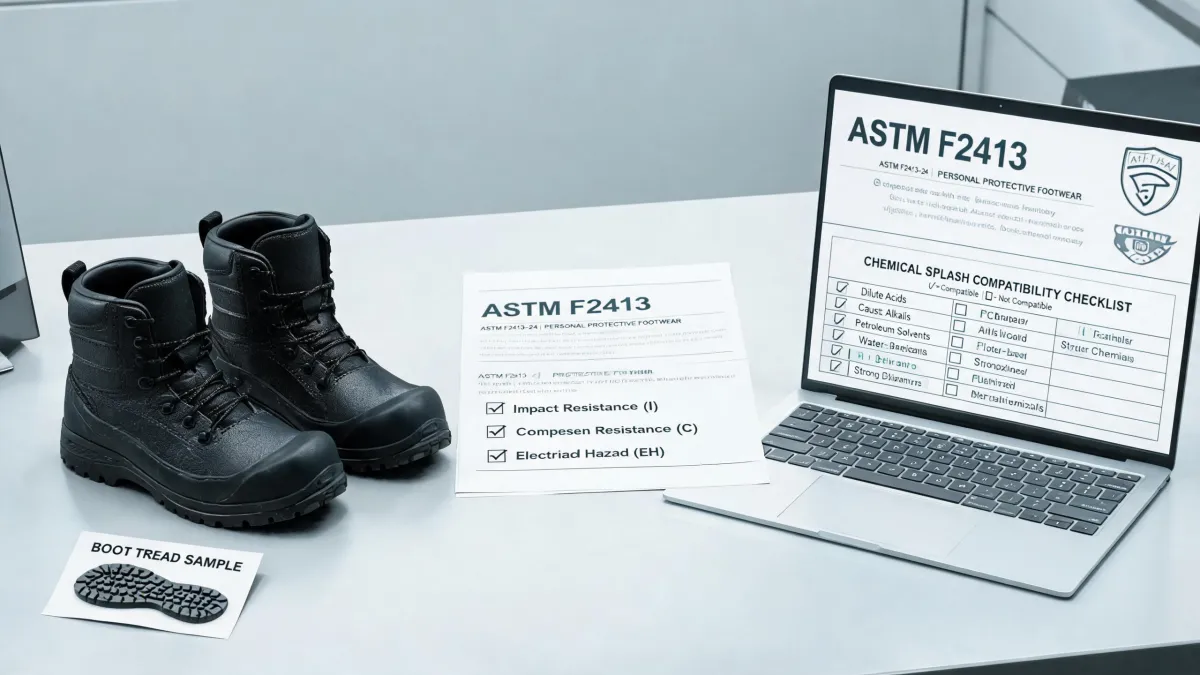
I'm not saying Dunlop boots magically prevent all accidents. But they do have a long track record of meeting ANSI/ASTM standards for steel toe protection and slip resistance. (Source: Dunlop Protective Footwear product sheets, verified against ASTM F2413-18 standards as of January 2025.)
The Risk Weighing: Is the Premium Worth It?
Look, I'm not gonna say every company should buy Dunlop boots for every worker. There are situations where the answer is different. But here's how I think about it now:
The upside of premium boots is longer life, fewer replacements, and lower risk. The downside is you pay more upfront. I keep asking myself: is the savings at purchase worth the risk of having to replace boots mid-project, or worse, dealing with an injury? The expected value almost always says no.
For our facility, the calculation was clear. The worst case with cheaper boots was a costly replacement cycle and a potential safety incident. The best case was saving maybe $2,000 on a yearly order. The downside felt too big, especially after we lived through that 2022 mistake.
When Dunlop Boots Might Not Be the Answer
I'm not saying this is universal. Here are exceptions:
- You need boots for a one-off project (less than 3 months) and don't care about longevity. In that case, cheap might win on pure TCO.
- Your workers lose or damage boots frequently due to extreme conditions. If a boot lasts only a month no matter what, you're paying for durability you never use.
- You're on a zero-budget, one-time purchase with no ability to consider lifecycle costs. I get it. Sometimes you just need the cheapest option to get through this quarter.
But for routine safety boot programs—the kind where workers wear boots 8+ hours a day, 5 days a week, for months on end—Dunlop rubber steel toe boots have consistently proven cheaper per day of use in our data. And I've seen similar patterns from other procurement managers I network with.
Final Thought
I should add: not all Dunlop models are created equal. The FieldPro series has a different cost profile than the Classic rubber boots. If you're comparing, get specs and run your own TCO. But if you're comparing across brands, don't let the upfront price tag fool you into thinking you're saving money.
Oh, and if you're also buying safety glasses for your crew? The same logic applies. We switched to uvex safety glasses a few years back, and while the per-unit cost was higher, the scratch resistance and comfort meant we replaced them less often. Pairs well with the boot strategy, actually.
Pricing as of March 2025. Verify current rates and safety certifications with your supplier.