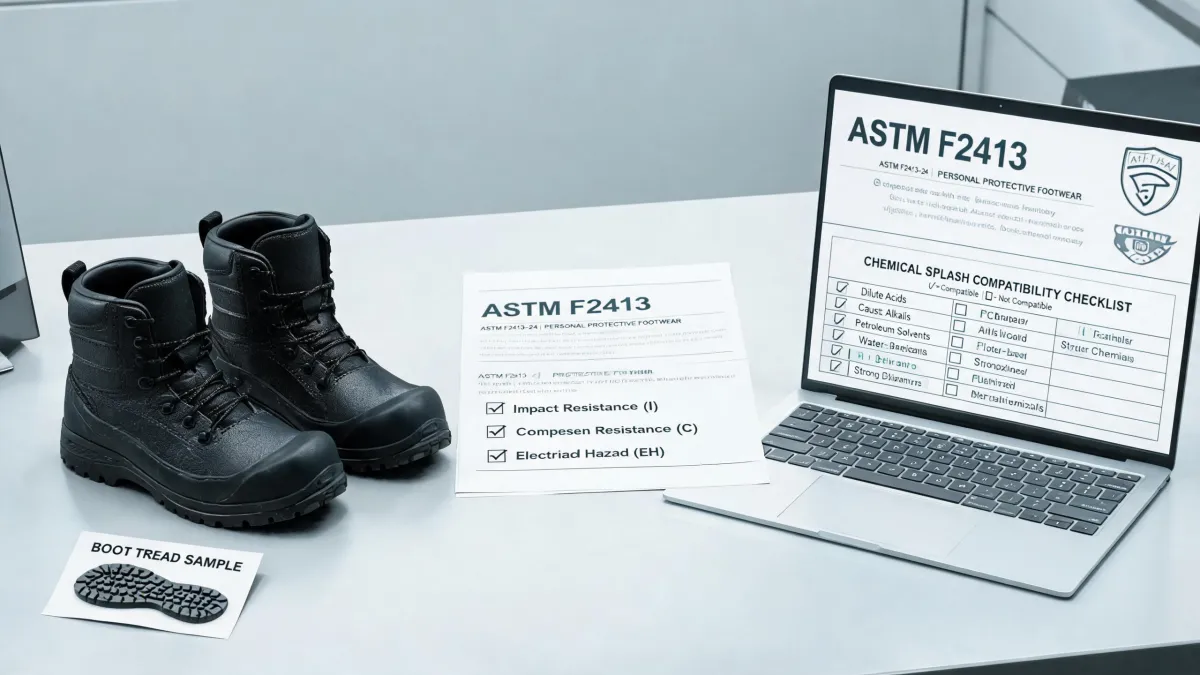
You Should Be Wearing Dunlop Fieldpro Steel Toe Boots If You Work In Wet Conditions, And Most Other Brands Are A Compromise
Here's the short version: after ordering over 50 pairs of safety boots in the last 18 months for our maintenance crew, I've settled on the Dunlop Fieldpro Steel Toe as the single best all-rounder for anyone dealing with water, mud, or chemicals. I've made enough mistakes to fill a small warehouse, so take it from someone who learned the hard way.
But that's not the whole story. Let me explain why I got it wrong—a lot—before I got it right.
My First Year: The $900 Mistake
In 2022, I ordered 10 pairs of what I thought were perfectly adequate rubber work boots from a no-name supplier. They looked fine on the website. Good reviews. Affordable. What could go wrong?
Everything. The boots delaminated within three weeks. The steel toe—which they claimed was ASTM-rated—bent out of shape on a light impact. And the 'waterproof' rubber cracked in cold weather. Ten pairs, $900, straight to the trash. That's when I started taking boot specs seriously.
What I Look For Now (And What Most People Miss)
I should clarify: I'm not a safety engineer. I'm the guy who handles procurement for a mid-sized industrial facility in the Pacific Northwest. Our crew works in concrete, sewage treatment, and outdoor construction. Wet, nasty, unpredictable conditions.
Here's what I've learned to check:
- Steel toe vs composite: Steel is heavier but more durable. For wet conditions, steel is less likely to crack under repeated impact. Composite can be lighter, but if you're stepping on rebar, steel wins.
- Rubber vs PVC: Dunlop uses a proprietary rubber compound that stays flexible in cold weather. Many PVC boots become stiff and crack below freezing. If you're working in temps under 40°F, rubber is non-negotiable.
- Insulation rating: The Fieldpro line offers different insulation levels. For our climate (40-60°F, wet), the uninsulated version is perfect. For colder work, look for the insulated models.
- Sole pattern: Deep, aggressive lugs for mud and loose soil. Shallow lugs for concrete. I learned this after watching a crew member slip on a mildly wet floor in boots designed for deep mud. Wrong sole = bad day.
I want to say the Dunlop Chesapeake Men's Rubber Boot (plain toe) is a great budget option for light-duty work, but don't quote me on that—I haven't tested it extensively in heavy industrial conditions. For serious work, the Fieldpro steel toe is the way to go.
The 'Bump Cap' Vs 'Hard Hat' Confusion
Since we're talking about protecting yourself, let me address a related question I get constantly: safety helmet vs hard hat?
I once ordered bump caps—which are designed to protect against minor bumps, not falling objects—for a job site where overhead hazards were present. That error cost $450 in re-stocking fees plus a 3-day delay while we sourced proper hard hats. Trust me on this one: if there's any risk of things falling from height, you need a real hard hat (ANSI Type I or Type II), not a bump cap.
As for the Merrell tactical boots I see mentioned in forums: they're great for hiking and tactical use, but they're not waterproof enough for our environment. One crew member tried them. Within a week, his feet were soaked. Stick with dedicated rubber boots for wet work.
Who This Advice Is For (And Who It Isn't)
My experience is based on about 200 orders with roughly 10 different boot models for industrial maintenance crews in the Pacific Northwest. If you're working in a dry warehouse or on a construction site in Arizona, your experience might differ significantly.
I've only worked with mid-range budgets ($80-$150 per pair). I can't speak to how these principles apply to ultra-premium brands or the absolute cheapest options. The Dunlop Fieldpro Steel Toe hits a sweet spot for us.
The Bottom Line
If you're ordering safety boots for a team that works in wet, muddy, or chemically exposed environments, the Dunlop Fieldpro Steel Toe is a no-brainer. It's not the cheapest option, but it's way more reliable than the generic alternatives I wasted money on.
For lighter duty, the Chesapeake Men's Rubber Boots (plain toe) are a decent budget choice. For anything involving overhead hazards, don't confuse a bump cap with a hard hat. And if you see someone recommending Merrell tactical boots for wet industrial work—well, take that with a grain of salt.
Prices as of March 2025; verify current rates. Regulatory information is for general guidance—consult official sources for current requirements.