Most procurement pros get this backwards. I did too.
When I took over ordering for our 200-person crew back in 2020, my VP gave me one directive: "Cut costs." So I went for the lowest-priced steel-toe boots I could find—some no-name brand that quoted 30% under our usual supplier. Seemed like a win. Until the invoices started rolling in with extra shipping, a "certification documentation fee," and replacement orders because the first batch failed our slip-resistance test. That budget win turned into a $2,400 loss—or rather, $2,400 after I accounted for my time dealing with returns. The vendor who couldn't provide proper invoicing made me look bad to finance, and the crew complained the boots hurt after four hours. Lesson learned the hard way.
Now I'm a firm believer: transparent pricing is more trustworthy than a low sticker price with hidden add-ons. That's why I've standardized on Dunlop boots for our team. Their pricing is upfront, their specs are verifiable, and their boots actually perform.
The hidden-cost trap that almost every buyer falls into
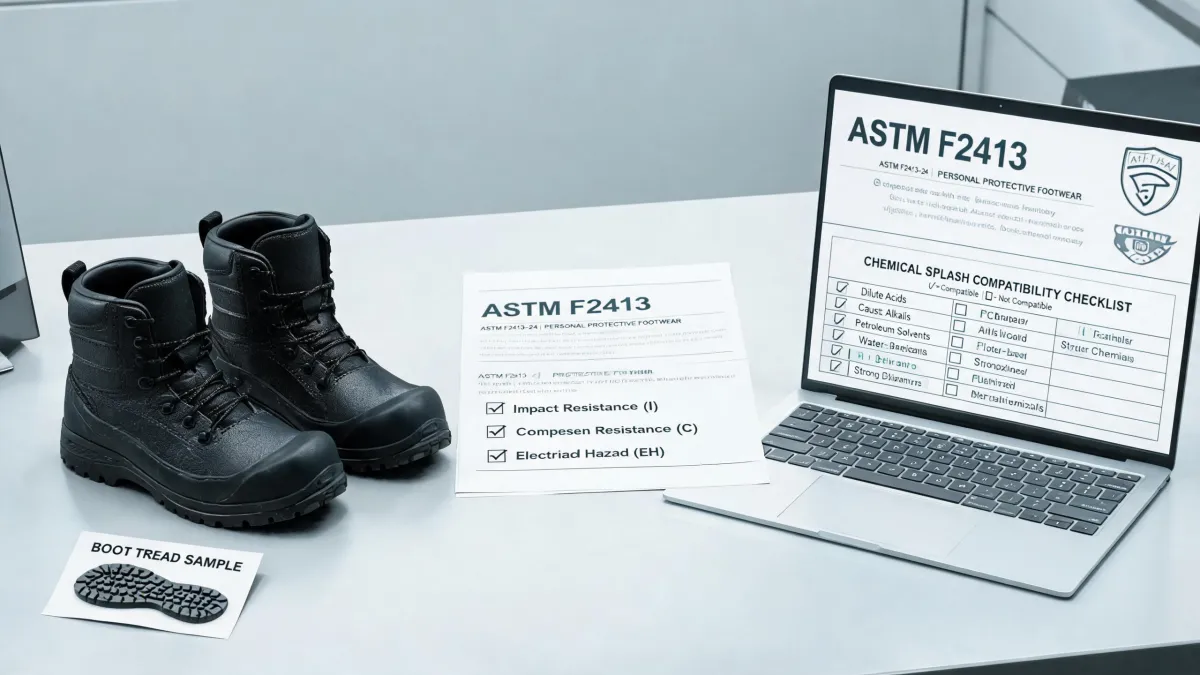
I assumed "same specifications" meant identical results across vendors. Didn't verify. Turned out each had slightly different interpretations of what "steel toe" means for real-world impact testing. The cheap vendor's boots didn't meet the ASTM F2413-18 standard we required for our contract work—a fact they conveniently buried in fine print. So I had to rebuy everything from a certified supplier. That mistake cost us about $1,800—maybe $1,900 if you count the overtime for the crew waiting on replacements.
The way I see it, the total cost of ownership includes more than the base price:
- Setup or certification fees (if any)
- Shipping and handling—some vendors add dimensional weight charges
- Replacement costs if boots fail safety audits
- Lost productivity when workers can't wear them
Dunlop's pricing model is refreshingly simple. Their website lists prices for each model—like the Dunlop Chesapeake rubber boots or the steel-toe Purofort—with no surprise shipping add-ons for standard orders. That kind of clarity saves me the headache of reconciling invoices.
Why Dunlop's boots work for our crew—and why the transparency matters
We have a mix of environments: some guys work on wet concrete (Dunlop rubber work boots are a no-brainer there), others handle chemical spills (their Hazmat line), and a few need metatarsal protection. I used to debate metatarsal boots vs steel toe every other week until I realized that Dunlop offers both options with clear labeling on their protection levels. No guessing, no fine print. The boots have actual certifications listed per model—ASTM, CSA, whatever's relevant.
And here's a thing I don't hear enough: transparent pricing also applies to accessories. We also order Nemesis safety glasses and tinted safety glasses for outdoor crew. The same vendor who hides boot surcharges often tacks on "lens tint fees." Dunlop's distributors? Flat rate per pair, no games.
Let me address the elephant in the room
"But Dunlop boots are more expensive upfront." Yeah, they are—by maybe 15-20% compared to a budget brand. But our total boot spending dropped 12% in the first year after switching, because we stopped throwing away defective inventory and stopped paying rush charges for last-minute compliance fixes. I can only speak to our situation—we're a mid-size company with predictable ordering patterns. If you're a small crew with one-off needs, the calculus might be different. But for anyone managing orders for 50+ people across multiple locations, the hidden-cost premium is real.
Some buyers argue that "any certified boot is the same." That was my assumption in 2020. I learned never to assume that certified specs translate to the same real-world durability. The cheap boots gave out in 6 months; Dunlop's Purofort and Chesapeake models lasted twice as long based on our usage logs as of Q3 2024.
To sum it up: trust the vendor who shows you the full bill before you buy
I've been burned enough to know that the lowest quote is rarely the lowest cost. For our crew, Dunlop's transparent pricing—combined with boots that actually meet the standards they claim—made the choice obvious. If you're shopping for safety boots, glasses, or any PPE, ask the awkward question: "What's not included in that price?" The vendor who answers clearly is the one worth keeping.