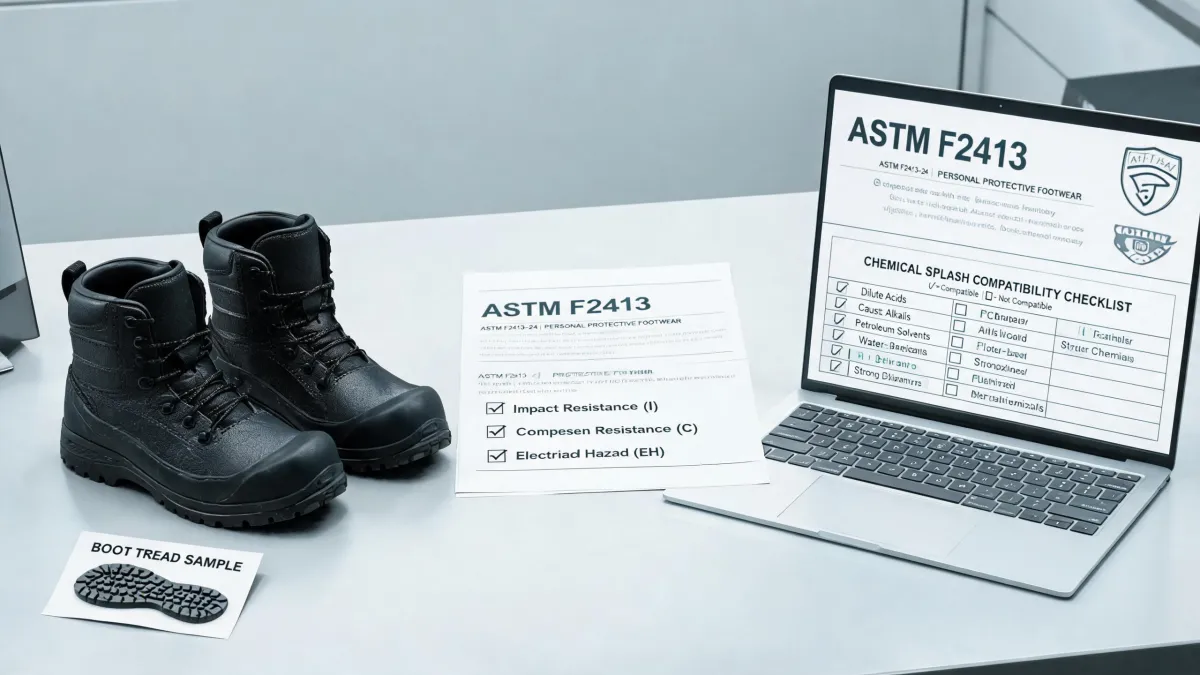
I would rather pay $80 more for a pair of boots upfront than spend $200 of administrative time replacing the cheap pair six months later.
I’m the office administrator for a 150-person construction services company. I manage PPE ordering—boots, gloves, glasses, the usual—roughly $60,000 a year across six to eight vendors. I report to operations and finance, so I see both the “we need it yesterday” side and the “why did this invoice get rejected” side.
My view is simple: the cheapest safety boot is rarely the cheapest. Here’s why I’ve standardized most of our crew on Dunlop safety boots, and why the decision is more about process efficiency than about the boot itself.
The Real Cost of a Cheap Boot
When I took over purchasing in 2020, we were using three different boot brands and buying from whichever distributor had a sale. The crews complained, finance complained about inconsistent invoices, and I was the one replaying email chains trying to figure out what had been promised.
So I started a running failure list. A pair of budget boots would last about five to seven months on an active site. A solid mid-tier boot, something with a proper sole and a steel or composite toe, lasted twelve to eighteen months. But the real cost wasn’t just the boot price. It was the downtime: someone goes back to the trailer, swaps boots, fills out a form, and loses two hours. At a loaded labor rate of $35/hour, that’s about $70 in lost productivity. Add my time, the delivery, the invoice processing, and a $60 pair of “cheap” boots was costing us close to $150 per year. A $120 boot, across a longer life, came to less than $90 per year.
(Note to self: I need to turn that running tally into a real spreadsheet before the next budget review.)
We’ve handled maybe 200 boot orders since then. Maybe 180—I’d have to check the system. The pattern is consistent.
Why I Trust Dunlop Safety Boots
I’m not a footwear engineer, so I can’t explain the rubber compound. What I can tell you from a purchasing perspective is that Dunlop makes the spec sheet easy to verify. If I order a pair of Dunlop safety boots, I know whether they’re rubber, steel toe, chemical-resistant, insulated, or metatarsal-rated before I fill out the PO. That sounds basic, but it’s surprisingly rare.
Dunlop also covers a wide range of hazard levels without multiplying my approval time. For one site I need a steel toe rubber boot. For another, a chemical-resistant boot with a higher shaft. For a third, an insulated boot for cold-weather work. The model numbers are consistent, so I can set up a basic spec sheet and the crew knows what to order. Some brands change model names every season, which makes reordering hell. Dunlop’s core work boot line feels stable.
Take “chemical resistant” as an example. That phrase gets thrown around a lot. Per FTC guidelines, advertising claims have to be truthful and substantiated. When a distributor says a boot is chemical resistant, I ask for the test data or the manufacturer’s chemical resistance chart. Dunlop chemical resistant boots usually have that documentation in the product line. I do not have to be the expert on every chemical in the workplace; I have to make sure the expert information gets to the person who needs it.
I only believed that after ignoring it once. In 2021, I approved a batch of “hazmat” boots from a non-specialty supplier without checking the documentation. The invoice said chemical resistant. The boots were not. Nobody got hurt, thankfully, but the boots had to be pulled from the site, and the labor cost of that mistake was more than the entire PO. Now I verify before ordering, not after.
Waterproofing is another place where cheap boots hide costs. Dunlop rubber boots are waterproof by construction, not by a coating that wears off after three washes. For crews standing in mud or rain all day, that’s the difference between a productive afternoon and someone driving home with wet socks. In cold weather, wet socks move beyond comfort and become a safety issue.
PPE Is a System, Not a Solo Purchase
While I’m on the subject: don’t order boots without thinking about work gloves. We consolidate both into the same order. If you’re already paying for a PO, add the gloves to it instead of creating a separate rush order. When we consolidated to one PPE distributor, our ordering time dropped from about four hours a month to maybe one. That’s the efficiency piece I care about—not spending two days comparing catalogs.
Work gloves are the same way. They’re not a “nice to have” that you tack on when a foreman remembers; they’re a PPE line item. I budget for them twice a year, order them as a SKU, and replenish sizes by usage. That stops the daily “we’re out of gloves” emails that used to eat my afternoons.
And yes, how to lace work boots matters. I’m not a podiatrist, but after five years of hearing “my foot goes numb” from crew members, I’ve learned that many boot complaints are actually lacing problems. Lace across the instep too tightly and you cut off circulation. A heel-lock lacing pattern can change the fit of the same boot entirely. If someone new is learning how to lace work boots, show them before they write off a perfectly good pair.
I’ve also had people search for “chanel rubber boots” because they like the look of a slim rain boot for their commute. That’s fine for a rainy city block, but it’s not a safety boot. If a boot doesn’t carry a safety rating, it doesn’t go on the work truck. Style is fine; the standard is the standard.
The Surprise Was Process, Not Product
Here’s what surprised me most: the difference wasn’t just the quality of Dunlop boots. It was how much administrative noise disappeared when we switched to a brand with consistent SKUs and published specs. Before, I’d call the distributor and ask “is this the steel toe one?” Now, crew members can check the model number online. That may sound small, but for three locations and forty different size requests, it saves hours.
I’m not saying every traditional boot shop is obsolete. I still use a local supplier for last-minute emergencies because he knows what we use and stocks the right sizes. But the steady workflow—the 80 percent of orders that are not emergencies—works better with a standard SKU list, a clear approval path, and an invoice that matches the PO. That’s the efficiency trend I’d bet on.
What If You Don’t Need a Safety Boot?
If your crew only works on dry indoor floors, a heavy rubber boot is overkill, and I’d be the first to say so. Dunlop is not the right choice for every foot. But the “cheapest” option is often the most expensive once you add labor, admin, and compliance risk.
This gets into occupational safety regulation territory, which isn’t my expertise. For a specific hazard, talk to a certified safety professional and check the applicable standards. From my chair, I just know that when a boot is sold with a clear safety rating, I can do my job. When it’s sold as a “tough work boot” with a blurry photo, I can’t.
Cheap boots look good on a P&L until they don’t. The cheaper path is to buy the right boot, lace it correctly, and make sure the invoice is clean so I never have to re-explain it to finance. Efficiency isn’t about the lowest number on a screen. It’s about not having to look at the same problem twice.