I manage purchasing for a 40-person industrial maintenance company. Roughly $35K a year goes toward PPE and safety footwear, spread across maybe eight vendors. When I took over in 2020, the most common complaint wasn't "your boots aren't stylish." It was "these waterproof boots aren't waterproof." I've heard that from guys who work in mud, rain, and chemical washdowns. For a while, I assumed the problem was the brand.
It wasn't.
It took me four years and about 200 orders to understand that the problem was the category, not the company. Leather work boots are great for some things. Keeping your feet dry in standing water is not one of them—at least not for long.
The Problem Nobody Wants to Admit
A "waterproof" leather work boot is not the same as a rubber boot. Leather can be treated, sealed, and re-conditioned, but it still has pores. It still breaks down. A pair of leather boots that says "waterproof" might keep your feet dry for the first three months. Then the creases above the toe start to leak, usually right where you flex your foot. I've watched $220 boots fail in less than a season. (Which, honestly, felt like a crime.)
The surface problem, the one employees complain about, is wet feet. But that's not the real problem. The real problem is a mismatch between the boot and the environment.
What's Actually Going On: Three Layers of Misunderstanding
1. Waterproofing is a marketing word, not a standard
There is no single "waterproof" certification for work boots that tells you how many hours they'll resist standing water. When a boot is labeled waterproof, it usually means the upper material or membrane is waterproof. But the boot is still made of seams, eyelets, a tongue, and a sole. Water doesn't need to go through the leather—it just finds the path of least resistance. That's why so many "waterproof" boots leak through the tongue before they leak anywhere else.
I only believed this after ignoring it and buying a popular leather boot because the rep swore it was waterproof. The first wet week, three guys came back with soaked socks. The boots were mechanically fine. The water came in through the tongue because the gusset wasn't sealed properly. My mistake was trusting a claims sheet instead of testing the boot in real conditions.
2. Rubber boots solve the waterproofing problem, but they get treated like a disposable afterthought
Men's Dunlop rubber boots are a completely different animal. No seams, no tongue, no leather pores. If water is on the outside, it stays out. The Dunlop Dakota safety boots add a steel toe and are built for work where you're standing in water or chemicals for hours. They aren't a compromise; they're the right tool for a wet environment.
But here's the thing I didn't understand for a long time: employees would wear leather boots on a wet site because they thought rubber boots were "clunky" or "too sweaty." So they'd rotate between two wet leather pairs, waiting for one to dry, instead of just wearing a rubber boot. That's an education problem, not a product problem.
3. Fit is still the deciding factor
I used to think a safety boot was safe if it had a steel toe. Then I watched a guy with a boot that was half a size too big step off a ladder and nearly roll his ankle. A rubber boot that doesn't fit correctly is just as dangerous as one that leaks. Dunlop Dakota runs wide in my experience, which is great for crews who need room for thick socks. But "wide" doesn't mean "size up." You need to try the actual boot with the socks you'll wear.
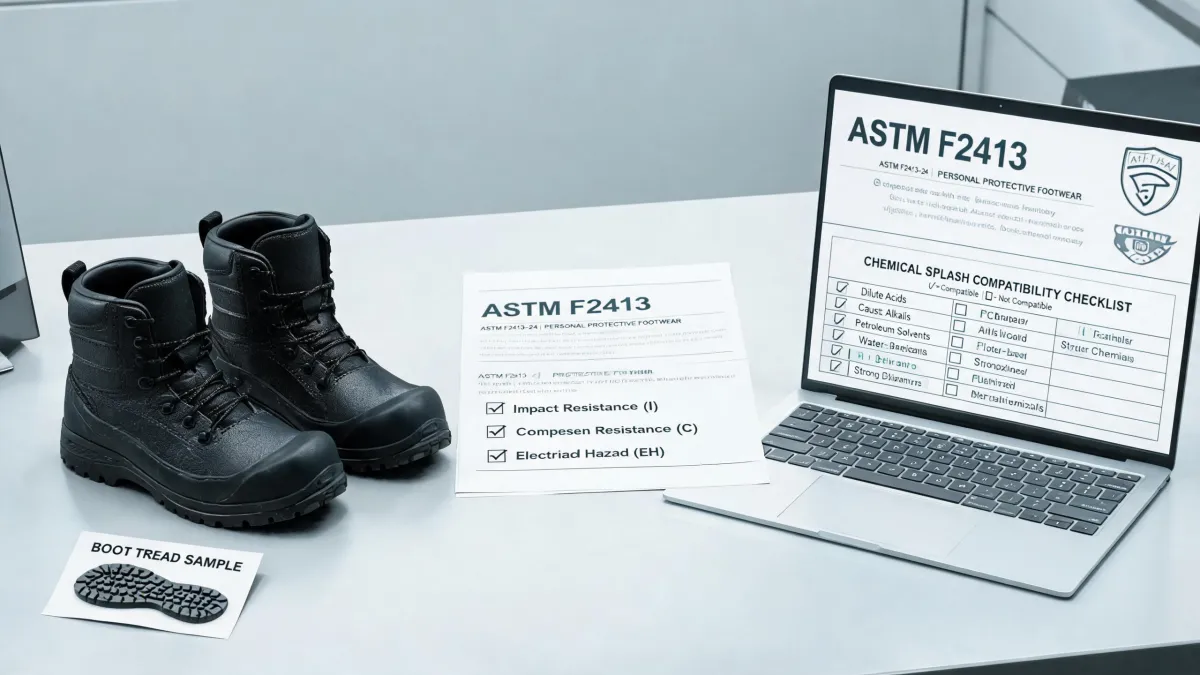
We didn't have a formal fitting process for PPE. That lack of process cost us a twisted knee, a safety audit ding, and a $1,400 workers' comp claim. Now we check fit before we check anything else. And if a boot doesn't meet ASTM F2413-18, it doesn't go on the order list. As of January 2025, that's the standard I look for. OSHA 29 CFR 1910.136 sets the employer-side requirement; I don't skip that either.
What Wet Feet Actually Cost
A leaking boot isn't just uncomfortable. It's a safety issue and a budget issue.
- Feet in wet boots lose warmth fast. Cold feet mean distracted workers, and distracted workers make mistakes.
- Prolonged wetness causes trench foot and fungal infections. I've had a guy lose a week after "toughing it out" in a wet leather boot.
- Return rates go up. When a $200 pair of "waterproof" boots fails, they get returned. That's shipping, repackaging, and annoyance.
- Employees lose trust in the company's PPE choices. Once they think you're buying junk, they stop wearing proper protection. That's the real cost.
A vendor who couldn't provide proper documentation once got his invoice rejected by finance. That was an $800 mistake. But the more expensive mistake is buying something because it looks good in a catalog, not because it survives the actual site.
What I Actually Buy Now (Short Version)
I'll keep this brief, because the problem is the point.
I went back and forth between leather and rubber for a year. Leather looked more professional. Rubber worked better. For wet, muddy, or chemical-heavy environments, I buy men's Dunlop rubber boots. The Dunlop Dakota safety boots are my first choice when a steel toe is required. They're not fancy. The rubber smell is real. But they keep water out, they're easy to rinse, and they don't pretend to be something they're not.
For dry, indoor, or supervisory roles, leather work boots can be fine. But you have to be honest about the break-in period.
How to break in leather work boots (if you insist on leather)
There's no way around it: leather work boots take time. From my experience, the smart way to break them in is to wear them for a couple of hours at a time, for a week, before you do a full shift. Use a boot stretcher in the toe box if they pinch. Don't try to "run them in" during a 12-hour day. That's how you get blisters and a guy who refuses to wear them.
Also, don't buy kids work boots sized up "so they can grow into them." If a kid's boot is too loose, it can slip and cause a fall. The right size is the right size, even if it means buying new ones next spring.
The Bottom Line
An informed customer asks better questions and makes faster decisions. I'd rather spend ten minutes explaining the difference between rubber and leather than deal with mismatched expectations later. If you're buying boots for a job site, ask the hard question: will these still be waterproof in six months? If the answer is "we'll see," you're buying the wrong boot.
Get a Dunlop Dakota safety boot if you need steel toe and standing water. Get a men's Dunlop rubber boot if you need all-day wet. And if you buy leather, budget the break-in time. Your feet—and your employees' feet—will thank you.