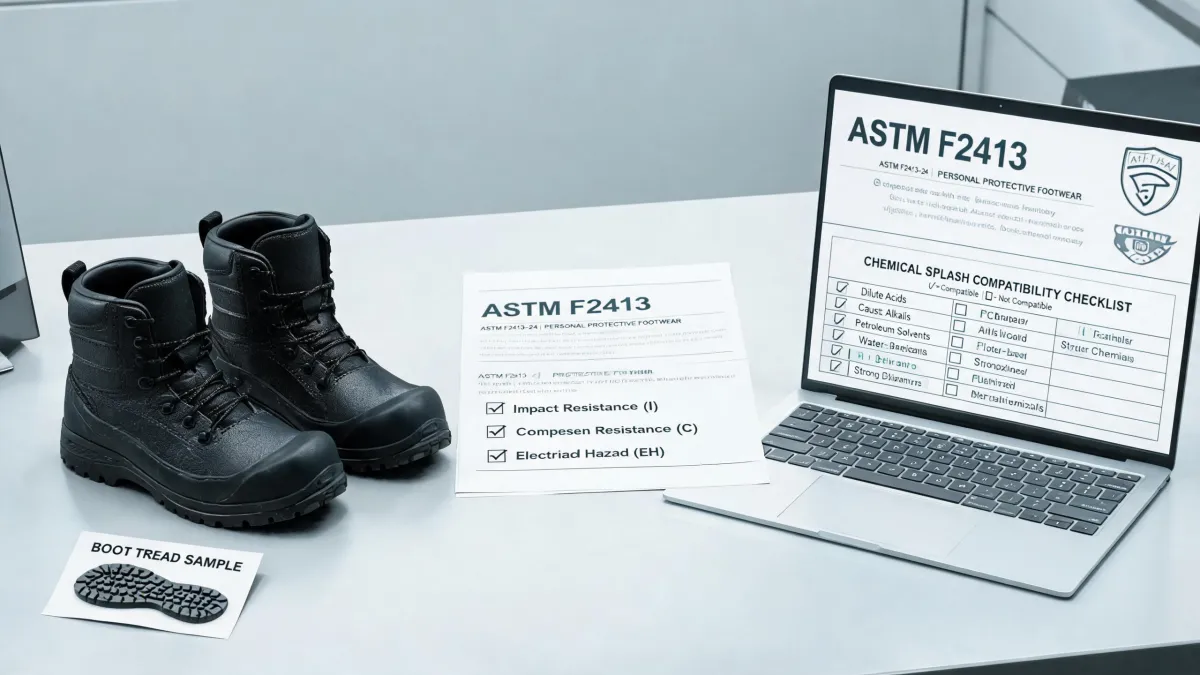
If you're shopping for Dunlop safety boots, start with the hazard, not the model number. The most protective boot in the catalog is the wrong boot if it doesn't match your environment. I found this out in 2019 on a $3,200 order that had to be returned. Every pair of Dunlop metatarsal boots was correct on paper. They had steel toe caps, metatarsal guards, and met the specs. But the worksite had a chemical exposure issue we hadn't asked about, and the rubber compound wasn't rated for it. One week of delays, $680 in return shipping, and a customer who almost switched suppliers.
Here's the thing: I've been handling PPE orders for nine years. I've personally made (and documented) three significant mistakes, totaling roughly $4,800 in wasted budget. Now I maintain our team's equipment checklist so other buyers don't repeat my errors.
Why I Don't Start With the Model Number
People assume buying safety boots is like buying sneakers. You pick a style, confirm the size, and you're done. The reality is different. The boot is only as good as the hazard assessment behind it. Use the wrong boot, and it might not fail dramatically. It'll just wear out faster, offer less protection than expected, or create a compliance issue during an audit.
From the outside, a $180 Dunlop boot and a $90 one look almost identical. The difference is in the toe cap material, the sole compound, the chemical resistance, and the safety ratings. You can't see that in a product photo. You have to verify it against the environment.
In my first year handling orders, I made the classic mistake: the customer said "steel toe boots," so I quoted the most popular steel toe model. It turned out the crew was crawling on metal gratings and dropping heavy parts. They needed metatarsal coverage, not just toe protection. That mistake cost $890 in rework and a three-day production delay. That's when I learned to ask: what's the actual hazard?
Dunlop Boot Lines: What Actually Matters
Dunlop has a wide range, which is honestly both a strength and a source of confusion. The lines I order most often:
- Dunlop steel toe boots – for general industrial work with impact and compression hazards.
- Dunlop metatarsal boots – for work where falling objects can hit the top of the foot, not just the toe.
- Dunlop rubber boots – for wet environments and basic chemical splash protection.
- Dunlop hazmat boots – for more aggressive chemical exposure. Different rubber compounds matter here.
That list looks straightforward. It's not. Here are two things that surprised me.
Steel Toe vs. Metatarsal: The Overlooked Difference
Steel toe protects the front of your foot. Metatarsal protection extends further, covering the instep and the bones that run along the top of your foot. If you're kneeling, climbing ladders, or handling heavy objects above foot level, metatarsal coverage can be the difference between a bruise and a broken foot. The extra protection costs more and feels heavier. That's fine if the hazard is there. It's wasted money if it's not.
Simple.
Rubber Boots Aren't All the Same
Here's a misconception I see a lot: "rubber boots are rubber boots." Not true. The rubber compound, liner material, and manufacturing process determine whether a boot is waterproof, chemical-resistant, or just water-resistant for a while. Dunlop's neoprene and nitrile boots handle different chemicals than their standard PVC or natural rubber lines. If you search "dunlop rubber boots near me," you'll get a dozen results. The right one for a dairy farm is not necessarily the right one for a chemical plant.
Who's Responsible for PPE Training? (It's Not the Worker)
One of the most common gaps I see in companies isn't the gear. It's the training. The question is direct: who is responsible for making sure that workers know how and when to use PPE? The answer, per OSHA's PPE standard (29 CFR 1910.132), is the employer. It's not the worker's fault if they use a boot wrong or skip the safety glasses because nobody told them when to wear them.
"The employer shall provide training to each employee who is required by this section to use PPE." – OSHA 29 CFR 1910.132(f)(1)
That means you can buy the best Dunlop metatarsal boots on the market and still fail safety if your people don't know what they're for, when to wear them, and how to inspect them. Training is part of the purchase. I'd argue it's the most important part.
In 2024, one client asked me to help them close a safety audit gap. They had the right boots, the right safety glasses, and a storage room full of PPE. But they had no training records. The auditor asked a simple question: "Show me who trained these workers on when to wear this equipment." They couldn't. That's the kind of thing that turns a minor finding into a serious citation.
The 10-Minute PPE Check That Saves Us
After the third rejection in Q1 2024, I built our pre-check list. It's not fancy. It takes about 10 minutes for a small crew, and it covers more than boots. Since we started, we've caught 47 potential errors. Exactly the kind of stuff that leads to rework or audit findings.
- Confirm the hazard and the required safety rating before ordering.
- Check safety glasses for scratches and impact rating (ANSI Z87.1).
- Verify fire extinguisher service tags – monthly inspections and annual servicing dates.
- Document who's been trained on each piece of PPE.
If you're wondering why fire extinguisher service shows up on a boot checklist: because an audit doesn't care about your good intentions. It cares about paperwork. In 2024, a client passed their PPE inspection but got a violation for an expired extinguisher tag. One separate issue, but it hurt their trust and slowed everything down. If you search "fire extinguisher service near me," make sure they log the date on the tag. It's a small detail with big consequences.
What Vendors Won't Tell You About 'Dunlop Rubber Boots Near Me'
Here's something vendors won't tell you: the first quote is rarely the final price once you factor in shipping, lead time, and returns. And "standard turnaround" usually includes buffer time. That's not a scam. It's how they manage their production queue. But if you're ordering a specialized Dunlop hazmat boot, don't believe a two-day delivery promise without confirming stock.
I once had two hours to decide on a rush order for a client. Normally I'd confirm sizing, hazard, and compliance standards first. But with the client's crew about to be idle, I went with a trusted model and skipped one verification. The boot was right, but the sizing was wrong for two workers. $320 in return shipping and a lesson: even under time pressure, five minutes of verification beats five days of correction.
Another thing: if you're looking for "dunlop rubber boots near me," local stock can be misleading. A retailer might have Dunlop boots in stock, but not the specific safety rating you need. I've seen people buy based on the logo, not the label. The logo gets you in the door. The label tells you if it belongs on your site.
When My Advice Doesn't Apply
Honestly, I'm a buyer, not a safety engineer. My advice comes from mistakes, not from lab testing. If your exposure involves unusual chemicals, extreme temperatures, or electrical work, get the spec from a qualified safety professional. Dunlop's technical team and your supplier's compliance people should be part of that conversation. My checklist is the starting point, not the final authority.
Also, not every role needs the top-tier boot. A warehouse supervisor who's mostly walking doesn't need the same metatarsal boot as someone on a demolition crew. Matching protection to the actual task is the whole point. Overbuying is just as wrong as underbuying, just in a different direction.
So, yeah. Start with the hazard. Ask the questions. Write it down. In my experience, that's the difference between buying a boot and actually protecting someone.