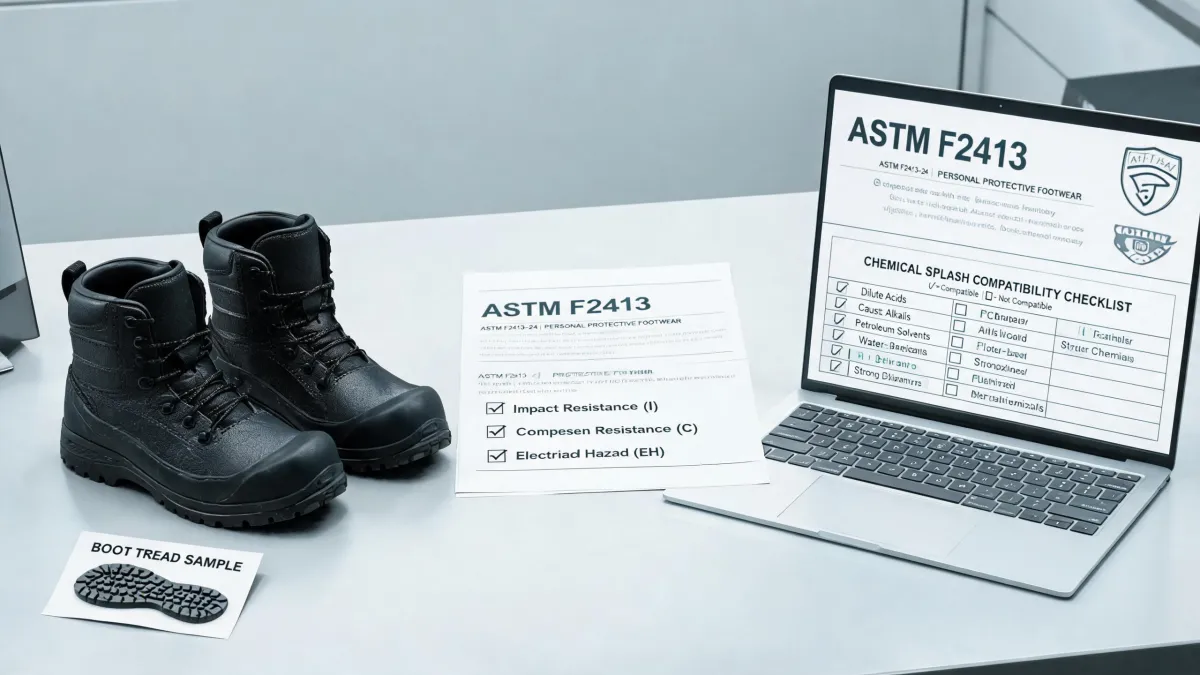
People ask me all the time: which Dunlop boot is the best one?
It's the wrong question, and I say that with respect—I used to ask it myself. The right question is: which Dunlop boot is best for my job site? Sometimes the answer isn't even a Dunlop boot at all. But if you're starting with Dunlop because you care about durability and waterproofing, you're already ahead of most buyers who just pick the lowest number on a price list.
I've been handling safety purchasing for an industrial services company for about six years. In that time, I've signed off on some genuinely bad equipment. I don't have hard statistics on industry-wide failure rates, but based on my own invoices, I wasted roughly $3,500 in 2022 and 2023 on boots that didn't survive their job, plus a compliance fine that I still flinch thinking about.
The reason I'm writing this is simple: there is no universal answer. Safety gear is scenario-dependent. Once you know which scenario you're in, choosing between a Dunlop steel toe rubber boot, a Dunlop hazmat boot, or even a sneaker-style steel toe shoe gets a lot easier.
Scenario A: General Industrial Work — Dry Floors, Normal Wear, Some Water
This is the most common scenario I deal with: warehouse operations, assembly lines, loading docks, general construction. Workers need impact protection, puncture resistance, and enough waterproofing to handle a wet floor or a rainy shift. They don't need chemical-grade sealing or special hazmat certifications.
For this environment, Dunlop steel toe rubber boots are my default recommendation. They're not flashy. They don't look cool. But they handle the basics really well and hold up for a long time—as long as you're not throwing chemicals at them.
Here's where I made my first big mistake. In early 2023, I ordered 14 pairs of sneaker-style steel toe shoes, including some Nike steel toe shoes, because I thought they'd be more comfortable and more modern for the team. And honestly, they were comfortable. The problem was lifespan. On wet concrete and dusty floors, those shoes wore down fast. By month five, we had delaminated soles, worn heels, and a couple of blown-out side seams. The boots we replaced them with cost about the same per pair and lasted more than twice as long.
I don't want to throw Nike under the bus. They make a decent casual steel toe shoe. But those shoes are designed for lighter duty—maintenance work, driving, inspections—not for eight-hour shifts in a warehouse. The mistake wasn't buying them. The mistake was buying them for the wrong job site.
If you want to compare options for your own team, calculate cost per month of use, not price per pair. I did a rough version of that in March 2024 using invoices from our last three orders. We were paying around $145 a pair for a steel toe rubber boot, and it was good for about 14 months of daily use. The sneaker-style shoes were around $130 a pair and lasted roughly five months in the same work. That's about $10 per month for the rubber boots versus $26 per month for the sneakers, give or take. The more expensive-looking choice was, in fact, the cheapest one.
Scenario B: Chemical Exposure, Wastewater, and Hazmat Work
This scenario is a completely different animal. If your crew is dealing with solvents, acids, caustic cleaners, wastewater, or any regulated hazardous material, then the conversation moves from "waterproof" to "chemically resistant."
Dunlop hazmat boots are not the same product as the standard Dunlop steel toe rubber boot. They use a sealed or molded construction designed to keep liquids from migrating through seams. For a chemical response team or an industrial cleaning crew, this isn't a premium feature—it's the main job.
I learned this the hard way in 2021. We had a crew doing industrial cleaning, and I figured all rubber boots were basically the same. They weren't. The boots we'd supplied looked fine from the outside after a few months, but the upper had degraded where it met the sole. One guy came in with contact dermatitis on his ankles and that's when we realized the boots had been letting small amounts of solvent through. We swapped the team to Dunlop hazmat boots and the skin issues disappeared.
The upfront price difference was significant. But the cost of a doctor's visit, lost work time, and the risk of a more serious chemical burn makes the premium look tiny in hindsight. I can't give you exact industry statistics for how often that kind of exposure happens, but based on our experience, it's not rare enough to ignore.
Scenario C: Eye Protection — Safety Glasses vs Goggles
I'm including this because the "safety glasses vs goggles" question comes up in almost every safety conversation I have, and it's another case where the answer depends entirely on the scenario.
Safety glasses are built for impact hazards. If you're grinding, cutting, or working with tools that send debris flying, a solid pair of impact-rated glasses is fine. But glasses are not sealed against liquids. If there's any chance of a chemical splash or a liquid spray hitting your face, you want goggles. The gap between the frame and your skin on a pair of glasses is exactly where a splash lands.
In 2022, our standard-issue safety glasses were approved across the whole company, including in a chemical storage area. I didn't think twice about it. Then one morning, a worker was pouring a solution into a drum and a drop splashed over the top of his glasses. He was lucky—the eye wash station and a quick rinse handled it. But it took 30 minutes of medical paperwork, a supervisor investigation, and one very shaken technician.
After that, the rule became simple: if liquids are present, you wear goggles. If it's only debris or dust, glasses are fine. No more company-wide standardization on a single type.
Scenario D: Fire Compliance — A Different Kind of "Boots on the Ground"
This one is about equipment we don't wear, but the logic is the same. And it's the mistake that hurt my budget the most, relative to what I gained.
In September 2022, I was responsible for arranging our annual fire extinguisher maintenance. My budget was tight, so I searched for "fire extinguisher service near me" with the intention of picking whoever could do it cheaply and quickly. The vendor I hired showed up, tagged the extinguishers, and left. I thought that was fine.
It wasn't. In March 2023, we had a fire safety inspection that found a missing pin on one extinguisher, a missing inspection record, and labels that didn't match the actual service dates. The result wasn't catastrophic, but we needed a re-inspection and paid a penalty. All in, the cheap service cost us about double what a reputable one would have.
So when you search for "fire extinguisher service near me," don't just compare prices. Ask the vendor how they document their work, whether they check pins and pressure gauges, and whether their paperwork will hold up when a fire marshal pulls the records. You're not buying a tag. You're buying a paper trail and the peace of mind that comes with it.
How to Tell Which Scenario You're In
If you're not sure which scenario applies to you, here's the process I wish I'd followed from day one:
- List the actual hazards on your site. Not the hazards you want to have, walking the floor. Are there chemical containers? Is there standing water? Do people work overhead? Are there liquid splashes during normal handling?
- Match the hazard to the equipment. Dry environment plus impact hazard means steel toe rubber boots and safety glasses. Chemicals or liquid exposure means hazmat boots and goggles. If you have electrical risks, that's a separate set of standards entirely—and you should treat it that way.
- Compare total cost of use. Take the purchase price, divide by the expected lifespan in months, and add the potential cost of failure. A glove that fails isn't $15 wasted—it's a hand injury. Low-priced gear only makes sense if it survives the conditions you actually work in.
I know this isn't the exciting answer. But it's the answer that would have saved me thousands of dollars and a fair amount of embarrassment.
The most expensive safety boot I ever bought was the one that looked cheapest on the invoice and didn't make it through the year. The same goes for eye protection and fire extinguisher services. When you stop comparing sticker prices and start comparing real total cost, the right choice gets a lot clearer.
If you remember one thing from this article, let it be this: start with the environment, not the brand. Then buy for that environment. The money you save won't just show up on your budget report—it'll show up in fewer incidents, fewer re-orders, and fewer 7 a.m. phone calls about something that fell apart.