-
Who This Checklist Is For
-
Step 1: Define the Hazard First
-
Step 2: Check the Certification Paperwork
-
Step 3: Run the Total Cost Numbers
-
Step 4: Test Fit, Weight, and Ergonomics
-
Step 5: Confirm Supply Chain and Lead Times
-
Two Mistakes That Will Cost You
-
Related Searches We Hear Every Week
-
The Bottom Line
I still kick myself for a purchase I approved in 2019. We ordered 120 pairs of generic rubber boots at $31 each. Four months later, more than half showed signs of chemical breakdown. The 'cheap' boots ended up costing us $2,300 in replacements, plus a near-miss when a worker's foot got soaked in solvent. That's when I built the five-step checklist I'm going to share with you.
Over the past six years, I've tracked every PPE invoice for a chemical processing company with 40–50 field employees. We spend roughly $35,000 a year on safety footwear alone. I've compared quotes from eight different vendors, audited our 2023 spending, and negotiated with suppliers until the numbers made sense. In my opinion, the most underrated piece of safety gear is a well-chosen boot.
Who This Checklist Is For
This is for anyone buying Dunlop boots for a team—not just for themselves. It fits site managers, procurement leads, and safety officers at chemical plants, water treatment facilities, oil fields, or workshops where concrete floors and oily surfaces are the norm. It's not for finding a fashion boot. It's for finding the right answer to the search 'best dunlop hazmat boots' before you spend money.
The checklist has five steps, and each takes about 10 minutes once you know what you're doing. Here's the flow.
Step 1: Define the Hazard First
Before you type 'dunlop chemical resistant boots' into a search engine, write down exactly what your crew faces. I know that sounds basic, but it's the step most people rush. And it's a mistake.
What most people don't realize is that 'chemical resistant' is not one rating. A nitrile boot might handle oils and fats but be useless against certain ketones. Butyl rubber is great for acids, less so for petroleum. So make a list:
- Acids, caustics, or solvents?
- Heavy impact or compression risk?
- Electrical hazards?
- Cold or wet environments?
- Slip-prone surfaces?
Once you have that, you can match the Dunlop model to the hazard. For example, Dunlop's Hazmax series is built for liquid chemical hazards; the Purofort line adds insulation and oil resistance. Neither is a universal shield. You need the manufacturer's chemical compatibility chart, not a sales pitch.
Step 2: Check the Certification Paperwork
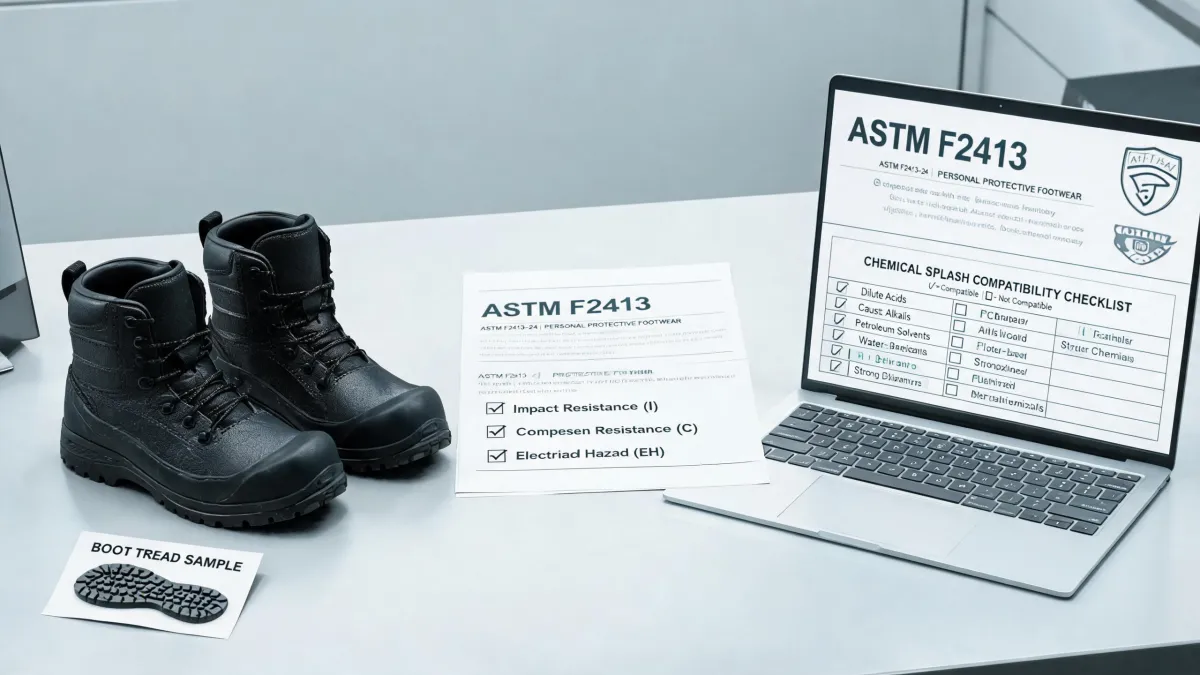
Certifications aren't just stickers. They're your legal protection. In the US, OSHA 29 CFR 1910.136 requires protective footwear when foot hazards are present. The impact and compression standards are defined by ASTM F2413-18. If a boot claims steel toe protection, that standard number should be on the boot or the datasheet.
For chemical-resistant Dunlop boots, ask for the permeation and degradation data. A 'hazmat boot' without a test report is not hazmat-grade. I've seen vendors label their boots 'chemical resistant' because the rubber doesn't melt when you spray brake cleaner on it. That's not the same as a documented permeation rate. To me, the datasheet is the real product; the boot is what you wear.
Try saying this to a supplier: 'If you can't send me the technical datasheet, don't send me a quote.' I've saved us from three bad decisions just by asking.
Step 3: Run the Total Cost Numbers
Unit price is the biggest lie in procurement. What matters is total cost over the boot's useful life. When I compare boots, I use a simple spreadsheet:
- Purchase price (including shipping).
- Expected lifespan in months.
- Replacement rate due to failures or damage.
- Labor time lost for each replacement.
- Potential injury claim costs if the boot fails.
Here's a real example from our tracking: A $45 rubber boot had an 18% replacement rate over the year. A $75 Dunlop hazmat boot had a 4% replacement rate. For a crew of 40, the 'cheaper' boot was $8,400 more expensive over 12 months because of replacements and downtime. That's why I'm a firm believer in prevention over cure. Five minutes of verification at the order stage beats five days of correction after a chemical splash.
Step 4: Test Fit, Weight, and Ergonomics
If your workers refuse to wear the boot, every safety promise is pointless. So order samples. Have three or four people from different roles—tank cleaning, maintenance, outdoor—wear them for three days. Check for arch fatigue, toe rub, and how easily they can walk on a slippery grate.
This is also the step where the old 'steel toe always means heavy and cold' myth needs to die. That was true twenty years ago. Today, Dunlop offers composite-toe boots that meet the same ASTM impact standards but weigh noticeably less. If your site gets cold, look at insulated models. Pair them with insulated coveralls for men and you've got a full winter PPE system. Don't buy a non-insulated boot and hope thermal socks will save you—they won't.
Step 5: Confirm Supply Chain and Lead Times
A safe boot that arrives in eight weeks isn't protecting anyone. Before you commit to an order, ask two questions:
- What's the current fill rate—do they actually have stock?
- What's the backup plan if a batch is delayed?
We learned this the hard way in Q2 2024. We switched vendors to save 6% per pair, and the result was a three-week delay that forced a crew to wear old boots past their replacement date. Now our policy requires quotes from three vendors minimum, but Dunlop's availability for high-mix safety boots has been strong enough that they're the default for most of our orders.
Two Mistakes That Will Cost You
One: choosing a boot solely by price. The '$28 rubber boot' from an online auction site might have a sole that turns into a slick surface when it hits oil. A slip and fall can cost more than a year of boot budgets. You don't need the most expensive model, but you do need a boot with tested slip resistance.
Two: ignoring the inner lining material. I remember a batch of 'hazmat boots' that looked perfect on paper, but the inside had a latex liner. A few workers with latex sensitivities developed rashes, which led to medical claims and a fine from our safety auditor. If I'd spent ten minutes reading the material spec, I could have avoided the entire incident.
Related Searches We Hear Every Week
Because this article covers a wide set of keywords, let me answer a few frequent side questions.
On Cloud tactical boots: On Cloud makes a comfortable tactical-style shoe, but it's not a certified safety boot. If your team needs protection against chemical splash or impact, you need a boot with proper certifications. For non-hazard administrative roles, sure, but not for the field.
Insulated coveralls for men: If you're buying winter PPE, make sure the boot and the coverall's leg opening are compatible. A bulky coverall that bunches up over the boot can catch on equipment. Dunlop's insulated Purofort boots pair well with standard work coveralls.
Where to buy Timberland work boots: I get this one because Timberland has a solid reputation for casual comfort. If you're in a low-hazard job, Timberland might be fine—just buy from an authorized retailer to avoid counterfeits. But for hazmat or chemical-heavy environments, ask for their permeation data. Timberland is not usually the go-to for that. We standardized on Dunlop for safety-critical roles, but I wouldn't criticize any brand before seeing their test reports.
The Bottom Line
A checklist won't make the decision for you. It just makes sure you look at the things that matter. The next time you search for 'best dunlop hazmat boots' or 'dunlop chemical resistant boots,' you'll already know the real question is: which hazard are you fighting today? Answer that, and the procurement choice becomes a lot simpler.