It was a Tuesday in August 2019. I was standing about four feet from a welder when I felt a sharp sting on the top of my foot. That's the thing about weld sparks—they don't always hurt right away. By the time you feel them, they've already burned through the fabric.
I looked down. There was a hole the size of a pencil eraser in my right boot. And my sock was starting to smoke.
That was the moment I realized I'd made a really dumb decision.
The Day I Almost Learned the Hard Way
I've been buying safety equipment for our crew for about seven years—almost eight now, if you count my time as an assistant. I should have known better. But in 2019, our budget was tight. Actually, it always is. I saw a pair of rubber work boots online for twenty bucks less than what I usually paid. They looked fine. They had lug soles, they were waterproof, and they seemed sturdy enough. So I bought them for the welding shop guys.
I didn't read the labels. I didn't check whether they were rated for heat or weld splatter. That was the mistake.
The boot that burned through was one of those cheap ones. It wasn't even a Dunlop—just some generic brand. The rubber melted like candle wax when the spark hit it. The welder saw me jump and killed the arc. He said, 'That's why I wear leather.' Yeah. Good point.
I spent the rest of the day writing an incident report. $20 saved. $2,400 in emergency room visit and lost time—not to mention the fact that I could have ended up with a permanent foot injury. I still kick myself when I think about it.
Why I Now Read the Standards
After that, I actually started reading the safety standards I was supposed to know. Not just skimming them—reading them.
Here's what matters for anyone buying work boots in a welding environment:
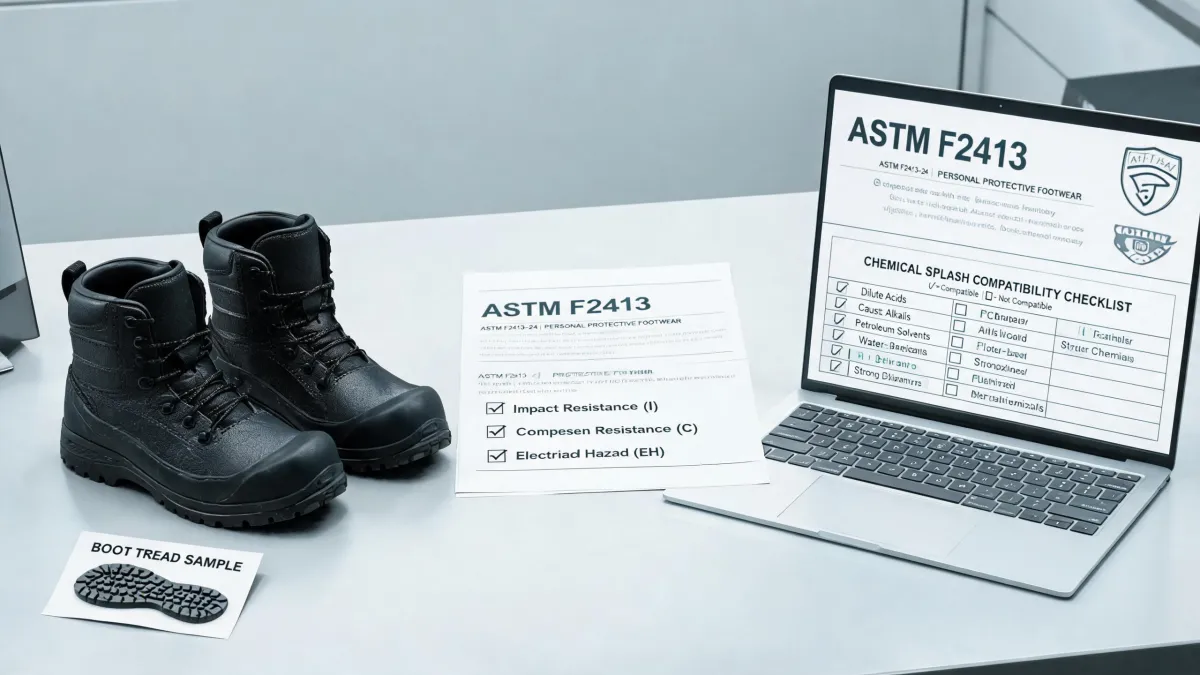
- ASTM F2413-18 covers impact and compression resistance for toe protection. If you need steel toes, look for this standard.
- OSHA 29 CFR 1910.136 requires that protective footwear be chosen based on the hazards present. That means you can't just buy a boot because it's popular.
- For welding, the heat-resistant rating matters. Rubber boots are generally not rated for weld splatter unless they're specifically made for it.
I know, I know—that's a lot of alphabet soup. But here's the plain-English version: don't buy boots by price tag. Buy them by risk assessment.
Where Dunlop Boots Actually Fit (And Where They Don't)
So let's talk about Dunlop. I actually bought a pair of Dunlop Chesapeake men's rubber boots plain toe for our water treatment room later that year. That model is great for a few specific things:
- Wet, slick floors (the rubber grips well)
- Chemical splash protection (they meet safety standards for many non-abrasive chemicals)
- Long days standing on cold concrete (the rubber insulation helps)
But here's the honest part—the part that would have saved my foot if I'd understood it earlier: that boot is not a welding boot. Plain toe means no impact protection. And rubber, even high-quality Dunlop rubber, isn't designed to stop a 3,000°F spark from burning through. It's a great boot for the right job. It's a terrible boot for the wrong one.
If you're searching for dunlop boots or dunlop rubber boots near me, you've probably seen a bunch of models and wondered which one you need. My advice: start with your hazard list. If you're in a welding environment, look for leather or flame-resistant materials. If you're handling chemicals or working in a wet environment, then look at Dunlop's rubber line.
We also get asked about wedge sole work boots all the time. Wedge soles are popular in construction because they don't trap mud and debris, and they give a wider base for ladder rungs. But a wedge sole isn't automatically safer than a lug sole. It depends on the surface. On wet metal, a lug sole might be better. On soft dirt, a wedge sole helps you not sink. Again—match the boot to the job.
A Note on Goggles, Glasses, and Other Gear
The same logic applies to eye protection. People ask me about safety goggles vs safety glasses all the time. The short answer: they're not interchangeable. Safety glasses protect from low-impact debris, but they don't seal around your eyes. Goggles seal. If you're grinding or splashing chemicals, goggles are the right choice. If you're just walking around a clean shop, glasses are fine.
Does it seem obvious? It didn't to me back in 2019. I assumed all PPE is basically the same. It's not. That assumption is what almost cost me my foot.
What I'd Do Differently
If you're still reading, here's the part I wish someone had told me when I was starting out:
- Write down the hazards in every station before you buy anything. Our welding station should have raised a red flag the moment I looked at a rubber boot.
- Check the standards, not just the marketing. Look for ASTM or EN ratings on the label. If it doesn't have one, don't trust it for safety-critical work.
- Buy one pair to test before buying a bunch. That $20 mistake multiplied across the crew would have ended up costing thousands. Better to spend $150 on a quality pair and try it for a week.
Now, our inventory list has clear categories:
- Welding area: Flame-resistant leather boots (not rubber).
- Wet/chemical area: Dunlop Chesapeake boots (plain toe is fine here, but steel toe also available if needed).
- General assembly: Wedge sole boots or similar.
And my boss finally approved a $1,500 budget for safety gear testing. That's a lot less than the $2,400 incident report cost. Go figure.
So if you're looking for dunlop boots or thinking about welding safety equipment, do what I didn't do: start with the hazard, not the brand. And honestly, if you're shopping for Dunlop rubber boots near me, take the time to go to a local safety supply store. Try them on. Talk to someone who knows the line. Because the right boot is the one that's right for your specific work.
No, I don't work for Dunlop. I just owe them a little respect for making boots that actually do what they say. I just need to pay attention to what they say first.