-
Dunlop Boots: What Buyers Actually Ask
-
Are Dunlop Rubber Boots Steel Toe?
-
How Do Dunlop Boots Compare to Lacrosse Rubber Boots or Rocky Work Boots?
-
What Do the Safety Ratings on Dunlop Boots Actually Mean?
-
Steel Toe or Composite Toe—Which Should You Choose?
-
How to Lace Up Work Boots Properly?
-
What's the Biggest Mistake Buyers Make with Safety Boots?
-
Do I Need Insulated Dunlop Boots for Winter Work?
-
Are Dunlop Rubber Boots Steel Toe?
Dunlop Boots: What Buyers Actually Ask
If you're responsible for kitting out a crew with safety footwear, you know the choices can feel overwhelming. This FAQ covers the basics I wish someone had told me when I took over purchasing in 2020: whether Dunlop steel toe boots make sense, how they compare to other trusted brands, what those safety codes mean, and how to get the lace-up right.
Are Dunlop Rubber Boots Steel Toe?
Yes—and this is usually the first thing my internal customers ask. Dunlop makes several rubber boots with a steel toe, including styles designed for everything from general construction to hazmat environments. The steel toe models are marked as meeting ASTM F2413-18 impact and compression standards. From the outside, they can look like any old puddle-jumper, but the difference is inside: a protective toe cap and, on many models, a puncture-resistant insole. If a crew member needs waterproofing plus impact protection, a Dunlop steel toe rubber boot is a practical choice. Just double-check the specific model's rating before you order.
How Do Dunlop Boots Compare to Lacrosse Rubber Boots or Rocky Work Boots?
I've purchased from all three at some point, and each has strengths. Lacrosse rubber boots are known for being lightweight and comfortable; Rocky work boots have a solid rep in hiker-style and tactical footwear. Dunlop, though, covers a wider range of specialized safety features—like hazmat ratings, metatarsal guards, and industrial-grade rubber compounds. To be fair, the 'best' brand depends on your jobsite. For wet, muddy conditions and compliance with insurance requirements, I've standardized on Dunlop because the sizing and safety ratings have been consistent across their steel toe line. But I still keep a few Lacrosse options around for crews who prioritize lightweight flexibility for light-duty tasks.
What Do the Safety Ratings on Dunlop Boots Actually Mean?
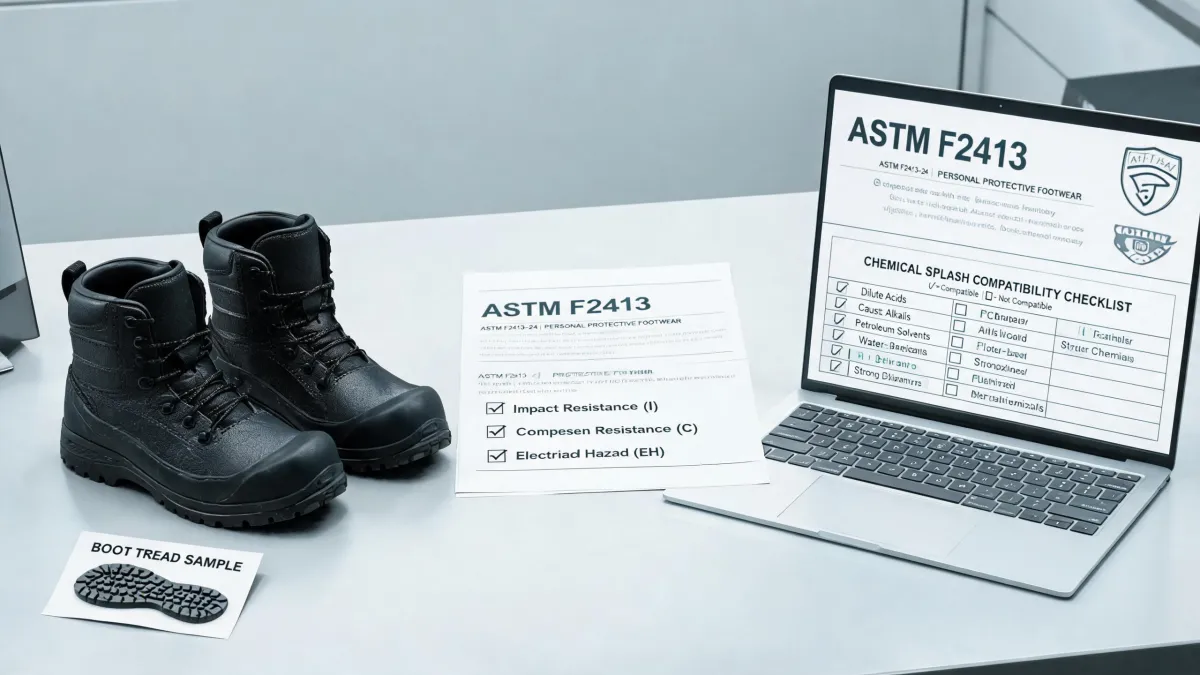
This is the question that separates informed buyers from price shoppers. Most safety toe boots in the U.S. are built to ASTM F2413-18. A Dunlop boot stamped with I/75 meets the standard's Class 75 impact limit; C/75 covers Class 75 compression. Some styles add Mt (metatarsal) or EH (electrical hazard). OSHA says employers must provide protective footwear when there's a risk of foot injury (29 CFR 1910.136), but it doesn't dictate which rating—that's up to you. I once had a supervisor argue a $70 boot was 'fine' until I showed him the ASTM certificate—it only met impact, not compression. Know your hazard.
Steel Toe or Composite Toe—Which Should You Choose?
Steel toes are classic: durable, impact-resistant, and usually cheaper. But they come with downsides—they're heavy and conductive. If your crew works in cold weather, metal toes get freezing; if they work around live electrical parts, composite is non-conductive. In 2021, I ordered steel toes for a crew that spent weeks outdoors during winter. The complaints rolled in. We switched those guys to insulated composite-toe Dunlop rubber boots, and the gripes stopped. For general construction, steel toe is still my default because the price is right and it handles most hazards. But don't ignore the environment. Look, the 'best' boot is the one that fits the actual job.
How to Lace Up Work Boots Properly?
Most people tie their boots like sneakers, which can cause heel slip and blisters. To lace up work boots the right way, start with the bottom eyelets and work up, keeping tension even. When you reach the top two eyelets, use a heel lock: thread the laces down through the same side loops to create a loop, then cross and tie. This locks your heel in place. On Dunlop rubber boots with quick-lace hooks, don't leave the top hooks empty—use them, but keep the laces a bit looser at the ankle so you can tuck your pants in. A proper lace job takes 30 seconds. Thirty seconds of effort. Worth it.
What's the Biggest Mistake Buyers Make with Safety Boots?
Real talk: buying on price alone is a trap. In 2023, we had a rush order for a storm cleanup crew. I had two hours to decide and our usual supplier was out of stock, so I grabbed a cheaper 'equivalent' from a new vendor. Within three weeks, soles had separated on two pairs and one toe cap cracked. The replacement shipping plus labor costs wiped out any savings. In hindsight, I should have waited or paid for expedited freight from a brand I trusted. Now I verify ASTM certifications and vendor invoices before every order. An informed buyer is less likely to get burned—and your finance team will thank you for not eating hidden costs.
Do I Need Insulated Dunlop Boots for Winter Work?
If your crew works outdoors when temperatures drop, insulation isn't a luxury—it's a safety factor. Cold feet distract from the job and increase the chance of slips. Dunlop offers insulated rubber boots with a thick lining that keeps warmth in without making the boot too bulky. But I have mixed feelings: insulation adds weight and cost, so if it rarely gets freezing where you are, it's overkill. Part of me wants to standardize one insulated boot for all seasons to simplify inventory; another part knows the non-insulated version breathes better for summer. My rule of thumb: buy insulated when the average low dips below 40°F, and keep regular steel toe boots for the rest of the year.