We All Think We Know the Math
Last year, I sat down to audit our 2023 safety equipment spending. I’d been tracking every invoice—every single one—for over six years. Our annual budget for work boots and PPE was around $42,000. I felt pretty good about it. We’d negotiated hard on volume, got a decent per-unit price on our standard steel-toe boots, and everyone was compliant.
But something felt off. We were buying the same number of pairs every year, but the total spend was creeping up. Not dramatically, but enough to catch my eye when I was reconciling Q4. I figured it was just inflation. It wasn’t. The real problem was a lot more expensive than inflation.
Surface Problem: The Sticker Price
Most of my colleagues—hell, most of the industry—focus on one thing: the unit cost. "We can get this boot for $65, or we can get that boot for $95. The $65 one saves us $30, easy decision."
It sounds so logical. And for a mass-market consumer product, it might even be right. But safety footwear isn't a consumer product. It's a line item in a risk management budget. When you buy a boot for $65, you aren't just buying rubber and steel. You're buying a promise—one that has a cost attached to getting it wrong.
The Question Everyone Asks vs. The One They Should
The question everyone asks: "What's your best price on a steel-toe boot?" The better question: "What is the total cost of this boot over its useful life, including the cost of a failure?"
When I looked at our data, I found that the 'cheaper' boots (which, by the way, were still from a reputable brand, just a lower-tier model) had a 40% higher replacement rate within the first six months. That meant more orders, more shipping, more administrative time processing returns and replacements. And that's before we even talk about the downtime of an employee whose boot sole separated on a wet surface.
Deep Dive: Why 'Cheap' is a Hidden Tax on Your Budget
Here's where it gets interesting—and where I think most buyers miss the point. It's not just about durability. It's about compliance and specialization.
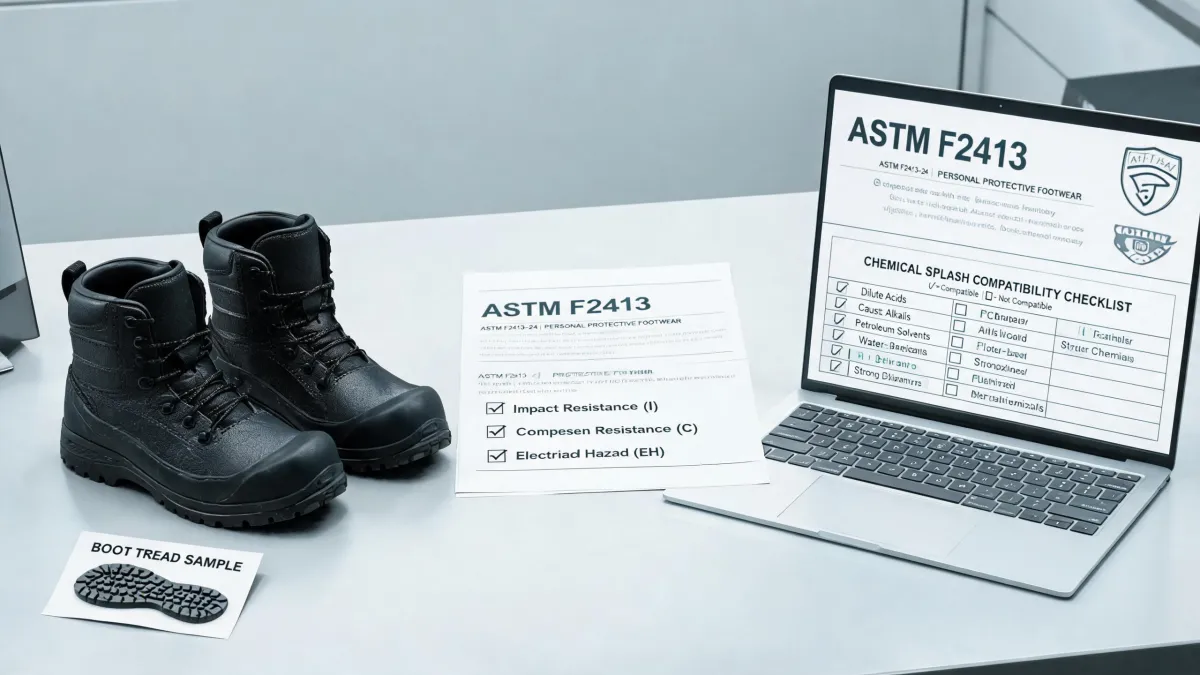
We needed boots for a hazmat scenario last year. One crew. Five guys. My new hire—great guy, very cost-conscious—found a 'general purpose' steel-toe boot that met the basic ASTM standards. It was $50 less per pair than the dedicated Dunlop Hazmat boot. He bought the cheap ones.
Saved $250 by buying general purpose boots. Ended up spending $1,200 on a hazmat cleanup redo when a boot wasn't rated for the specific chemical exposure. The 'budget' option looked smart until the boots absorbed a solvent they weren't designed for. Net loss: $950. – My notes from Q2 2024
That was a hard lesson. The issue wasn't that the boots were bad. The issue was that they were the wrong tool. Most buyers focus on the sticker price and completely miss the specialization factor. Dunlop Hazmat boots aren't just rubber boots with a fancy name. They're designed with specific chemical resistance properties. You can't see that on a spec sheet unless you know what to look for.
The 'It'll Be Fine' Trap
I knew I should have double-checked the chemical compatibility chart before signing off on that order. But I thought, "It's just a quick job, what are the odds?" Well, the odds caught up with me. The solvent was on the 'not recommended' list for that boot's material. It was written right there on the manufacturer's website. I just didn't look. (Which, honestly, was a stupid mistake. I knew better.)
That $950 redo? It wasn't even the biggest cost. The biggest cost was the project delay and the hit to our safety record. Try explaining to your plant manager that you saved $50 per boot but cost the company two days of production. That's a conversation you don't win.
The Real Cost of Getting It Wrong
So let's talk about the hidden costs that never show up on a purchase order. These are the things that, as a cost controller, keep me up at night:
- Administrative Drag: Every return, every warranty claim, every 'please expedite' call costs money. I tracked this once. It averaged $35 per incident in staff time alone.
- Downtime: If a boot fails on the job, the employee is out of service. That's lost productivity, often at overtime rates to cover the gap.
- Compliance Risk: You can't just hand a guy a steel toe boot and call it a day. You need the right boot for the hazard. A $1,200 cleanup is cheap compared to a workplace injury or an OSHA fine.
- Replacement Cycle: 'Cheaper' boots wear out faster. In our analysis, a $95 Dunlop boot lasted an average of 14 months in a standard warehouse environment. A $65 boot lasted 9 months. The $95 boot was actually cheaper per month of use.
This was true a few years ago when I first started digging into this data. Today, with inflation and material costs shifting, it's even more stark. The premium for a quality boot has narrowed, but the durability gap has widened.
The Fix: A Simple Framework
I'm not going to give you a 10-step plan. The problem is already clear. Here's the short version of what we changed:
- Stop looking at unit price. Start looking at 'cost per wear-month.' It sounds fancy. It's just division. Total boot cost divided by expected lifespan in months.
- Audit your hazards properly. If a crew is handling chemicals, don't ask for a 'general safety boot.' Ask for a boot with a spec sheet for that chemical.
- Buy the right spec, not the cheapest price. For a dry warehouse, a standard steel toe is fine. For a wet, oily, or hazardous environment, invest in the Dunlop Hazmat or a similarly specialized boot. The price difference is usually smaller than the cost of one failure.
- Track your reorders. If you're buying the same boot for the same role twice as often as you think you should, that's a data point. Don't ignore it.
Look, I'm not saying I've never bought a budget boot. I have. For a one-week job in a clean area? Fine. For a long-term assignment in a real work environment? It's a false economy. The question isn't 'Is it cheaper?' It's 'What is the total cost of this decision, and what is the cost of being wrong?' That's the math that actually matters. (Note to self: I really should write this up as a formal TCO model for next year's budget review.)