That $45 Boot Cost Us $1,800
It was a Tuesday in November 2023. I was walking through the warehouse checking a shipment of what I thought were "budget-friendly" work boots when one of our crew leads walked over holding a boot with the sole completely separated from the upper. "Third pair this month," he said. "And honestly, this one's not even that old."
I asked how long he'd had them. Six weeks. Six weeks of light-to-moderate warehouse work. Not oil rig abuse. Not construction site punishment. Just concrete floors and normal walking.
That was the moment I started questioning our entire footwear procurement strategy.
How We Got Here: The Lowest-Bid Reflex
I'm a procurement manager at a 90-person industrial supply company. I've managed our PPE budget—about $48,000 annually—for six years now. And for the first few years, I did what most buyers do when they're drowning in purchase orders: I looked at unit price. The cheapest steel toe boot that technically met our specs won the PO every time.
I want to say we ordered maybe 300 pairs of boots in that period, though I might be misremembering the exact number. It was somewhere in that range, spread across four suppliers.
Here's what I didn't account for at the time: replacement frequency, worker downtime, foot fatigue-related productivity loss, and the occasional gritted-teeth safety incident when a boot failed at the wrong moment. The cost of those hidden items would eventually dwarf the price difference—maybe $18,000 total, give or take a few thousand.
The Turning Point: When the Numbers Finally Made Sense
The sole separation incident was our wake-up call. I went back and audited every boot order we'd placed over the previous 24 months, documenting everything in our cost tracking system. The results surprised me—and not in a good way.
Our cheapest boots (around $42 a pair) were failing at an average of 7 weeks. The mid-range options ($60–$80) lasted 12–16 weeks. The premium options ($95–$125) consistently made it 6 months or more.
Here's the total cost of ownership math:
- $42 boots: about 7 replacements per worker per year → roughly $294 per worker annually, plus 14 hours of labor swapping boots and adapting to new pairs
- $70 boots: about 4 replacements per year → roughly $280 per worker annually, plus 8 hours of labor
- $110 boots: about 2 replacements per year → roughly $220 per worker annually, plus 4 hours of labor
Not what I expected. The $42 boots were essentially tied in annual cost with the $70 options—and the $110 boots were the cheapest option over a full year of use. The surprise wasn't the durability difference. It was how much hidden value came with the "expensive" option: fewer replacement cycles, less downtime, and far fewer complaints from workers who were tired of breaking in new boots every two months.
Why Brand Selection Started Mattering More
Once I switched to TCO thinking, I stopped looking at boots as a commodity and started treating them as safety equipment. That changed the conversation entirely.
For example, Dunlop rubber boots are engineered for specific environments—wet conditions, chemical exposure, hazardous material handling. I initially searched "dunlop rubber boots near me" hoping to stock up locally, but the selection at regional distributors was limited to one or two generic models. Ordering dunlop hazmat boots for sale online gave us access to the full range: certified chemical resistance, steel toe options, insulated linings—models that simply didn't exist on local shelves.
And look, I'm not here to trash other brands. We've tested Caterpillar work boots and Merrell work boots for different teams, and each has its place. Caterpillar boots hold up well for general construction work and have solid durability. Merrell boots are more comfortable for lighter duty but don't offer the same chemical resistance specs we needed for our hazmat teams. The point isn't which brand is "best"—it's which boot delivers the right protection profile for the specific hazard environment you're dealing with. A boot that fails in a chemical environment doesn't just cost you a replacement pair. It potentially costs you an injury.
The Same Lesson Applies to Head Protection
This TCO framework didn't stay confined to boots. The same logic now drives every PPE category we procure, including the ongoing safety helmet vs hard hat debate.
Hard hats are cheaper. No question. We could buy them for around $15–$20 per unit. Full-brim safety helmets with chin straps run $35–$60. Same pattern, right? The "cheap on paper" approach.
But over an 18-month tracking period: hard hats needed replacement roughly every 5–6 months due to UV damage, impact, or general wear. Safety helmets consistently lasted 2+ years. Annualize that, and the safety helmet comes out ahead. And that's before you factor in the retention benefit—workers actually wear chin-strap helmets consistently because they don't fall off when someone's leaning over a ladder. That matters for compliance in ways a purchase order can't capture.
The question isn't "which is cheaper?" It's "which delivers better protection over its full service life?" Why does this matter? Because according to OSHA (osha.gov), head trauma remains one of the leading causes of construction-site fatalities. That's not a stat you want to gamble against to save $30.
What I'd Do Differently
Looking back, I should have built a proper TCO calculator in year one instead of year five. At the time, the annual budgeting cycle didn't leave room to question the "lowest bidder wins" policy that was already in place. But given what I know now, I'd have pushed back much earlier.
If I could redo that decision, I'd implement a simple three-step evaluation for every PPE category:
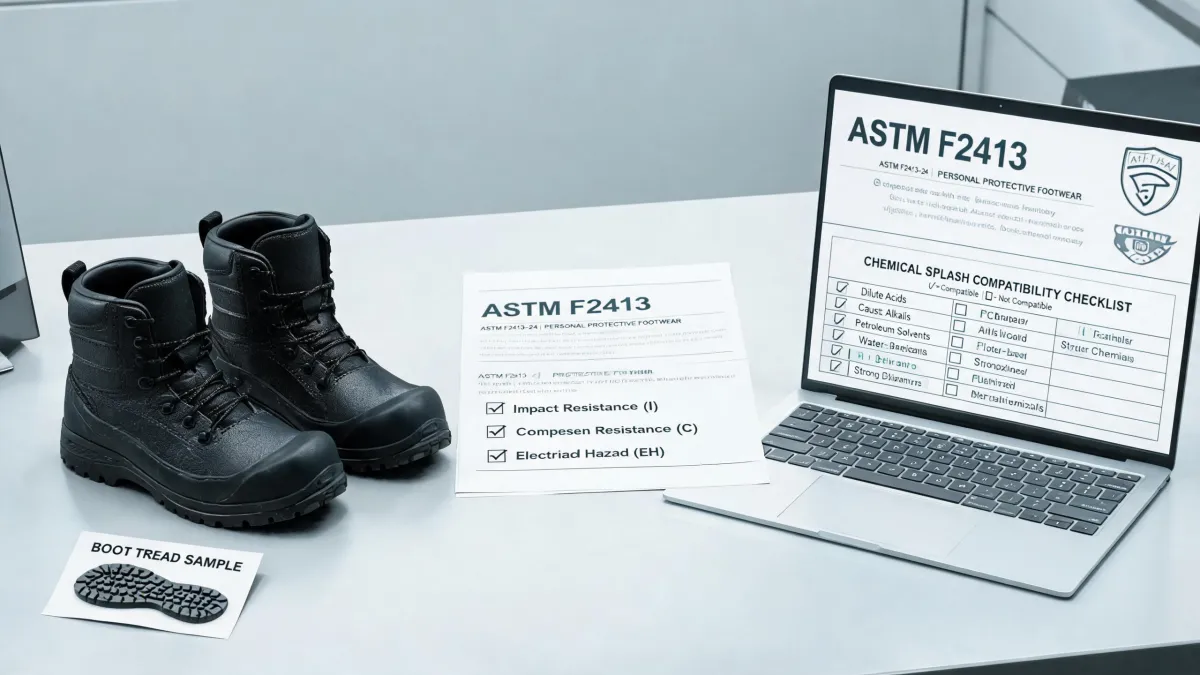
- Define the hazard profile and required standards—ASTM F2413 for protective footwear, ANSI/OSHA criteria for head protection
- Get quotes from at least three vendors that actually meet those standards, not just the cheapest ones
- Calculate the 2-year total cost, including expected replacement cycles, labor time, and safety risk
The numbers said go with the budget options for years—they appeared 40% cheaper with similar spec sheets. My gut, after the November incident, said we were going to pay for that shortcut later. We did. Roughly $8,400 extra per year in replacement and downtime costs, if I remember the final audit numbers correctly.
Since we switched to the TCO model in early 2024, our PPE spending has dropped about 17% and boot-related complaints have basically disappeared. That's not magic. It's just math applied correctly.
One caveat: this pricing analysis was accurate as of Q4 2024. The PPE market changes fast, so verify current rates and certification requirements before finalizing your budget.
Here's what I want other procurement managers to take from this: the lowest quote isn't your cost—it's your starting point. The total cost is where real decisions happen. And in safety equipment, that total cost includes outcomes you can't see until something goes wrong.